
Lab-Grown vs. Mined Diamonds for Custom Jewelry: An Honest Comparison
This isn't a debate about which diamond is "real." It's about knowing what you're actually trying to build before you choose.
This is one of the most misunderstood debates in the industry, mostly because people are asking the wrong question. It isn't really "technology versus tradition." It's alignment — whether the diamond you're choosing actually matches what you're trying to accomplish.
The Question We Ask Before Any Recommendation
Early in this work, we generally supported clients choosing lab-grown diamonds if it meant getting a larger stone within budget. Looking back, that advice wasn't wrong, exactly — it was incomplete, because it answered a narrower question than the one that actually mattered. Maximizing visual size for a given budget is one conversation. Building a piece meant to carry emotional and material significance across generations is a different one entirely. Both are legitimate goals. They just call for different materials.
So before we talk about diamonds, we talk about intent. What are you actually trying to build? A beautiful ring you'll love wearing? Or a future heirloom, something meant to still mean something to someone who never met you?
Where Lab-Grown Diamonds Make Sense
If the priority is size, sparkle, and value for the budget available today — not the diamond's value forty years from now — lab-grown is a completely reasonable choice. It offers the same optical and chemical properties as a natural diamond at a lower price point, which means more visual presence for the same spend.
Where Natural Diamonds Make Sense
When the goal is building something meant to hold both emotional and material significance across generations, natural stones are typically where we land. A natural diamond carries billions of years of geological history and genuine physical scarcity — qualities tied to provenance, rarity, and heirloom significance, not a guarantee of financial appreciation. Historical scarcity and market value are not the same thing, and we're not going to tell you a natural stone is a financial investment. What it offers is a different kind of permanence: material that existed millions of years before your commission and will still exist long after it.
What People Get Wrong on Both Sides
The debate is full of marketing shortcuts standing in for actual substance.
On the lab-grown side, people often assume "lab-grown" automatically means ethical or low-impact. That's not guaranteed. Lab-grown does not automatically answer every ethical or environmental question — production methods, energy sources, manufacturing practices, and supply-chain transparency can vary significantly between producers, the same categories of concern people assume only apply to mined stones.
On the natural side, people often assume mined diamonds can't be verified or ethically sourced at all. That's also not accurate. With rigorous vendor vetting, sanctions screening, and independent lab documentation, natural sourcing can be entirely clean and transparent — it just requires actually doing the diligence, rather than accepting a supplier's word.
Neither Choice Is Automatically the "Right" One
We don't think there's a universally correct answer here, and we're not interested in selling you toward whichever option is more profitable. Clients deserve an honest answer to what they're actually trying to accomplish, not a sales pitch dressed up as ethics or a sales pitch dressed up as tradition.
If you want a nice design, real sparkle, and don't have an unlimited budget, a lab-grown diamond is a completely legitimate choice — and so is a natural sapphire or a well-cut moissanite, depending on what you're prioritizing. If your goal is a stone with real provenance and heirloom significance — something built to be passed down with its own history intact — that's a different conversation, and it usually leads toward a natural stone with strong documentation behind it.
How We Start This Conversation
Every commission starts by getting clear on what you're actually trying to preserve. Once that's established, the material choice tends to become obvious on its own — not because one option is objectively better, but because it becomes clear which one actually serves the story you're building.
If you're weighing this decision for your own commission, that's exactly the kind of conversation worth having before any stone gets sourced. Begin a private consultation, or read more about how we source gemstones for one-of-one commissions.
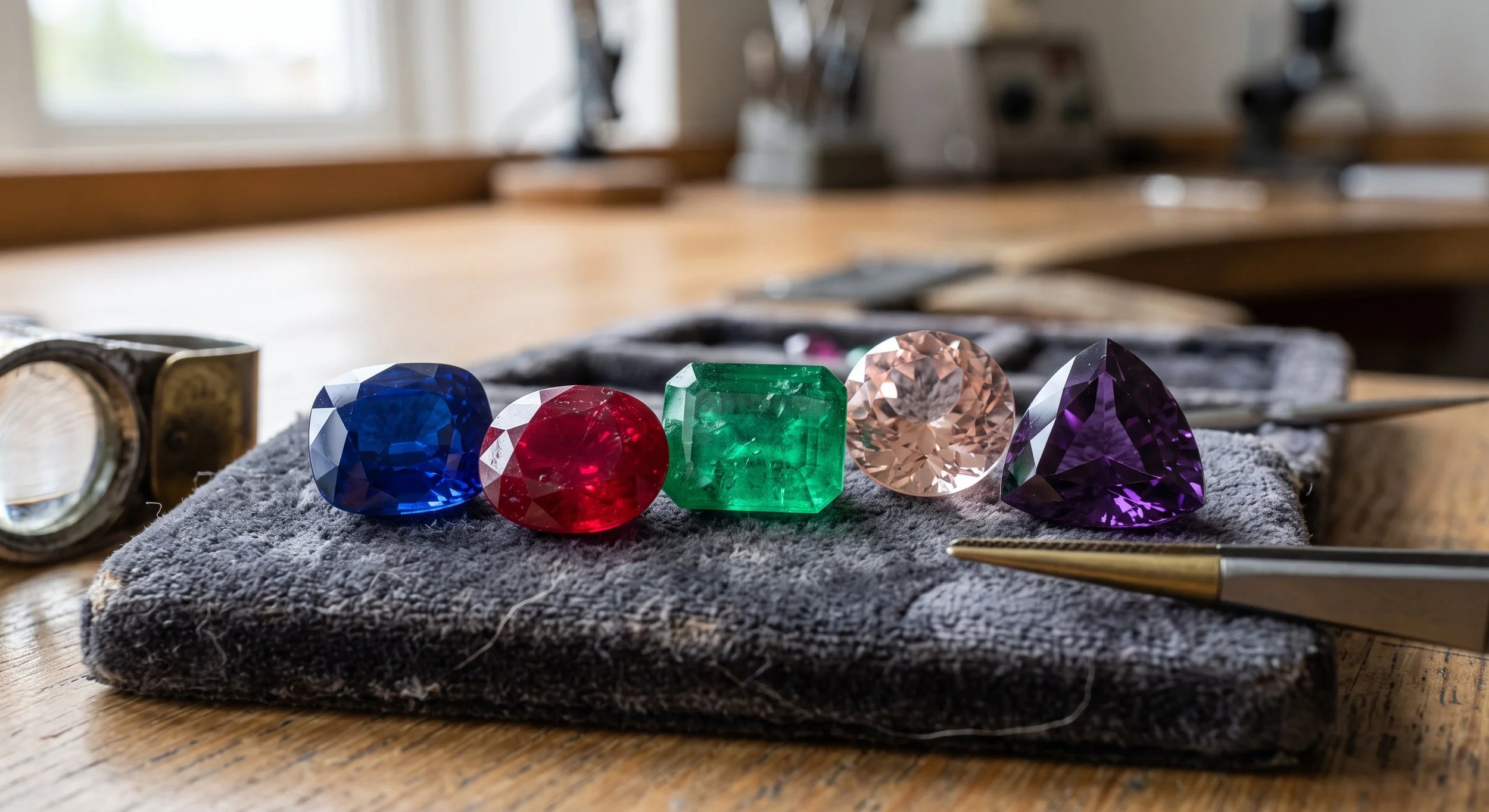
Colored Gemstone Engagement Rings: What to Know Before You Commission One
Choosing a sapphire or emerald over a diamond changes more than the color. Here's what to know about durability, care, and design before you commit.
Choosing a colored gemstone over a diamond isn't just an aesthetic decision — it changes several things about how the ring should be designed, worn, and cared for. Before committing to a center stone, it's worth understanding what actually shifts.
Durability Isn't the Same Across Every Stone
Diamonds rank hardest on the Mohs scale of any natural material, which is part of why they became the default engagement stone in the first place. But hardness alone doesn't determine how well a stone actually holds up — toughness, cleavage planes, how the stone is set, typical treatments, and how the wearer actually lives with the piece all factor in just as much.
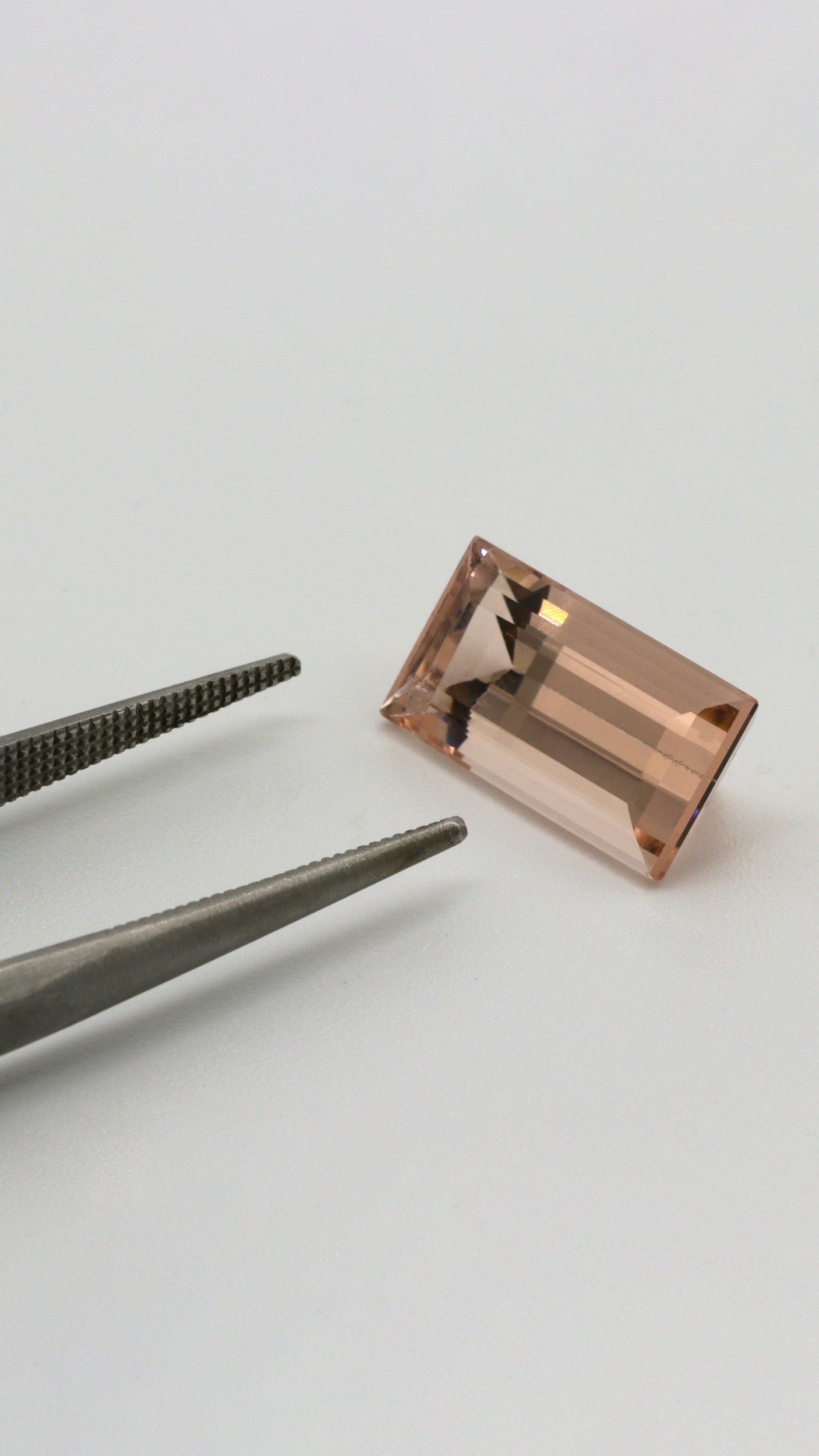
Sapphires and rubies are extremely durable and genuinely well-suited to daily wear, both in hardness and toughness. Emeralds are a more nuanced case: their durability concerns come less from hardness and more from natural inclusions and the clarity treatments most emeralds receive, which can make them more vulnerable to impact than their hardness rating alone would suggest. Morganite isn't automatically unsuitable for daily wear either — with a protective setting and reasonable care, it can hold up well; the real variables are how it's set and how the wearer actually treats it day to day, not a blanket rule about the stone itself.
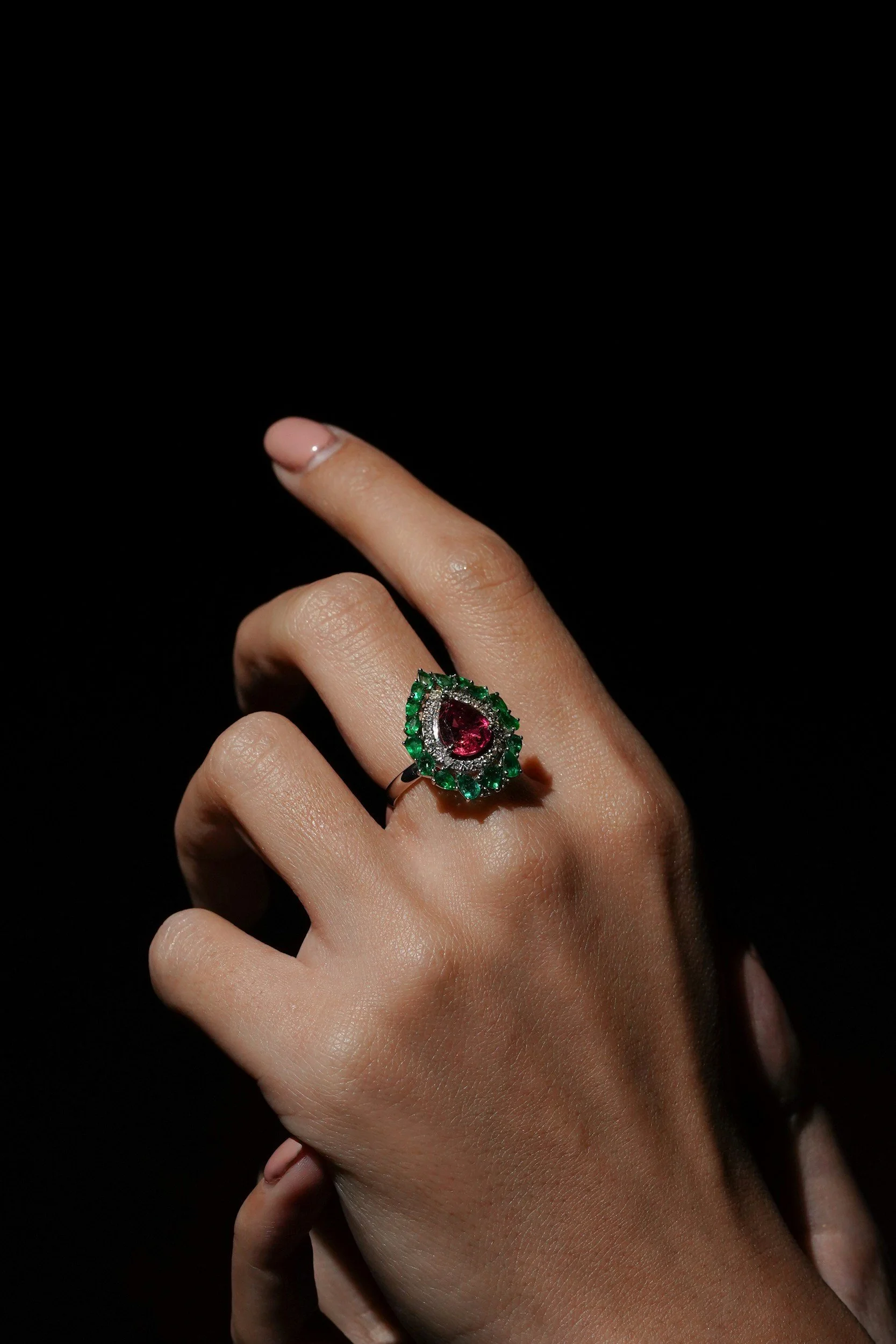
None of this means a softer or more delicate stone is off the table — it just means going in with clear, accurate expectations about how to protect it, rather than a generic durability chart that flattens real differences between stones.
If You Already Know Which Stone You Want
If you're set on a specific colored gemstone — an emerald, a morganite, a particular sapphire — that's exactly what gets built. The design process centers on making sure you understand that stone's physical characteristics and daily care requirements clearly enough that living with it feels effortless rather than anxiety-inducing.
If You Just Know You Want "Something That Isn't a Diamond"
This is a more common starting point than people expect, and it's a perfectly good one. If a client isn't attached to a specific stone but knows they want, say, a pink stone that isn't a diamond, that opens up options like pink sapphire, pink spinel, or a light ruby — stones that deliver a similar color family with significantly more durability for daily wear than some of the softer, more fashionable alternatives.
Color Becomes the Design's Primary Language
With a diamond, the design conversation centers on cut, brilliance, and setting. With a colored center stone, color becomes the organizing principle of the entire piece — which changes how every other decision gets made.
Metal tone matters more. The warmth of 18k yellow gold can deepen the richness of an emerald in a way white metal doesn't. Platinum tends to make a saturated blue sapphire look crisp and architectural, rather than warm. Rose gold can soften an otherwise formal stone into something quieter. None of these pairings are automatic — they're decisions made specifically around the stone you've chosen.
Why a Colored Stone Often Feels More Personal
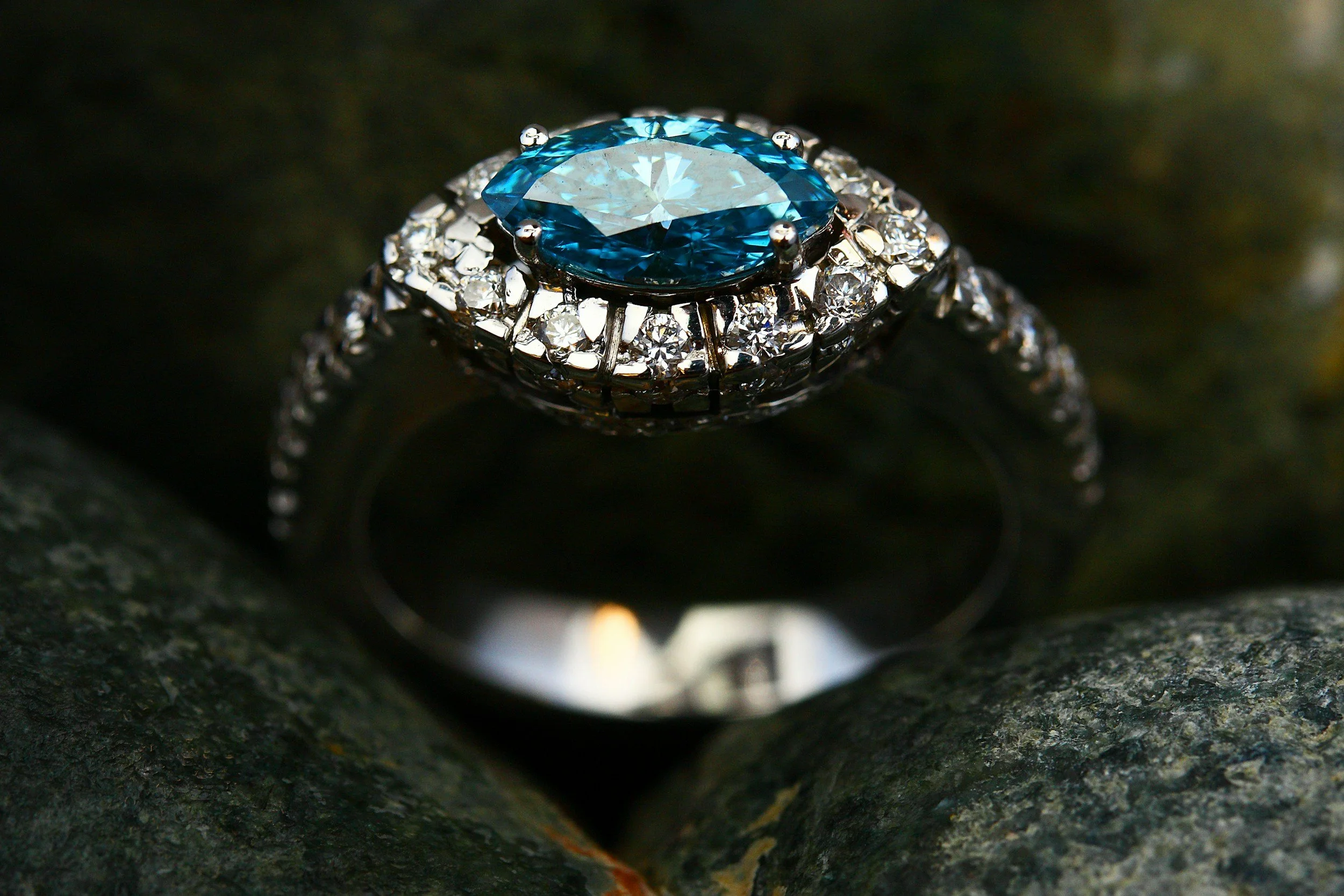
A colorless diamond, however beautifully cut, tends to read as a conventional choice — recognizable, expected, safe. A colored center stone shifts the piece away from that default entirely. It becomes an intentional, specific statement about mood, heritage, or meaning, rather than a piece that could belong to almost anyone.
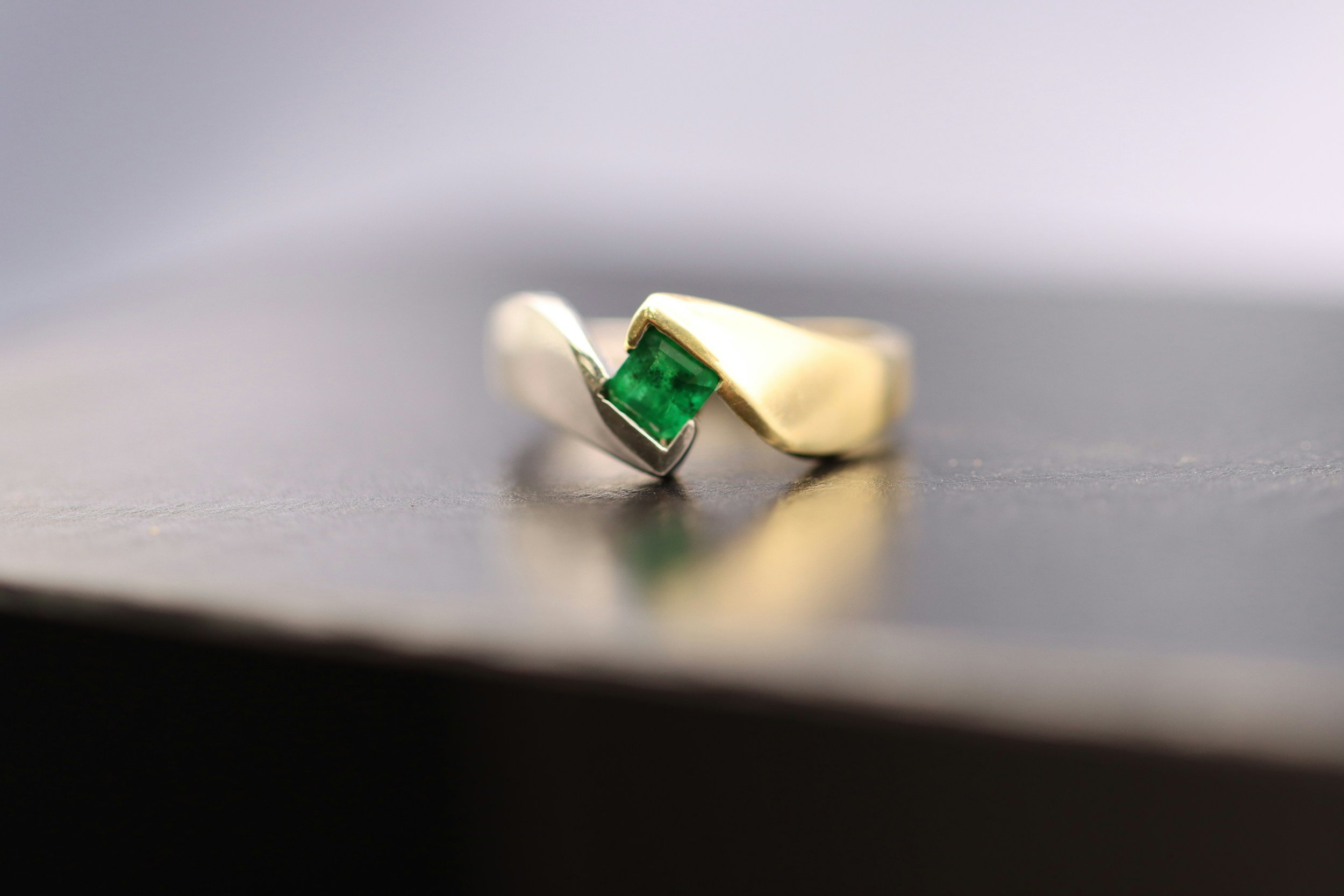
That's often the actual draw for clients who choose color: not that they dislike diamonds, but that they want the ring to say something more specific about who they are.
Treatment Isn't Automatically a Red Flag
Most colored gemstones on the market have been treated in some way — heat treatment for sapphires, clarity enhancement for emeralds, and so on. Treatment by itself isn't a defect. The real question is whether it's disclosed, whether it's stable over time, and whether it's compatible with how you actually intend to wear and care for the stone. An emerald with well-documented, traditional oil enhancement can be a completely sound, long-term choice. The same stone with an undisclosed or unstable treatment is a very different proposition. Knowing the difference — and asking about it directly — matters more than avoiding treated stones altogether.
How the Stone Shapes the Actual Design
A colored gemstone's specific characteristics don't just affect which stone you choose — they shape how the entire piece needs to be engineered around it. This is where a lot of the real design thinking happens, and it's easy to overlook if you're only comparing stones on paper.
Bezel versus prong protection. A more delicate or inclusion-prone stone often benefits from a full or partial bezel, which shields the girdle and edges from daily impact in a way open prongs can't.
Stone orientation. Certain cuts and inclusion patterns hold up better oriented one way over another — this is a judgment call made stone by stone, not a fixed rule.
Exposed corners. Pointed shapes like pear, marquise, or emerald-cut stones are more vulnerable at their corners, which often calls for reinforced prongs or protective metalwork specifically at those points.
Setting height. A lower-set stone sits closer to the finger and is naturally less exposed to catching or impact than a high-set stone, which matters more for someone with an active day-to-day life.
Cleaning restrictions. Certain treatments can't tolerate ultrasonic cleaners or certain chemicals, which affects not just how the stone is maintained after the ring is finished, but sometimes how it can be safely cleaned during fabrication itself.
We'll sometimes recommend against a particular stone for a specific client's lifestyle — not because the stone isn't beautiful, but because the honest answer is that it won't hold up the way they'd want it to. That judgment call is part of what a real consultation is for.
What to Ask Before You Commit
Is this stone durable enough for how I actually live day to day?
What treatments, if any, does this stone commonly have, and are they stable, disclosed, and compatible with how I'll wear and care for it?
How will the metal tone I'm considering interact with this stone's color?
Does the design protect this specific stone's vulnerable points — corners, girdle, inclusions — or is it purely decorative?
Am I choosing this stone because I love it, or because it's currently trending — and does that distinction matter to me?
If you're weighing a colored gemstone for your own commission, that decision is worth working through with someone who can walk you through the specific stone's character, not a generic durability chart. Begin a private consultation, or read more about how we source gemstones for one-of-one commissions.

Beyond the Four Cs
The Four Cs tell you what a gemstone is. They don't tell you if it's the right one. Inside the verification-first approach to sourcing behind every commission.
Why I Source Gemstones Like an Investigator, Not a Salesperson
The Four Cs are a useful place to begin. They're not where I stop.
For decades, the jewelry industry has taught consumers to evaluate gemstones the way they might compare appliances: cut, color, clarity, carat weight. Add a grading report, compare two stones side by side, and choose whichever scores higher. There's nothing wrong with that approach, it's just incomplete. A grading report tells you what a gemstone is. It doesn't tell you whether it's the right gemstone for the piece in front of you, and those are two very different questions.
When I source a stone for a custom commission, I'm not hunting for the highest number on a certificate. I'm looking for the stone that belongs in that specific piece. Sometimes that's the same stone. Often it isn't.
Beauty Isn't Always Perfect
One of the biggest misconceptions in fine jewelry is that perfection is always the goal. It isn't. I've turned down technically flawless stones because they felt lifeless, and fallen for gemstones with tiny natural characteristics most buyers would never even notice.
Not every inclusion is a flaw. Sometimes it's a fingerprint. Natural gemstones spent millions of years forming under extraordinary heat and pressure, and no two emerge with the same internal landscape. Those subtle differences change how light moves through a stone, which changes its personality and how it feels to wear.
That said, not every imperfection deserves to be celebrated, and there's a real difference between character and compromise. A surface-reaching fracture isn't charming, it's a structural weakness. An inclusion positioned where daily wear could threaten the stone's integrity isn't romantic, it's a problem. Knowing the difference is the actual job.
I Don't Buy Paperwork. I Verify It.
Alongside running Gerard Rene, I still work in anti-money laundering compliance, financial crimes, sanctions, and regulatory risk, a field I've built my career in for more than a decade and continue to practice in today. I hold a law degree from New York Law School, though I'm not a practicing attorney; the compliance work and the atelier run in parallel, not one before the other.
That world has permanently shaped how I evaluate information. In compliance, trust isn't built on confidence, it's built on verification. Documentation isn't optional. Claims aren't accepted simply because someone makes them. Everything has to withstand scrutiny.
That mindset followed me directly into gemstone sourcing. When a supplier tells me a stone is ethically sourced, my first question isn't "that's wonderful," it's "can you substantiate that?" A laboratory report isn't a marketing document to me, it's independent verification. If a supplier can't clearly explain provenance, treatment history, or documentation, I get cautious, not because I assume dishonesty, but because uncertainty itself carries risk. My clients trust me with acquisitions that may stay in their families for generations. That trust deserves diligence.
Know Your Vendor
People often ask how I choose suppliers, and the answer usually surprises them: price is rarely my first consideration.
I want to know who a vendor has worked with, who trusts them, and how long those relationships have existed. If I ask for documentation, do they provide it immediately, or become defensive? Do they respond consistently, or only when they're trying to close a sale? I also pay attention to how they evaluate me. The best suppliers don't work with everyone; they run their own diligence, verify identities, and protect their own businesses. That's a good sign. Strong standards tend to exist on both sides of a relationship.
I call this my Know Your Vendor standard, a compliance principle borrowed from my other career and applied directly to how I source materials for one-of-one commissions. It's one of the quieter parts of our process, but it's the part that protects every commission long after it leaves the workbench.
Provenance Matters, But Not in the Way Most People Think
Clients sometimes assume provenance automatically makes a gemstone more meaningful. Not necessarily. The beauty of the stone comes first; a remarkable gemstone doesn't need an extraordinary origin story to deserve admiration. But when reliable provenance is available, it becomes another layer of meaning. Knowing exactly where a gemstone came from, who handled it, and how it moved through the supply chain doesn't replace beauty, it enriches it, the same way knowing the history of a painting doesn't change how it looks, only how deeply you appreciate it.
The Questions Collectors Rarely Ask
Many collectors know to ask whether a gemstone has been treated. Few ask what kind of treatment was used, and that distinction matters. Take emeralds: minor clarity enhancement is common and widely accepted, but not all enhancement methods behave the same way. Traditional cedarwood oil has been used for generations and is stable and well understood. Certain modern polymers and resins behave very differently. They can discolor, cloud, or become difficult to remove without damaging the stone. The word "treated" doesn't tell you enough; the method and its long-term implications do.
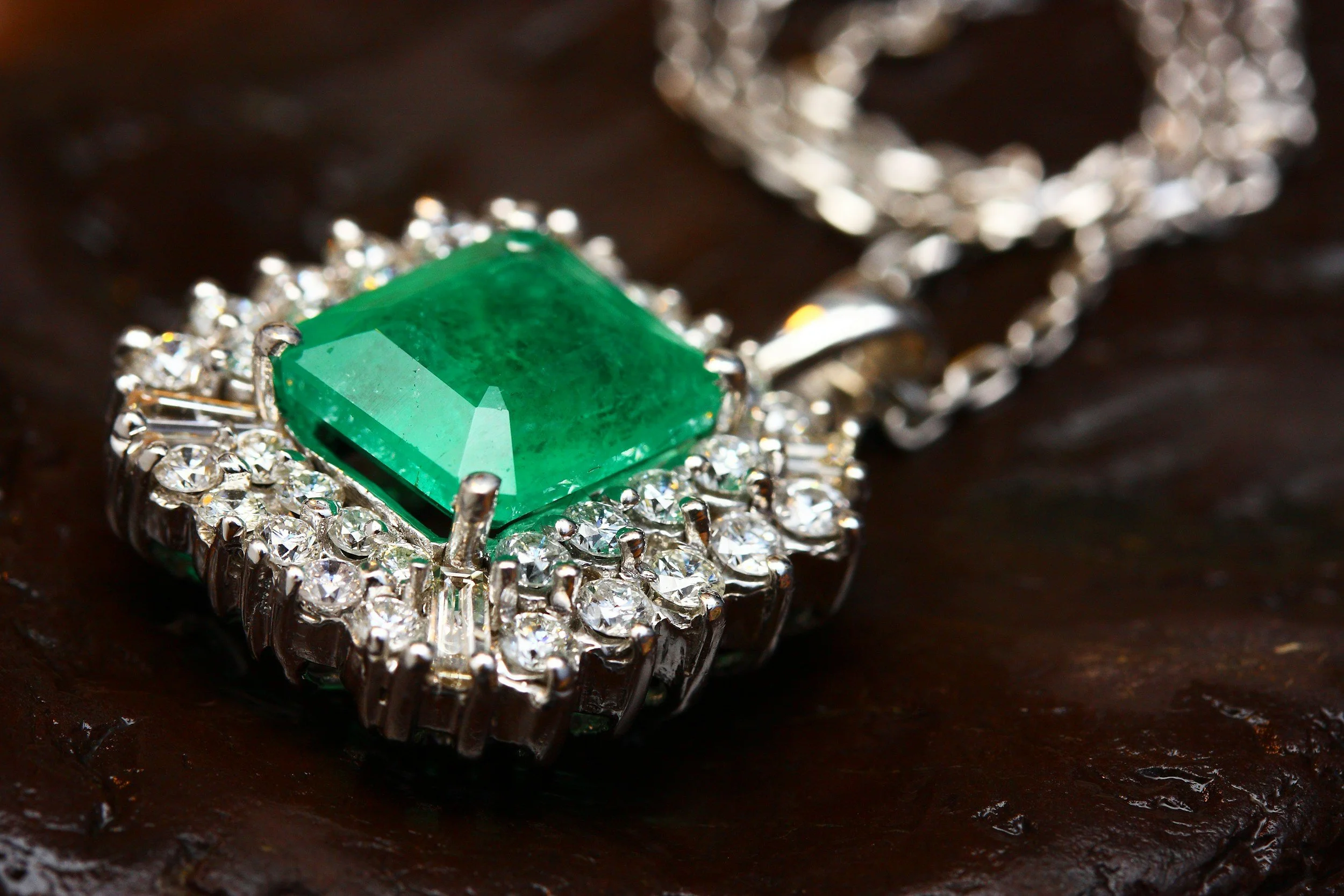
The same goes for inclusions. Not all of them affect durability equally. A feather buried safely within a gemstone may never cause a problem. A fracture reaching the surface is another story entirely, and understanding that difference can mean the gap between enjoying a piece for decades and facing avoidable repairs.
Sometimes the Right Stone Costs Less
People often assume a more expensive gemstone is automatically the better choice. That's rarely how I approach sourcing. If a client wants something quiet and understated, the largest available center stone may overwhelm the design. If someone lives an active lifestyle, a beautiful but fragile stone may not be the wisest recommendation. I've recommended smaller diamonds, different cuts, and lower-priced alternatives, not because they're cheaper, but because they're more truthful to the piece and the person wearing it. The goal isn't maximizing budget. It's maximizing meaning.
Beyond the Certificate
The Four Cs remain valuable. They're part of the conversation, just not the whole conversation. A gemstone is more than a set of measurable characteristics. It's a material that existed for millions of years before either of us ever saw it, and it deserves both technical discipline and human sensitivity.
My years in regulatory compliance taught me to verify what can be verified. Jewelry taught me that not everything that matters can be measured. The best commissions happen where those two worlds meet, where evidence satisfies the mind, beauty satisfies the eye, and meaning satisfies the heart. That's the point a gemstone stops being inventory and becomes irreplaceable.
If sourcing a gemstone for your own custom commission is something you're considering, I'd welcome that conversation.