
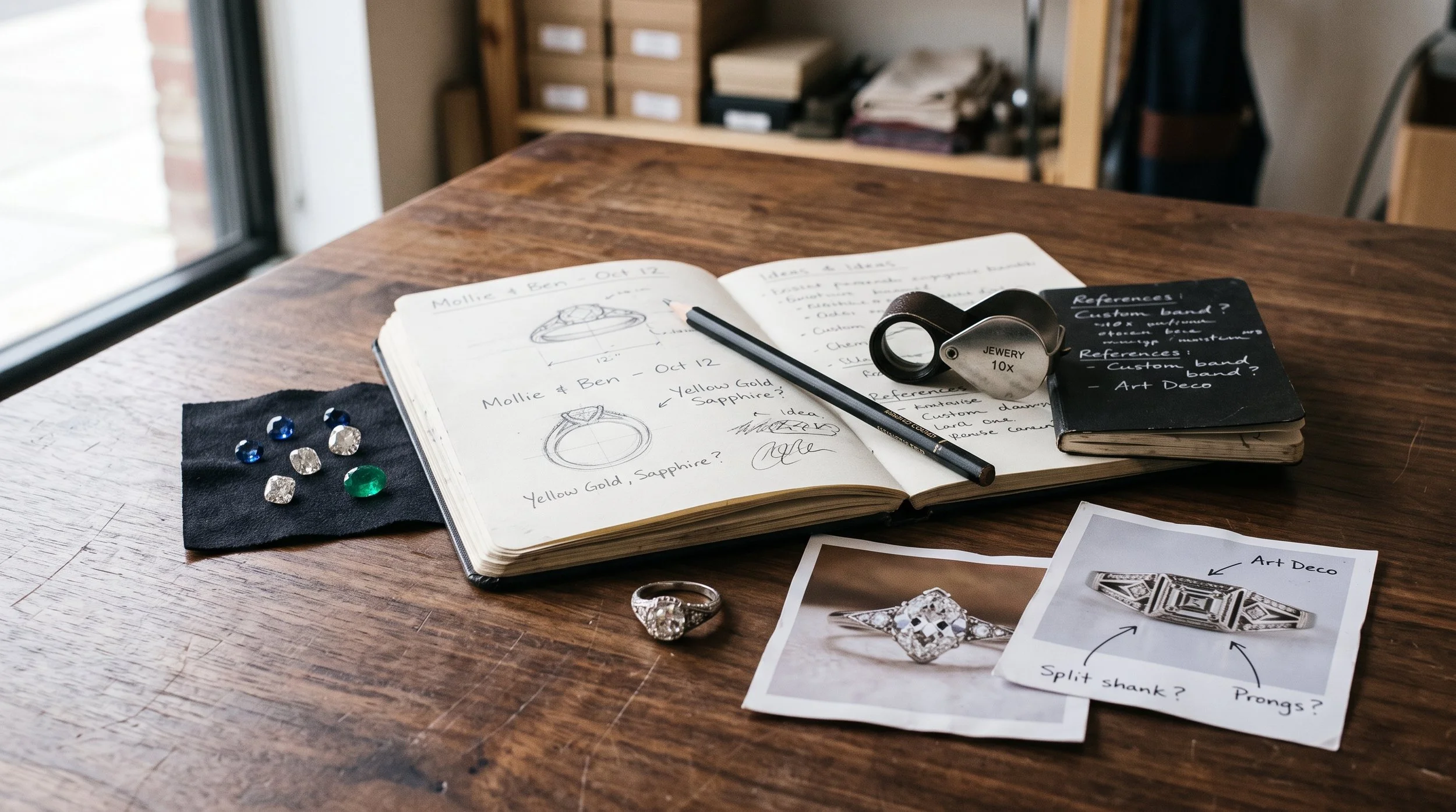
What to Bring to Your First Bespoke Jewelry Consultation
Wondering what to bring to your first bespoke jewelry consultation? Less than you think — here's what's actually useful, and what you don't need to have figured out yet.
The most common question we get before a first consultation isn't about design at all. It's some version of: "What am I actually supposed to bring?" The honest answer is that you need far less than most people assume — clarity helps, but it isn't a requirement.
What's Actually Useful
Reference images, if you have them — but not a finished vision. If you've been saving photos, bring them, even if they feel scattered or contradictory. We're not looking for a single perfect example of what you want. We're looking for what repeats: a stone shape, a proportion, a level of detail you keep gravitating toward. Even just your single favorite element from each image is enough to start building a real picture of your taste.
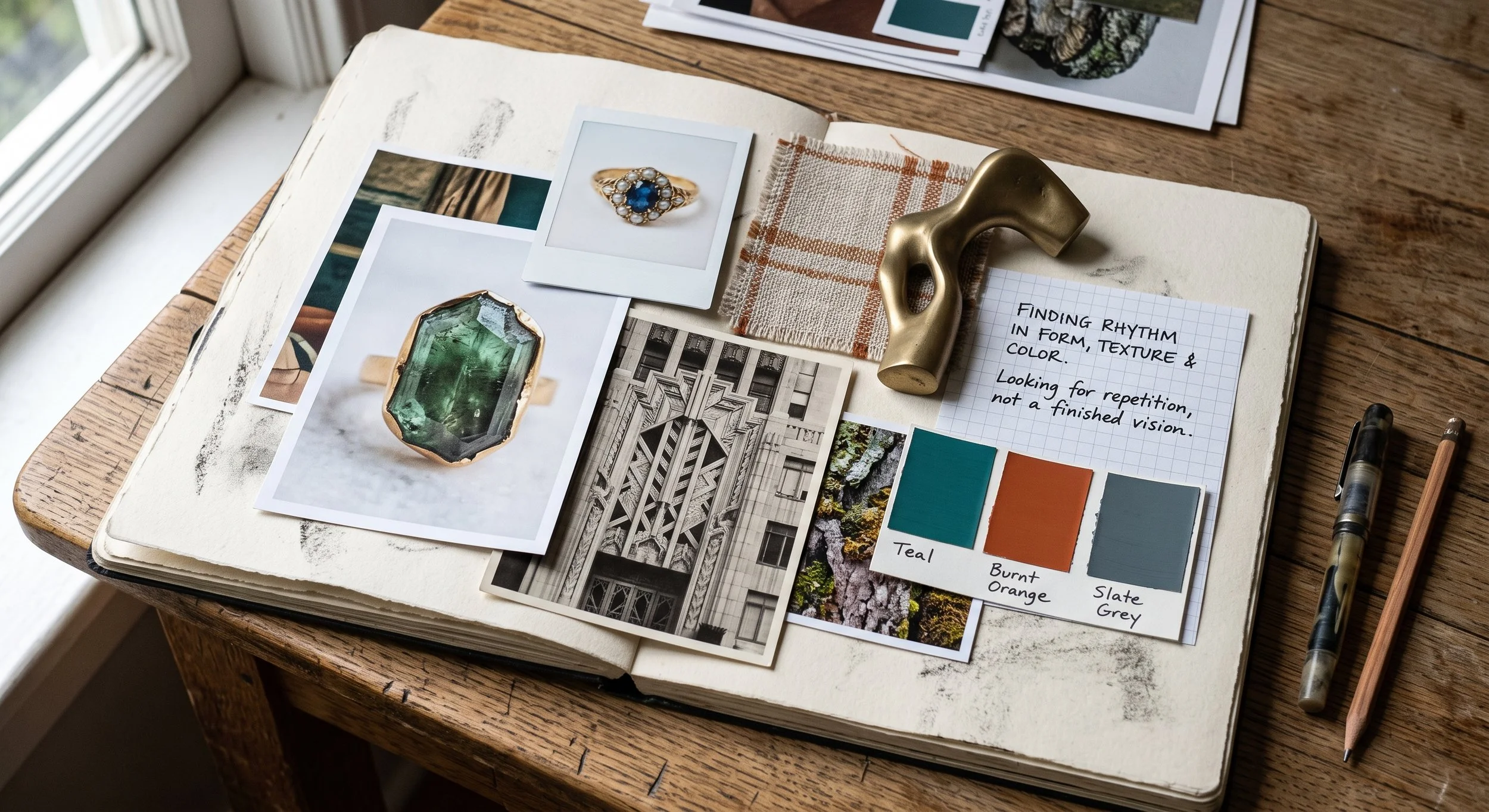
A general sense of your budget range. You don't need an exact number, and you're never going to be pushed toward spending more than you're comfortable with. But a rough range helps shape realistic options from the very first conversation, rather than designing something that has to be scaled back later.
Context about the relationship, if it's an engagement ring. How you met, how long you've been together, what your partner's day-to-day life actually looks like — whether they wear jewelry often or almost never, whether they're active or more likely to be behind a desk. None of this needs to be polished. The more honestly you can describe the person, the more the design can actually reflect them.
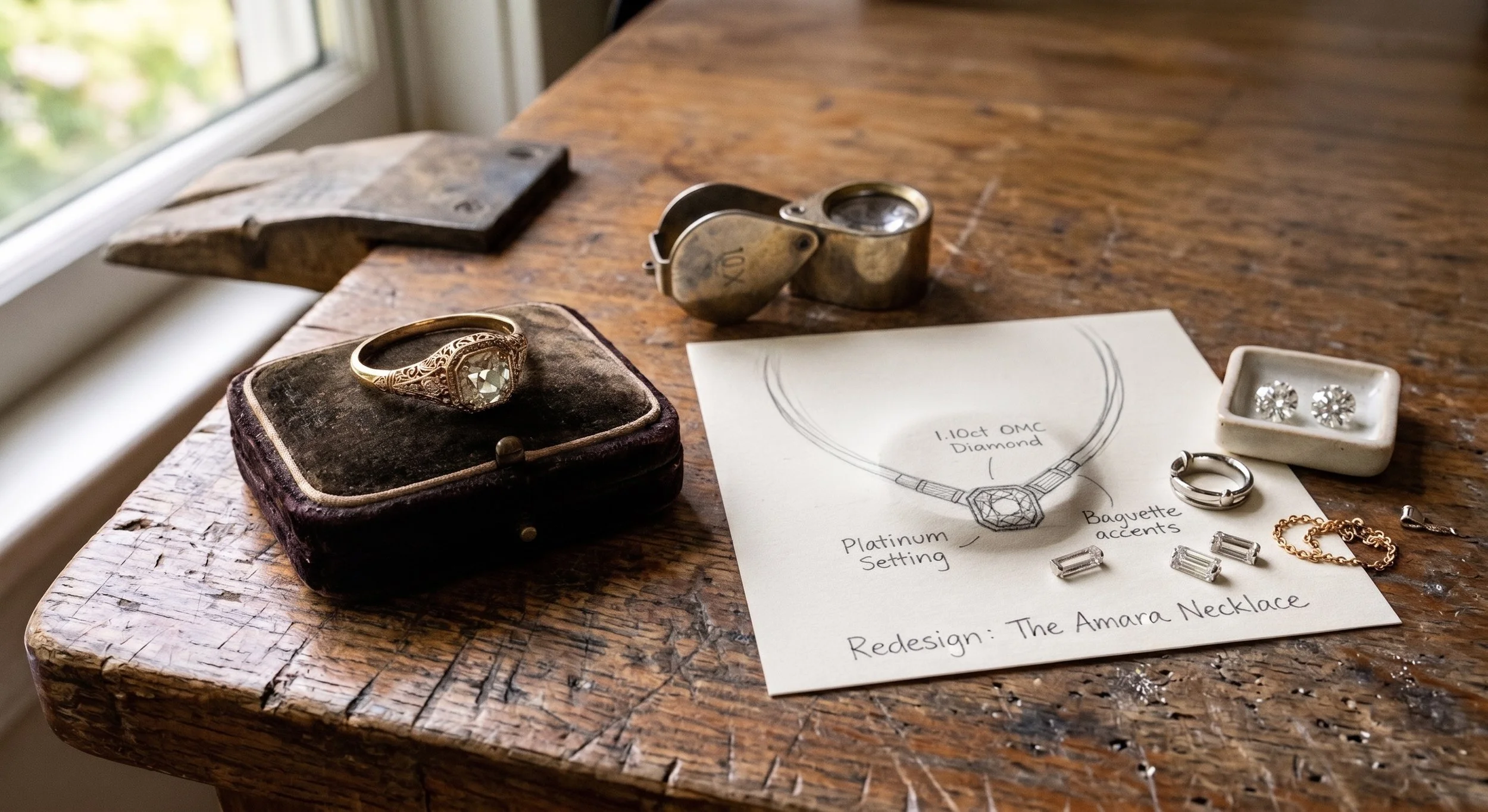
Any inherited materials you're considering incorporating. If there's a family stone, an heirloom piece, or inherited gold you might want worked into the new design, bring it — or at least mention it exists. It changes what's possible and often becomes the most meaningful part of the final piece.
Your actual questions, even the basic ones. Nobody expects you to already understand cut grades, sourcing, or engineering. Ask anything. Understanding the process is part of what a consultation is for.
What You Genuinely Don't Need
A finished design in your head. Plenty of the most successful commissions start with a client who has no clear vision at all — just a feeling, or a handful of scattered references. That's a completely normal starting point, not a disadvantage.
A ring size. Sizing happens later in the process, once a direction is set. It's not something you need before a first conversation.
Certainty about every material decision. Metal, stone type, whether it's a diamond or a colored gemstone — these get worked out together. You don't need to walk in with firm answers.
What the Consultation Itself Actually Involves
Expect a real conversation before any sketching happens — questions about your story, your taste, and what you want the piece to say, not an immediate pitch toward a specific setting or stone. If you already have strong references and a clear point of view, we'll let that lead. If you're starting from almost nothing, we'll build the picture together from what you tell us about your life.
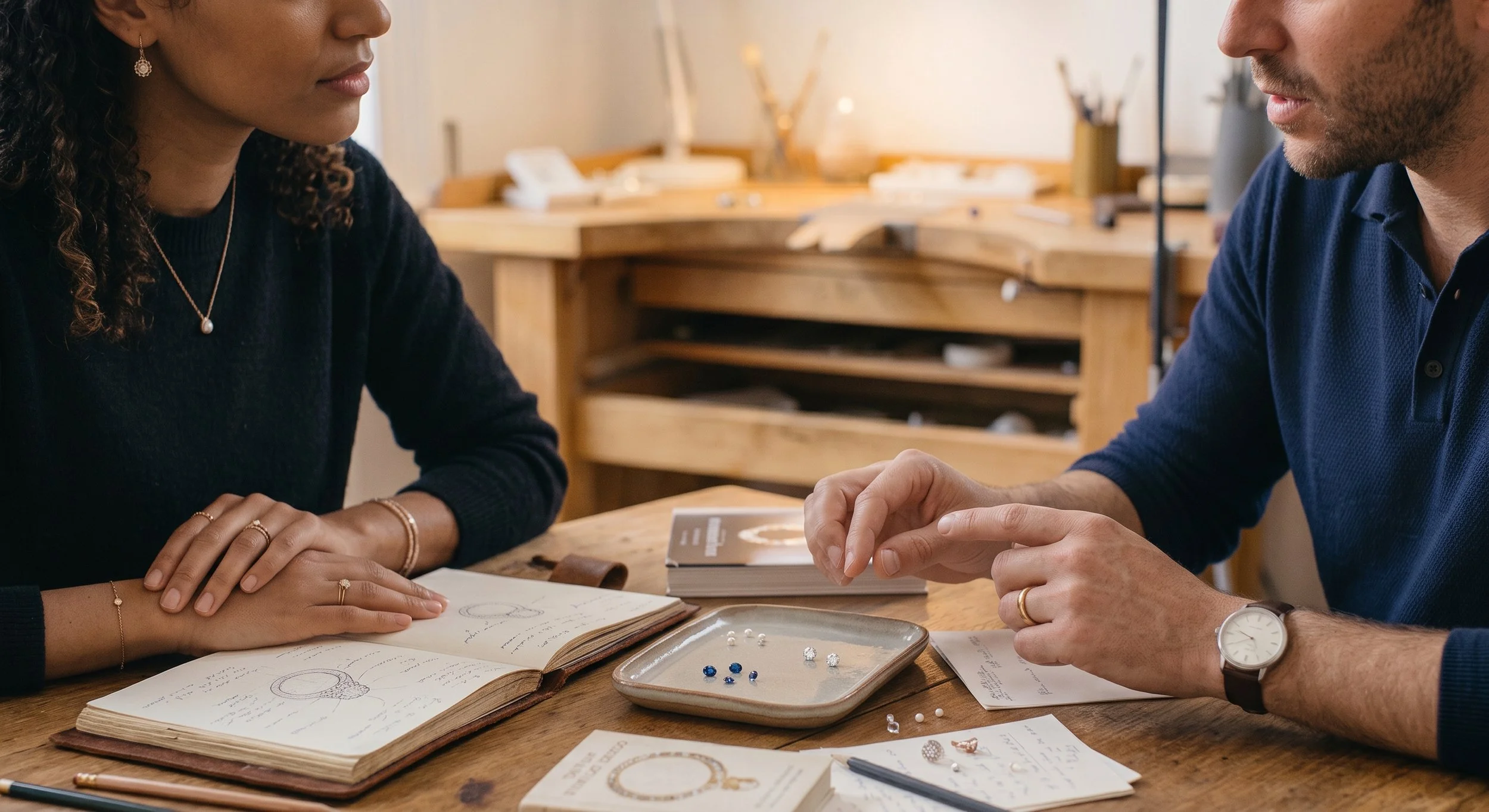
There's no wrong way to arrive at a first consultation. Some clients come in with a folder of saved images and a firm budget. Others come in with nothing but a feeling that they want something different from what they've seen everywhere else. Both are exactly the right starting point.
Schedule your private consultation, or read more about the bespoke engagement ring process, start to finish to know what happens after that first conversation.

What Determines the Price of a Custom Engagement Ring?
The honest breakdown of where your investment actually goes when you commission a custom engagement ring — no sales pitch, no vague hand-waving.
"Why does this cost so much more than a ring I found somewhere else?" is a fair question, and it deserves a real answer rather than a deflection. The short version: a custom commission and a retail ring are two different categories of object, built through two entirely different processes. The price reflects that difference — and these cost drivers hold regardless of which city or atelier you're commissioning from.

You're Not Comparing Two Rings. You're Comparing Two Processes.
A retail ring's price is largely determined by materials, brand markup, and manufacturing at scale. A custom commission's price is determined by something closer to the cost of building a single, unrepeatable object from the ground up — design time, engineering, sourcing, and hand-finishing that all exist for exactly one piece, once.
That's not a justification so much as an explanation of where the investment actually goes.
Where the Money Actually Goes at Gerard Rene
Gemstone sourcing and verification. Every stone that enters a commission is vetted for cut, character, and documentation — not simply purchased off the highest number on a certificate. That vetting process, including verifying a supplier's history and a stone's paper trail, takes real time and real diligence, and it protects the piece long after it leaves the workbench.
Material quality. Solid, substantial gold or platinum, built to hold up under decades of daily wear, costs more than thin, lightweight metal designed to look larger for less.
Design and engineering. Concept sketches, refinement based on client feedback, and CAD engineering to confirm a design is structurally sound before it's ever built — this stage alone can represent weeks of iterative work, especially for a complex or unconventional design.
Hand-fabrication and finishing. Whether a piece is hand-forged, cast, or built through a combination of both, the labor involved in properly securing stones, finishing metal, and quality-checking the final piece under magnification is substantial, and it's labor that scales with complexity, not price point alone.
Irreplaceability. Perhaps most importantly, you're paying for something that exists nowhere else. A retail ring can be replaced or duplicated. A bespoke commission, by definition, can't be.
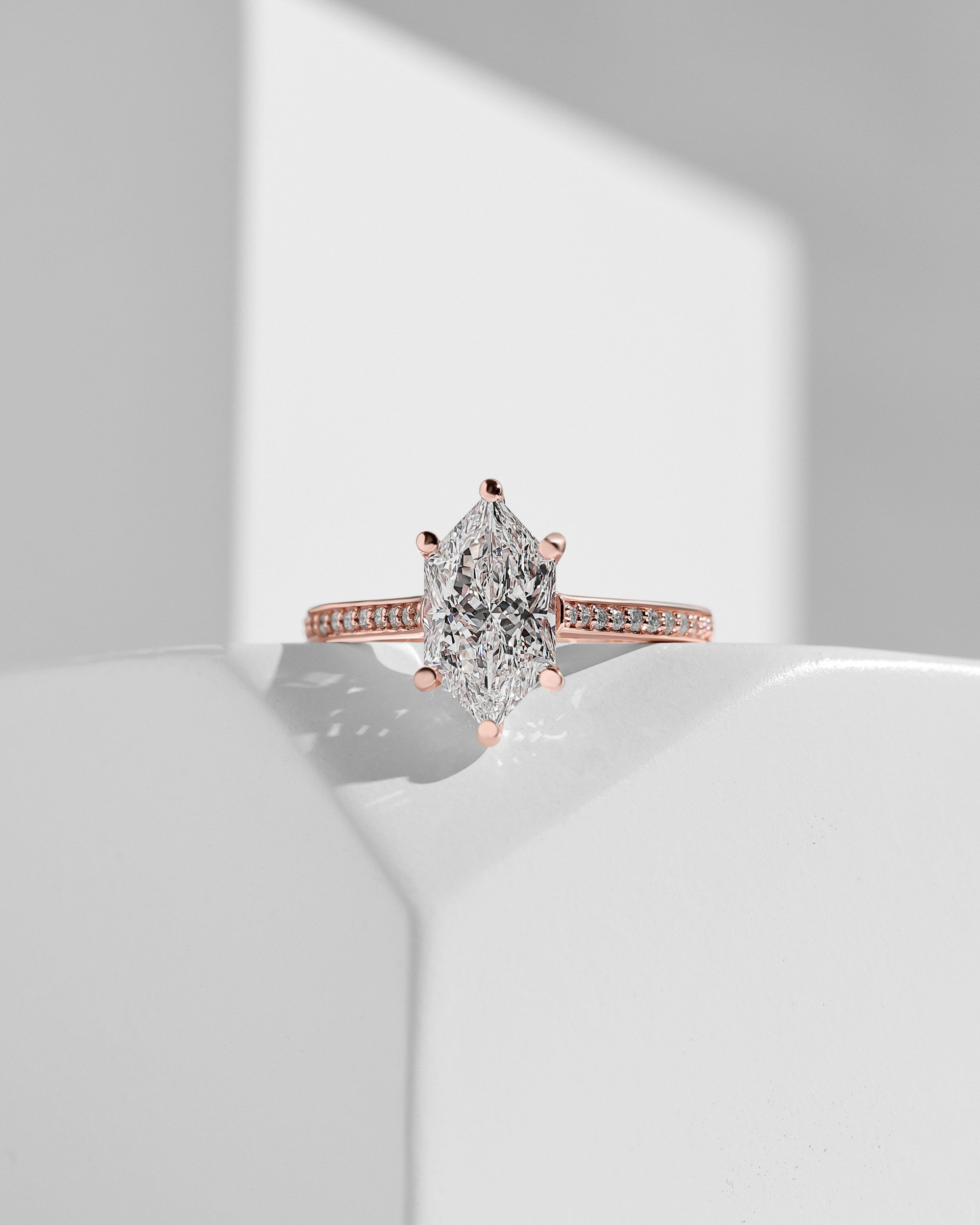
Where the Investment Is Actually Concentrated at Gerard Rene
The investment is concentrated in the design, sourcing, engineering, craftsmanship, and individualized attention required to create one piece — rather than in the overhead of producing and distributing an inventory item at scale. That's a different cost structure than retail jewelry, not an absence of one.
Why Two Commissions Can Cost Very Differently
Complexity is the biggest variable. A clean, architectural solitaire with a well-documented diamond costs less than a heavily engraved, sculptural design built around a rare, hand-sourced gemstone — not because one designer is trying harder than the other, but because the second piece genuinely requires more time, more sourcing effort, and more hand-finishing to execute properly.
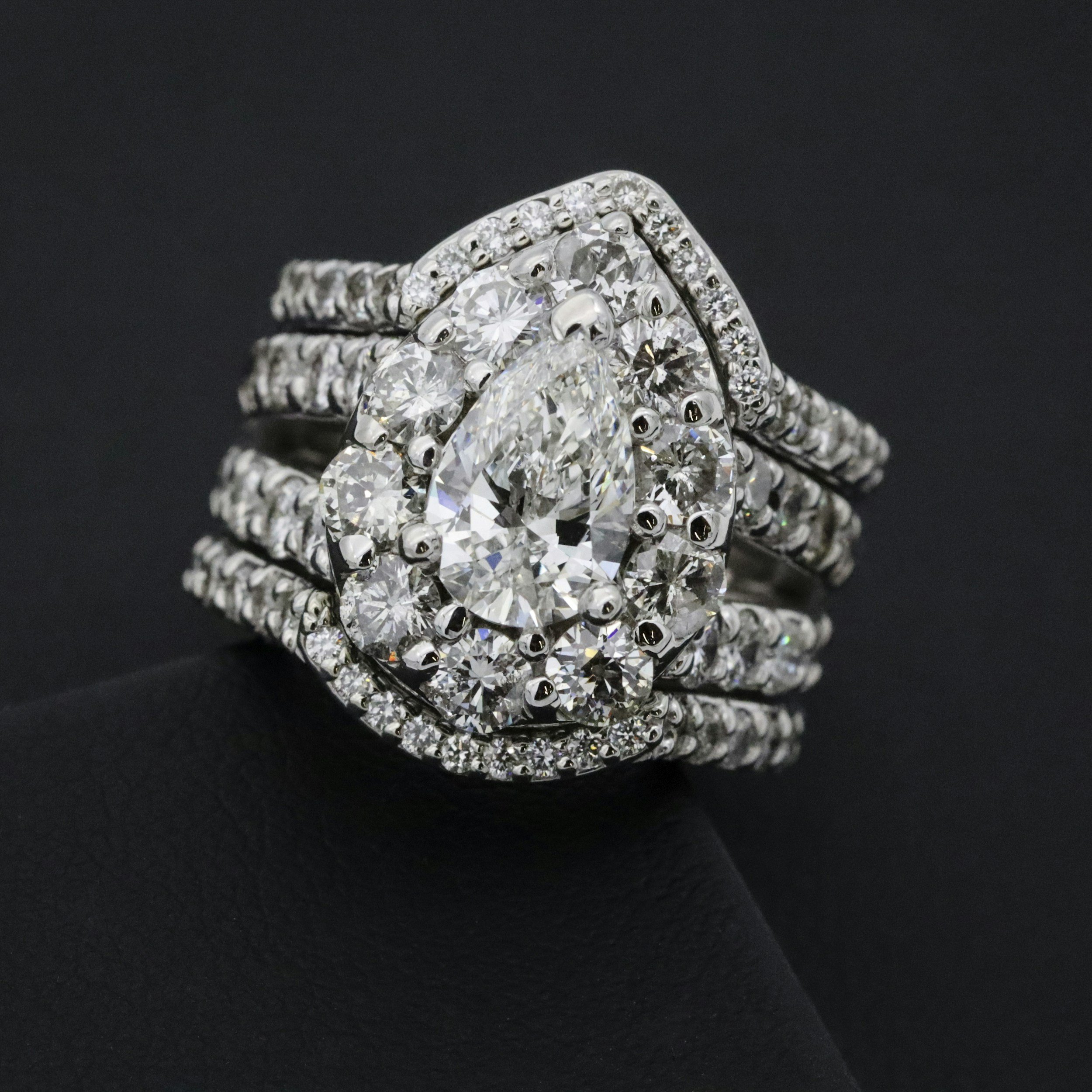
A Note on Comparing Prices
If you're comparing a bespoke commission against a mass-retail ring purely on a price-per-carat basis, you're likely optimizing for a different goal than the one bespoke work is built to serve. That's a completely legitimate priority to have — but it's worth being honest with yourself about which outcome you actually want before the comparison starts, because the two paths lead to genuinely different objects.
If you want a clearer sense of what your specific commission would actually cost, that's a conversation best had directly, with your design and priorities in front of us — not estimated from a general range. Commission Your Ring to begin the process, or explore our custom ring portfolio to see how different design approaches translate into finished pieces.
The Bespoke Engagement Ring Process, Start to Finish
From the first conversation to the final polish, here's exactly what happens when you commission a bespoke engagement ring — and why none of it looks like picking from a catalog.
Most explanations of the "custom ring process" are really explanations of a product configurator: pick a setting, pick a stone, pick a size, check out. That's customization. It's not what happens at Gerard Rene, and it's not what the word bespoke actually means.
This is the general process behind a Gerard Rene bespoke engagement ring commission — from the first conversation through final quality control. The sequence can vary depending on the piece, particularly when gemstone sourcing, design development, and engineering overlap, but the underlying process remains the same.
Step One: We Learn Who the Ring Is For
The first thing we want to know isn't your budget or your metal preference. It's how you two met, how long you've been together, what her day-to-day life actually looks like. Does she wear jewelry often, or almost never? Is she active, or does she work a desk job? Does she care how her ring compares to what her friends and family wear, or is that irrelevant to her? Where someone lives even factors in — a large center stone reads differently in New York than it does somewhere it would make the wearer feel conspicuous rather than confident.
If a client already has strong references — a folder of saved images, a clear point of view — we let that lead. If they arrive with nothing but a feeling, we build the design from everything they've told us about their life, their values, and what they want the ring to say. Either way, the goal of this stage is the same: understanding the person well enough that the ring could only have been made for them.

Step Two: Reading the References
When a client sends twenty saved photos, we're not just looking at what's pretty. We're looking for what repeats — stone shapes, proportions, metal tones, whether the eye is drawn to architectural lines or organic movement, negative space, symmetry, engraving, pavé. If there's no obvious throughline, we ask a simpler question: out of everything you've shown me, what's your single favorite detail from each one? That's usually enough to reverse-engineer a taste the client hasn't fully articulated yet.
Step Three: Concept Sketches
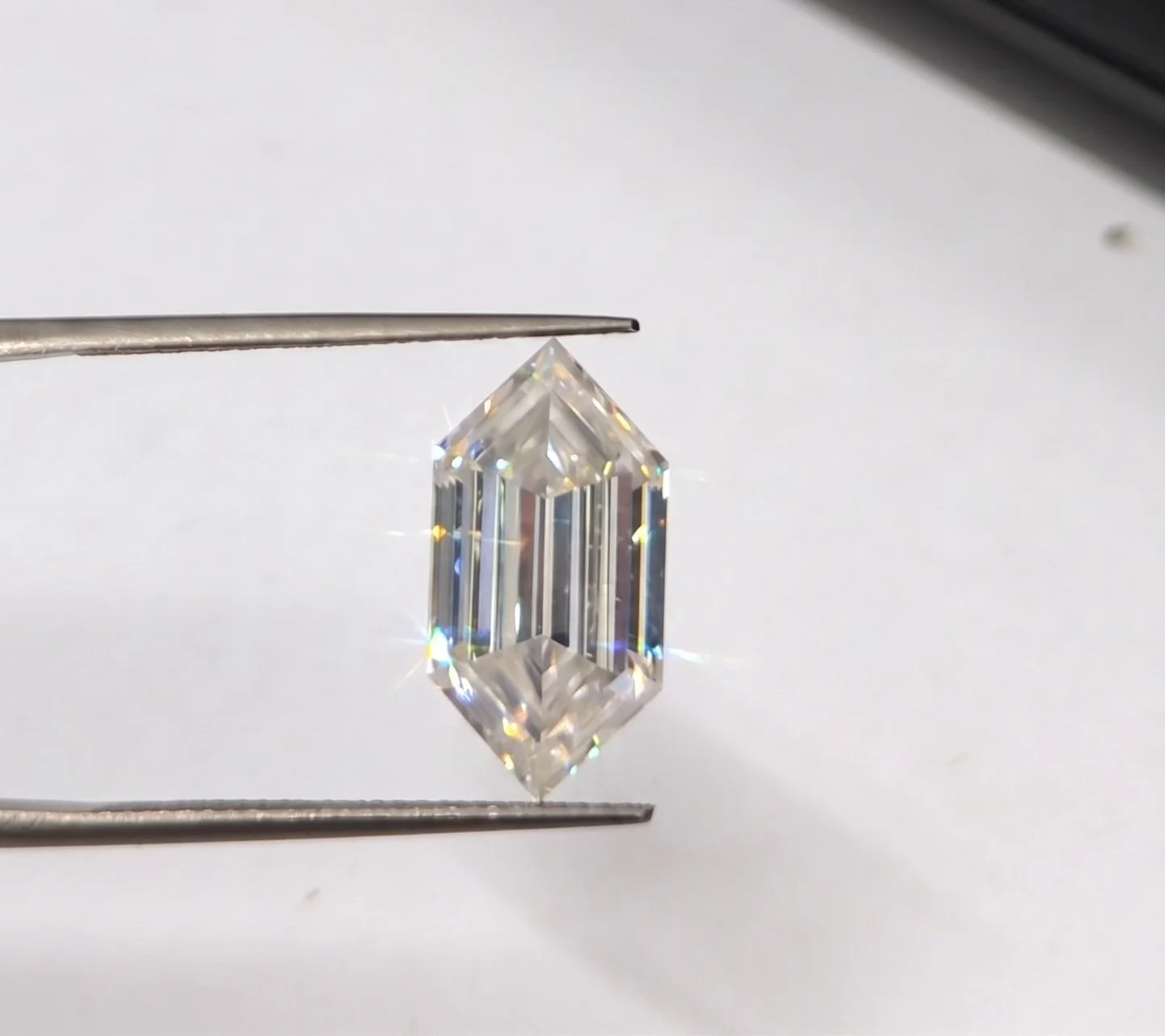
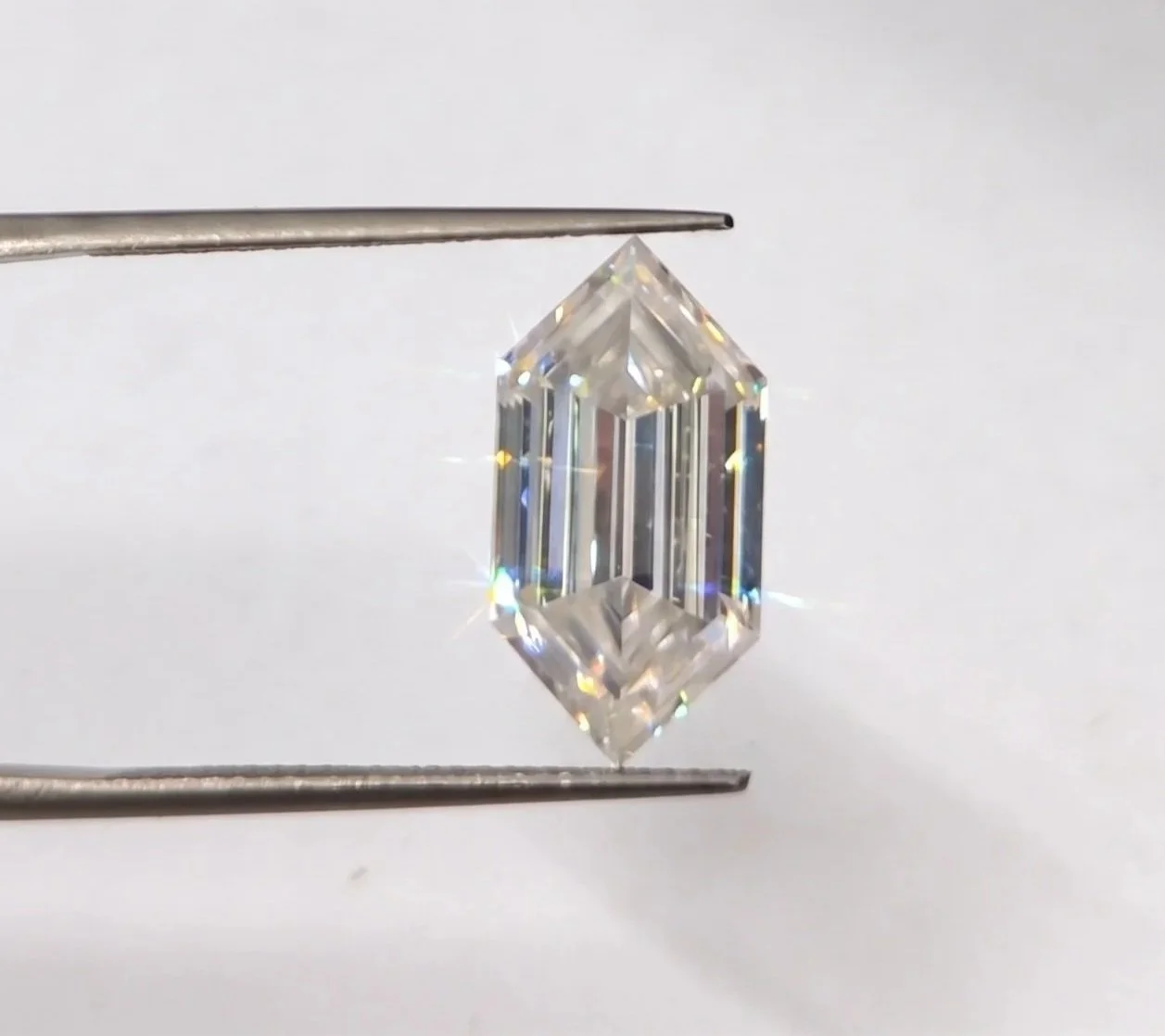
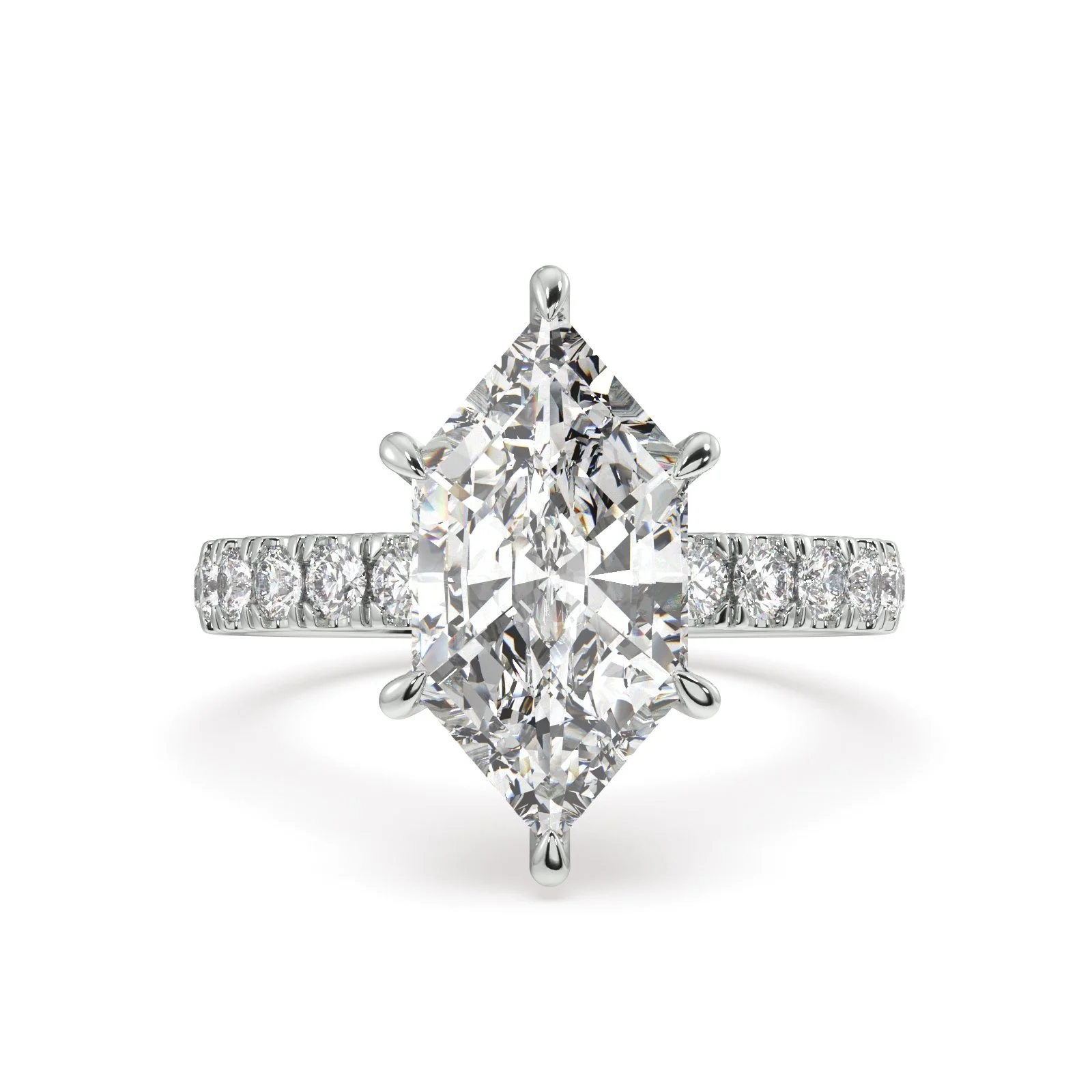
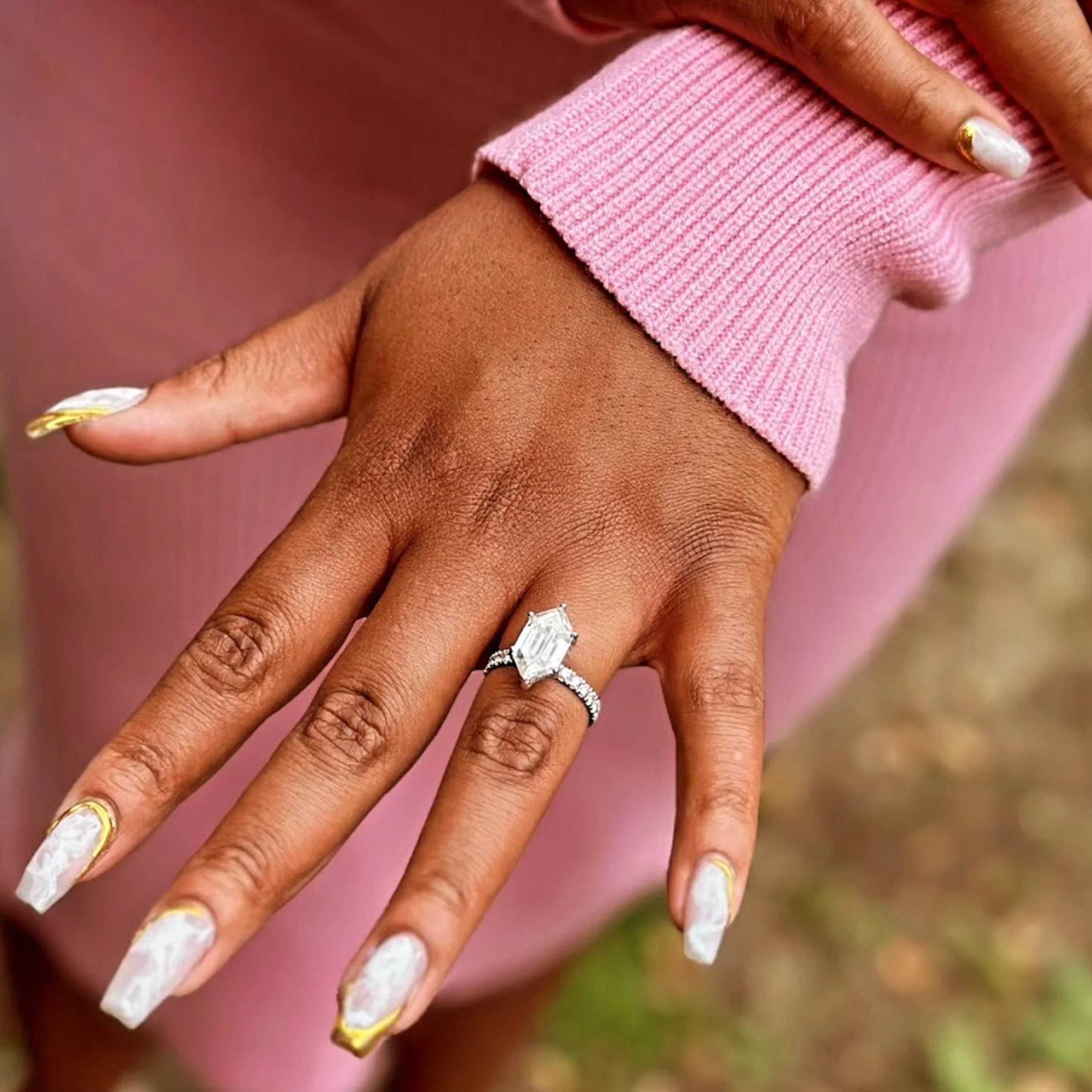
From there, we sketch — typically three or four directions, sometimes rendered in color to help a client visualize the design more concretely. This is a deliberately iterative stage. We're not trying to land on the final design in round one; we're learning, from what a client says no to, exactly what they're actually looking for. One recent client's fiancé handed us reference images of a pear-shaped diamond and said that was "exactly" what she wanted. We designed three pear options — and when we finally spoke with her directly, she was happy, but not thrilled. It took one honest conversation to learn she wanted a center stone shape almost no one else had. She ended up choosing an elongated hexagon cut that never would have surfaced from the original brief alone.
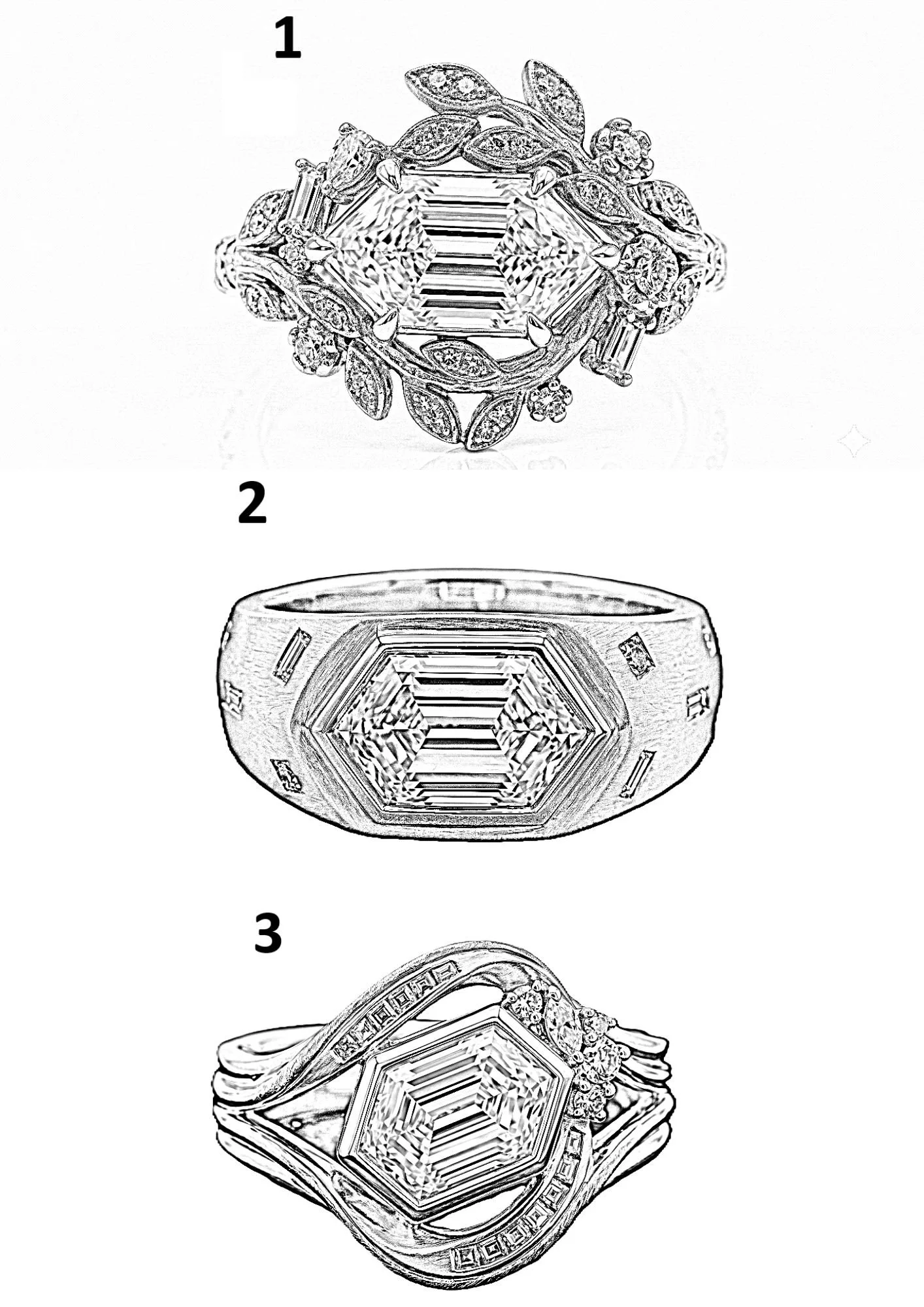
Step Four: CAD — Where the Design Becomes Real
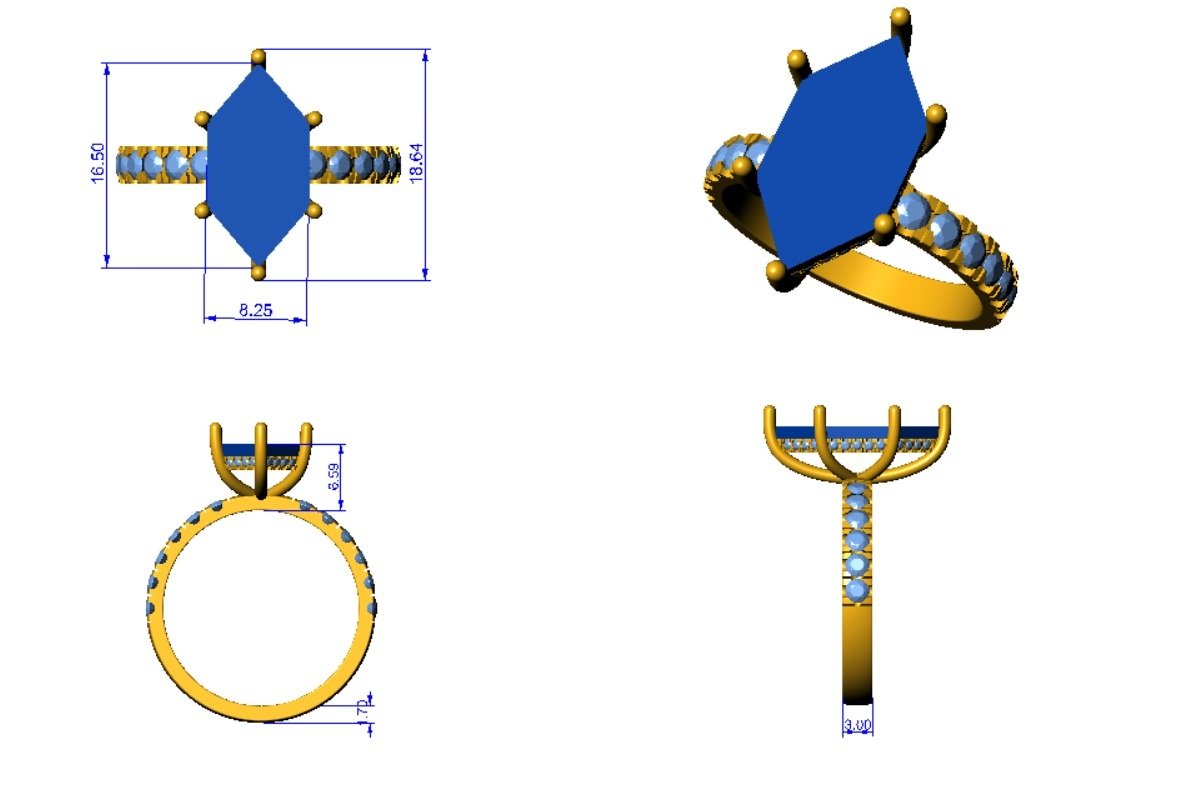
Once a direction is chosen, the piece moves into CAD. This is genuinely the moment a concept stops being an idea and starts being engineered. Sketches can be more elaborate than what's physically or structurally possible, and CAD is where that gets tested — proportions, structural integrity, manufacturability. This stage typically takes anywhere from a day to a week depending on complexity, and it's also where our design standards get applied. At Gerard Rene, for example, we generally avoid bands below 2.5mm in designs intended for everyday wear, because thinner structures can be more vulnerable to bending or deformation.
Step Five: Stone Sourcing
Whether the center stone is a diamond or a colored gemstone, sourcing follows the same underlying discipline, adjusted for what each material rewards. For diamonds, cut quality matters more than chasing the highest color and clarity grade — a slightly lower color can read beautifully in certain gold tones, and a stone that isn't clinically perfect often has more character. For gemstones, the same logic applies, with even more weight given to how the stone's individual personality — its inclusions, its color zoning, the way light moves through it — will read in the final piece. Every stone is vetted for its cut, its visual presence, and its documentation before it's approved for a commission. Depending on the client, this sourcing sometimes happens before design work begins, and sometimes runs alongside it.
Step Six: Renders and Refinement
Once the CAD is finalized, we provide both photo and video renders so the design can be evaluated from every angle before production begins. This is the last checkpoint before the piece becomes physical — the moment to confirm the proportions, the stone placement, and the overall composition feel right.
Step Seven: Production
From approved renders, the ring moves into fabrication. Depending on the design, this may involve hand fabrication, casting, or a combination of both — hand fabrication for crisp, dense, structurally demanding architecture, casting for sculptural or organic forms that would be nearly impossible to achieve any other way. Problems can surface here that never showed up in CAD: a setting that needs reinforcing, a stone that needs to be re-secured, a material behaving differently than expected. We solve these as they arise rather than compromising the final piece to protect a deadline.
Step Eight: Quality Control
Before any ring leaves the atelier, it's reviewed under magnification — prong thickness, prong alignment, band durability, stone security. If it doesn't meet that standard, it isn't finished yet, regardless of the calendar.
What Makes This Bespoke, Not Custom
Customization is choosing from a menu — swapping a setting, resizing a stone, picking from six hundred pre-built templates. Bespoke is different in kind, not just degree. It's design built entirely around a person's story, informed by a real conversation about who they are and why this piece matters, rather than assembled from existing options. That distinction is the entire premise of this atelier.
Ready to begin? Start your commission, browse past one-of-one pieces, or read about what determines the price of a custom engagement ring to understand where the investment actually goes.
How Long Does It Take to Commission a Custom Ring?
Six weeks or six months? The honest answer depends on more than most jewelers admit. Here's what actually drives a custom ring's timeline, stage by stage.
If you search "how long does it take to commission a custom ring," you'll find a lot of vague answers: "six to eight weeks," "it depends," "ask your jeweler." None of it tells you what's actually happening during that time, or why one commission takes five weeks and another takes five months.
At Gerard Rene, a private atelier building one-of-one engagement rings and heirlooms in New York City, timeline isn't something we hedge around. We tell clients upfront what to expect, because the honest answer is more useful than a comforting one. Here is what the process actually looks like, stage by stage.
The First Conversation Sets the Clock
Before anything is sketched, we need to understand who the ring is for — not just a budget and a metal preference, but the relationship itself. How long the couple has been together, how they met, what the wearer's day-to-day life looks like, whether she's drawn to a particular stone shape or detail and why. This conversation isn't a formality. It's the foundation the entire design rests on, and rushing it is the single fastest way to add weeks to a project later, because a design built on incomplete information almost always needs to be reworked.
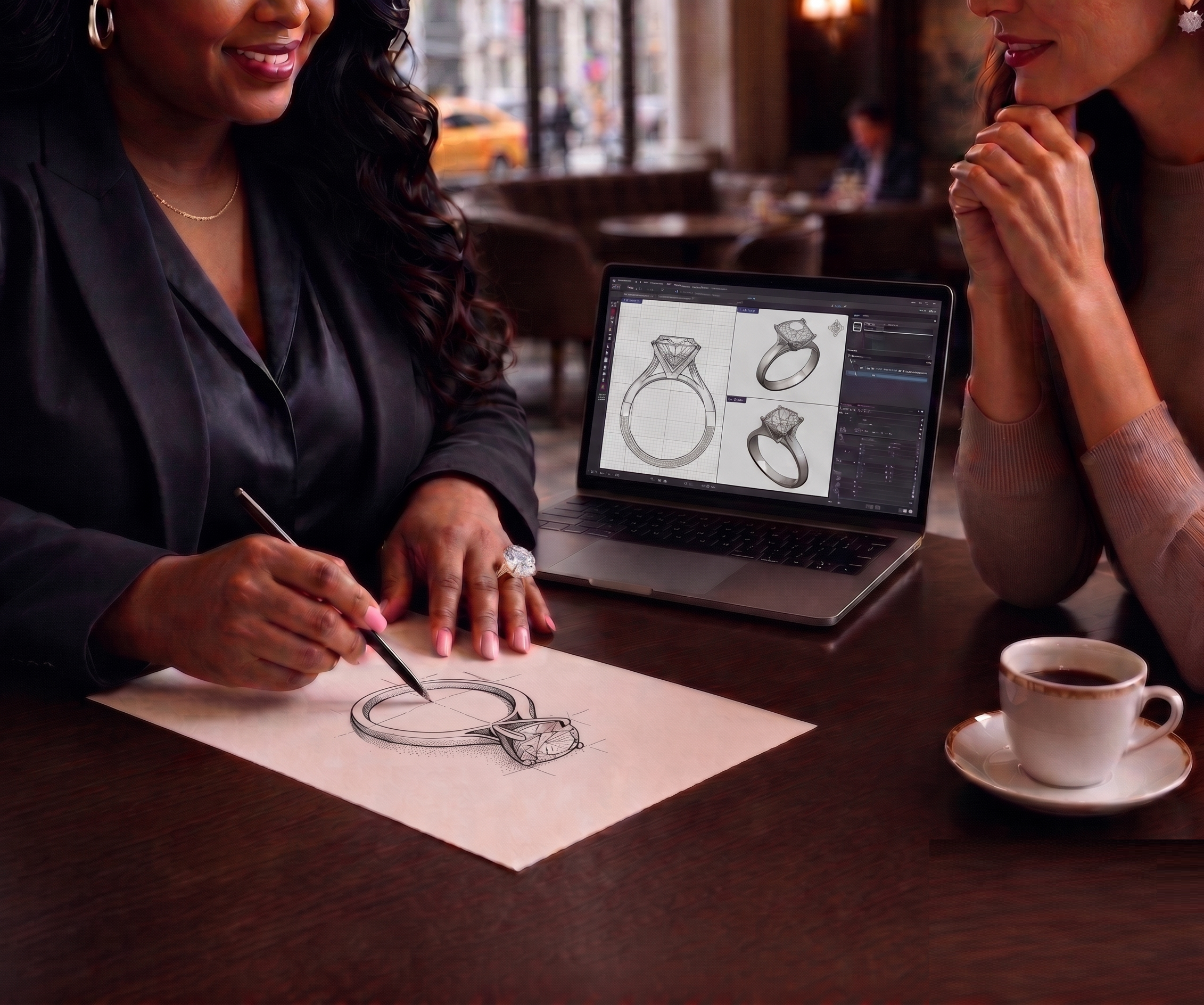
Sketching: Typically the Fastest Stage
Once we understand the story, we move into concept sketches — usually three or four directions, refined based on what resonates and what doesn't. This stage moves quickly, often within days, because it's iterative by nature: we're not trying to get it perfect on the first pass, we're trying to learn what you respond to so the next round is sharper.
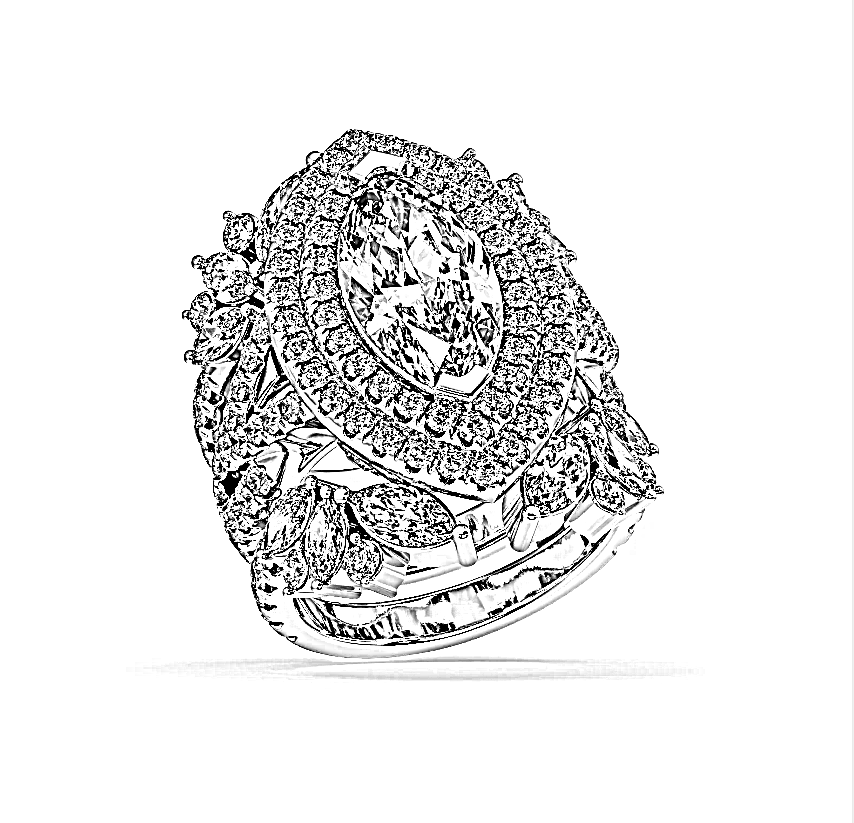
Original sketch of the Alumna wedding set by Gerard Rene atelier
CAD: One Day to One Week
Once a direction is chosen, the piece moves into CAD (computer-aided design), which is where a sketch either proves it can become a real, wearable object or reveals that it needs to be re-engineered. This stage can take anywhere from a single day to a full week, depending on the complexity of the design. An intricate, sculptural piece with hand-engraving, unusual stone placement, or asymmetrical settings simply requires more design iterations than a clean, architectural solitaire.
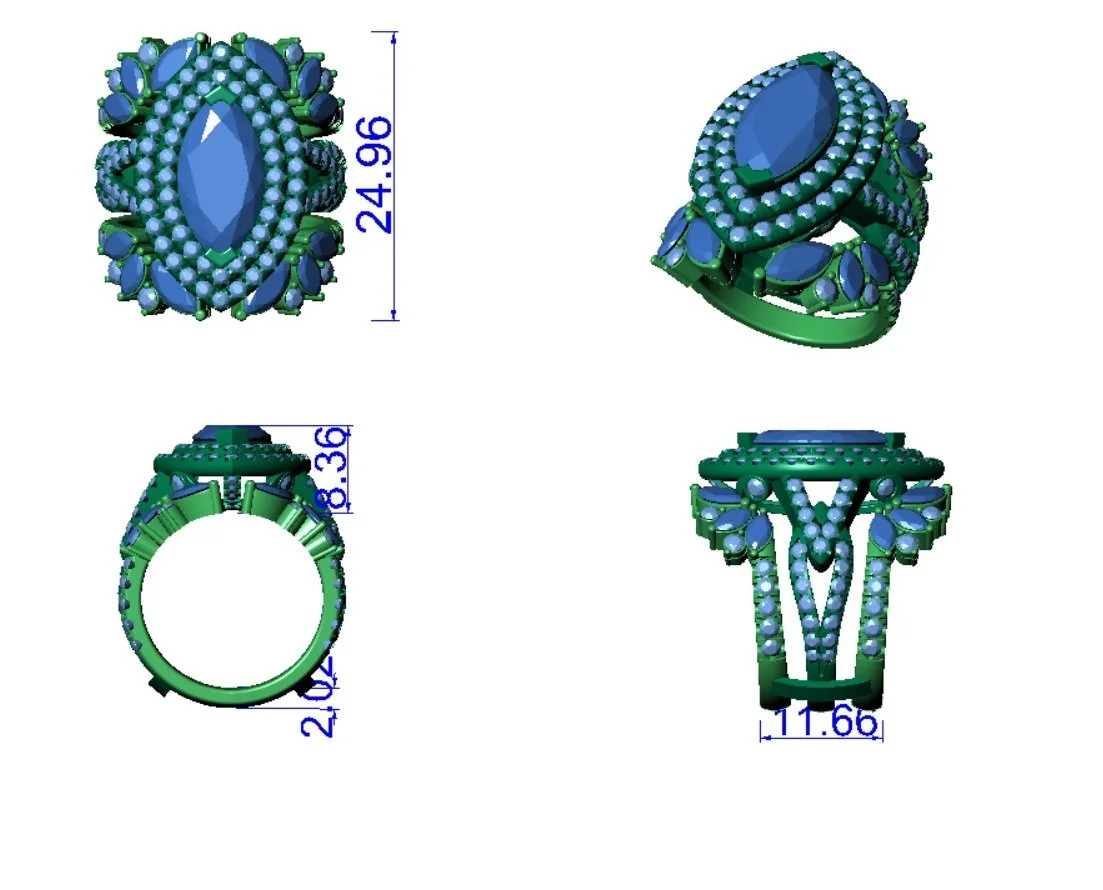
Original CAD of the Alumna wedding set by Gerard Rene atelier
This is also the stage where structural decisions get made that a client will never see but will absolutely feel over the life of the ring. At Gerard Rene, for example, we generally avoid bands below 2.5mm in designs intended for everyday wear, because thinner structures can be more vulnerable to bending or deformation over time. If a design concept conflicts with that kind of structural consideration, we solve it here, before production, rather than after.
Stone Sourcing Can Run in Parallel — or Add Time
If your design centers on a stone we already have vetted and in hand, sourcing adds nothing to the timeline. If it requires locating a specific stone — a particular color of sapphire, a rare cut, a gemstone with a certain character — this can extend the timeline meaningfully, because we don't compromise on documentation or provenance to save a week. Every stone that enters the atelier is vetted for its paper trail, its cut, and its visual presence, and that process takes as long as it takes.
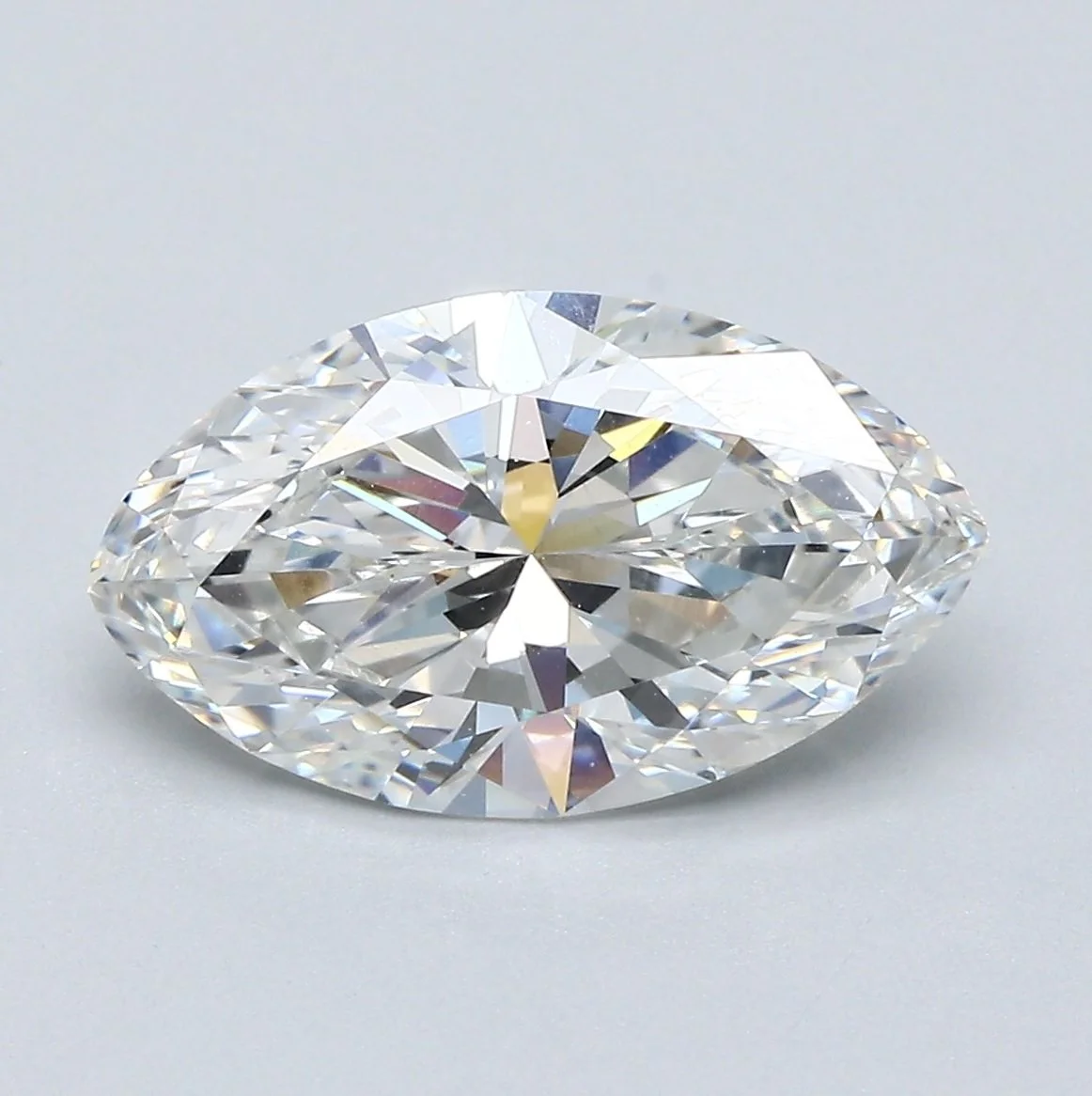
Marquise cut diamond sourced by Gerard Rene atelier
Production and Quality Control
Once the CAD is approved and stones are secured, the piece moves into fabrication. This is where the design becomes physical — and where the most legitimate reasons for a timeline to expand tend to appear. A setting that needs to be adjusted to properly secure a stone. A material behaving differently than expected. A structural detail that needs to be reinforced once it exists in metal rather than on screen. We'd rather solve these issues properly than ship a piece that won't hold up.
Before anything leaves the atelier, it goes through an internal review under magnification — checking prong thickness, band integrity, and stone security. If a piece doesn't meet that standard, it doesn't go out the door yet, regardless of what the calendar says.
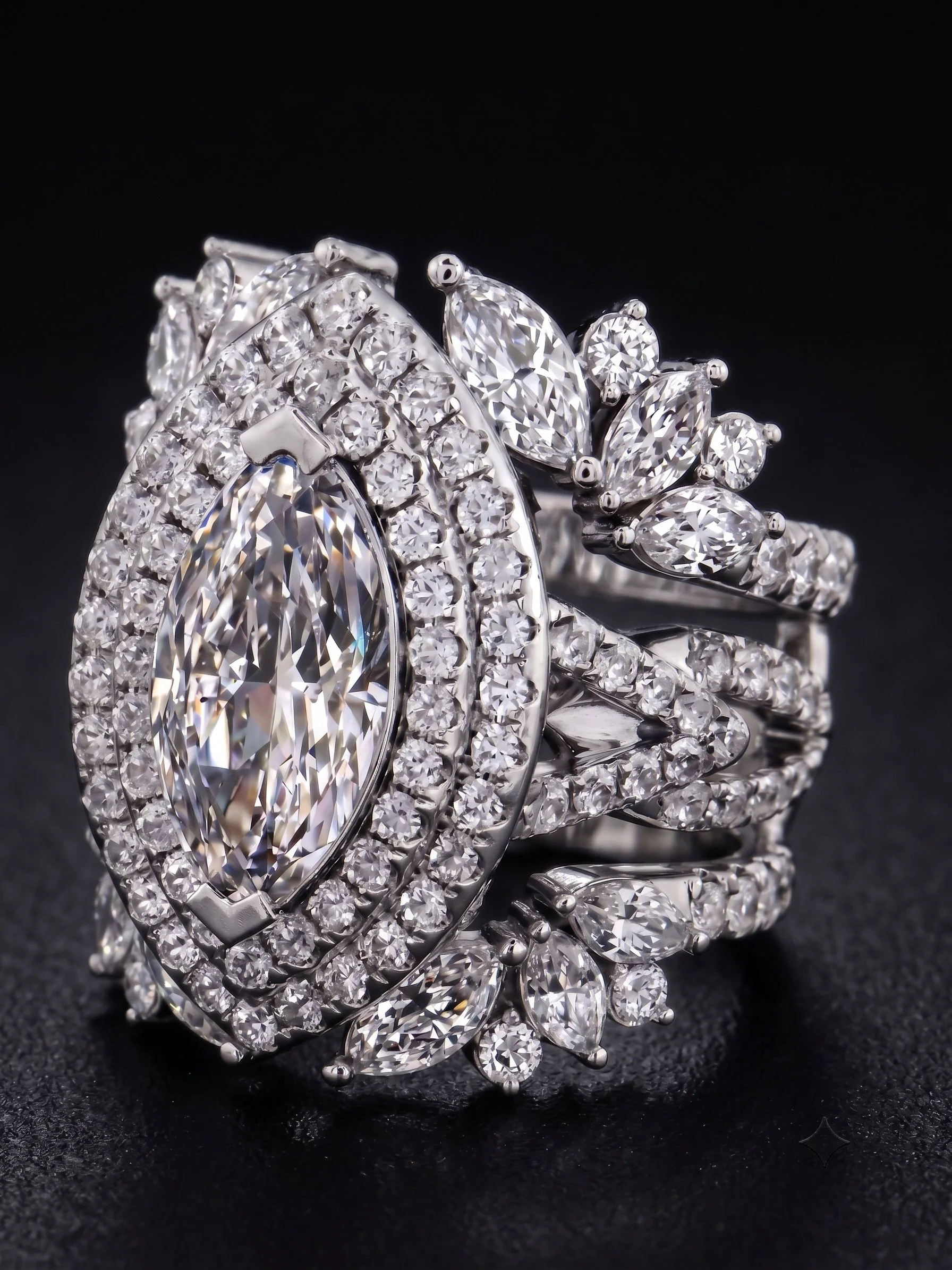
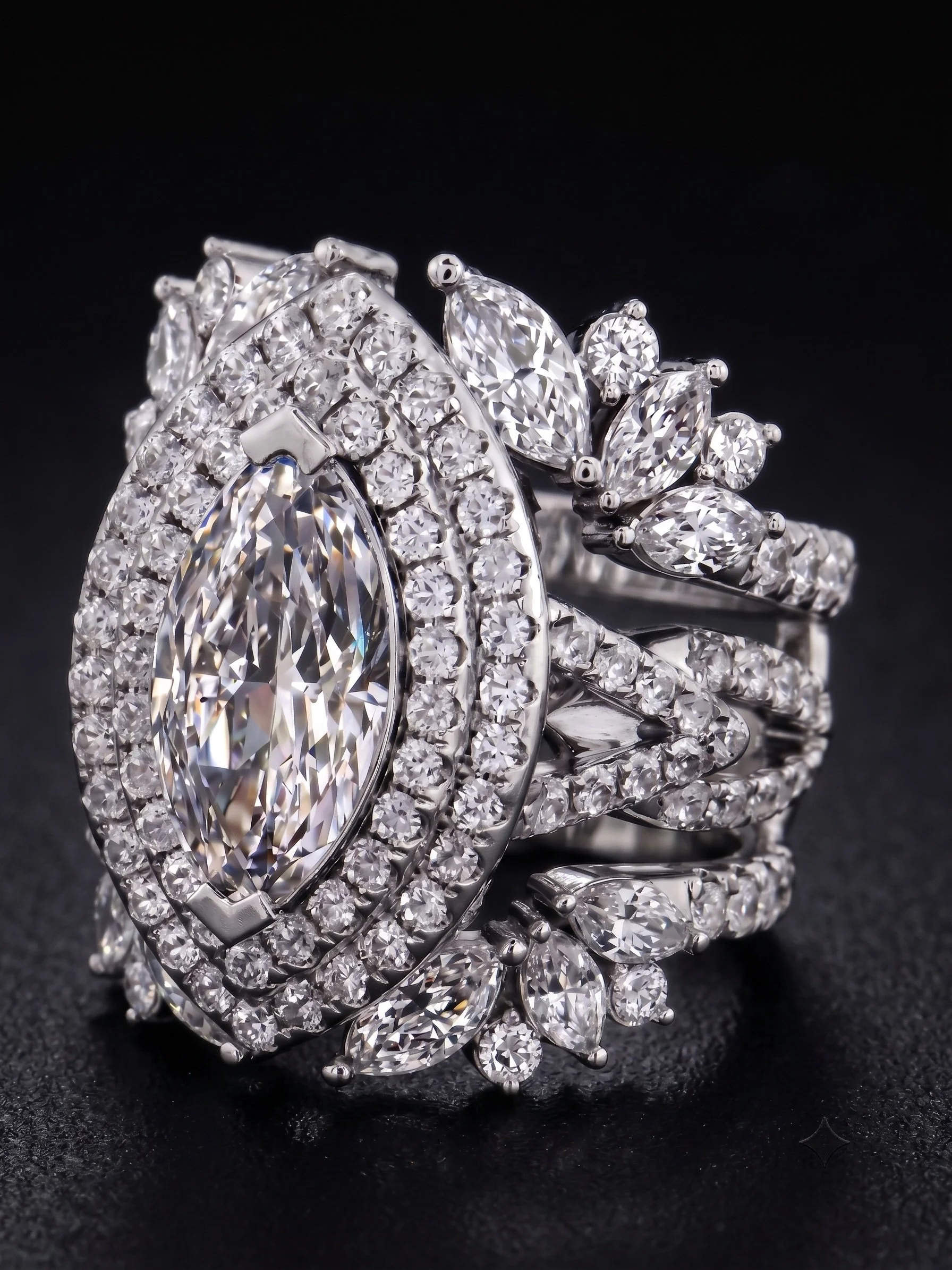
The Alumna wedding set by Gerard Rene atelier
So, Realistically — How Long?
For a design built around stones already sourced, expect the process from first consultation to finished ring to run several weeks. For a piece requiring a specific gemstone search, more elaborate hand-finishing, or a highly complex sculptural design, plan for a longer window — often a few months. The honest range depends entirely on complexity and sourcing, which is exactly why we walk every client through a realistic timeline at the start rather than a marketing number designed to sound fast.
What Actually Extends a Timeline
A design that changes direction significantly partway through
A specific, rare stone that takes time to locate and vet properly
Structural problems discovered mid-build that require re-engineering
A client who isn't yet clear on the "why" behind the piece, which tends to produce more revisions
What Doesn't Have to Slow You Down
Knowing what you want — and, just as importantly, why you want it — is the single biggest accelerant in this entire process. Clients who arrive with a clear sense of the story they want the ring to tell move through concept and CAD faster than those still discovering their own taste in real time. Either way, we meet you where you are. But it's worth knowing that clarity, more than budget or complexity, is often what determines how quickly a commission moves.
If you're planning a proposal and working backward from a date, timeline is exactly the kind of thing worth discussing before you fall in love with a design — not after. Schedule a consultation to talk through your timeline honestly, or explore the full bespoke process from start to finish.