
How Long Does It Take to Commission a Custom Ring?
If you search "how long does it take to commission a custom ring," you'll find a lot of vague answers: "six to eight weeks," "it depends," "ask your jeweler." None of it tells you what's actually happening during that time, or why one commission takes five weeks and another takes five months.
At Gerard Rene, a private atelier building one-of-one engagement rings and heirlooms in New York City, timeline isn't something we hedge around. We tell clients upfront what to expect, because the honest answer is more useful than a comforting one. Here is what the process actually looks like, stage by stage.
The First Conversation Sets the Clock
Before anything is sketched, we need to understand who the ring is for — not just a budget and a metal preference, but the relationship itself. How long the couple has been together, how they met, what the wearer's day-to-day life looks like, whether she's drawn to a particular stone shape or detail and why. This conversation isn't a formality. It's the foundation the entire design rests on, and rushing it is the single fastest way to add weeks to a project later, because a design built on incomplete information almost always needs to be reworked.
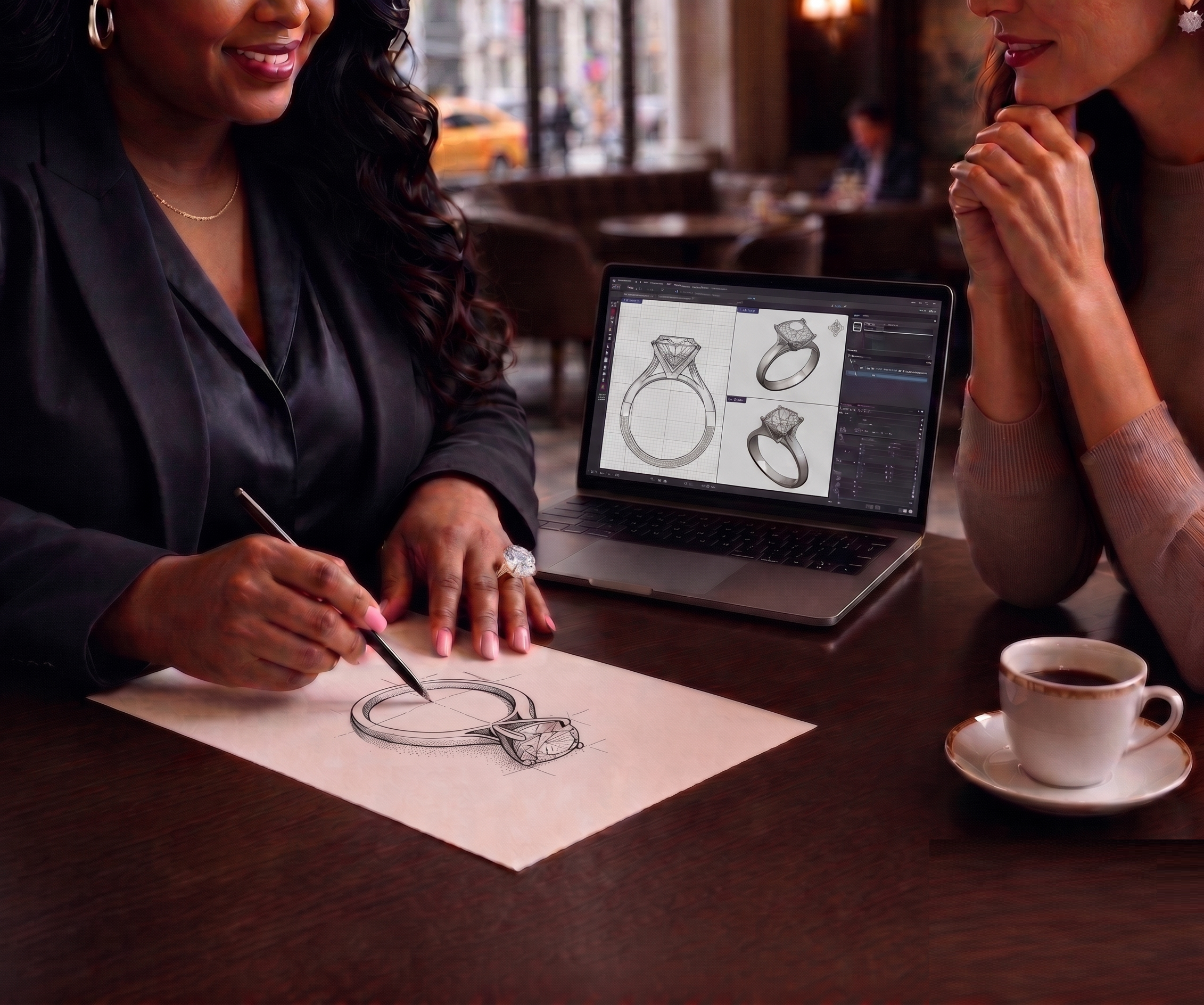
Sketching: Typically the Fastest Stage
Once we understand the story, we move into concept sketches — usually three or four directions, refined based on what resonates and what doesn't. This stage moves quickly, often within days, because it's iterative by nature: we're not trying to get it perfect on the first pass, we're trying to learn what you respond to so the next round is sharper.
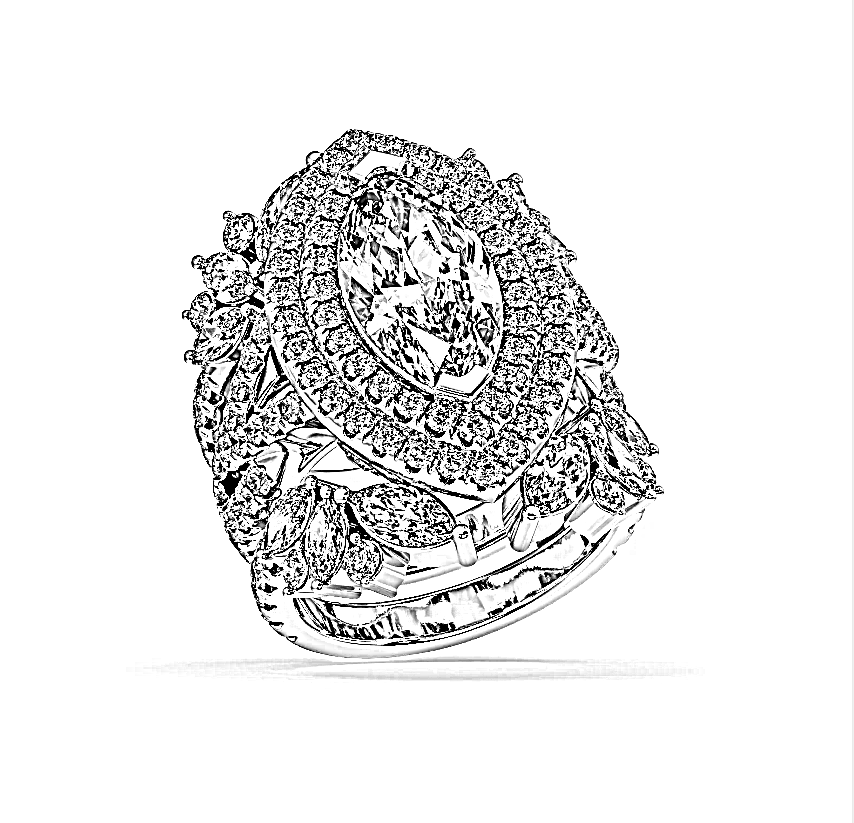
Original sketch of the Alumna wedding set by Gerard Rene atelier
CAD: One Day to One Week
Once a direction is chosen, the piece moves into CAD (computer-aided design), which is where a sketch either proves it can become a real, wearable object or reveals that it needs to be re-engineered. This stage can take anywhere from a single day to a full week, depending on the complexity of the design. An intricate, sculptural piece with hand-engraving, unusual stone placement, or asymmetrical settings simply requires more design iterations than a clean, architectural solitaire.
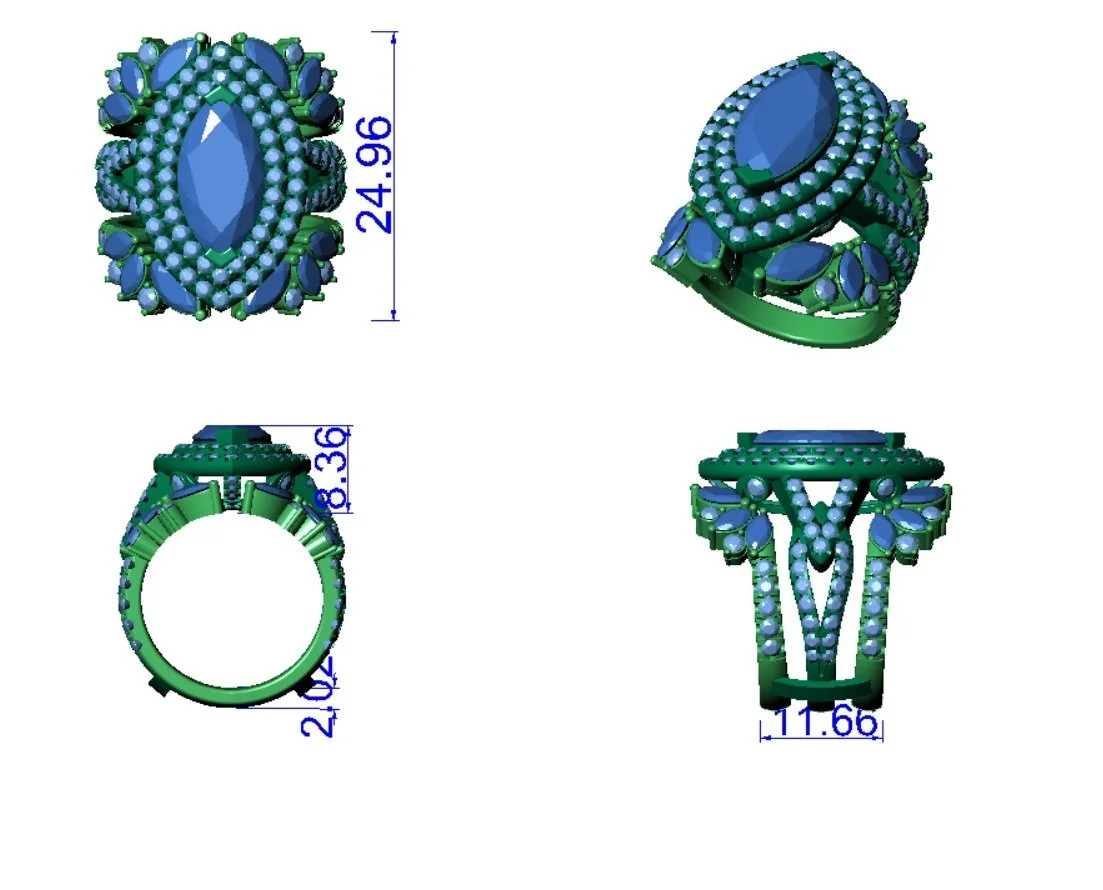
Original CAD of the Alumna wedding set by Gerard Rene atelier
This is also the stage where structural decisions get made that a client will never see but will absolutely feel over the life of the ring. At Gerard Rene, for example, we generally avoid bands below 2.5mm in designs intended for everyday wear, because thinner structures can be more vulnerable to bending or deformation over time. If a design concept conflicts with that kind of structural consideration, we solve it here, before production, rather than after.
Stone Sourcing Can Run in Parallel — or Add Time
If your design centers on a stone we already have vetted and in hand, sourcing adds nothing to the timeline. If it requires locating a specific stone — a particular color of sapphire, a rare cut, a gemstone with a certain character — this can extend the timeline meaningfully, because we don't compromise on documentation or provenance to save a week. Every stone that enters the atelier is vetted for its paper trail, its cut, and its visual presence, and that process takes as long as it takes.
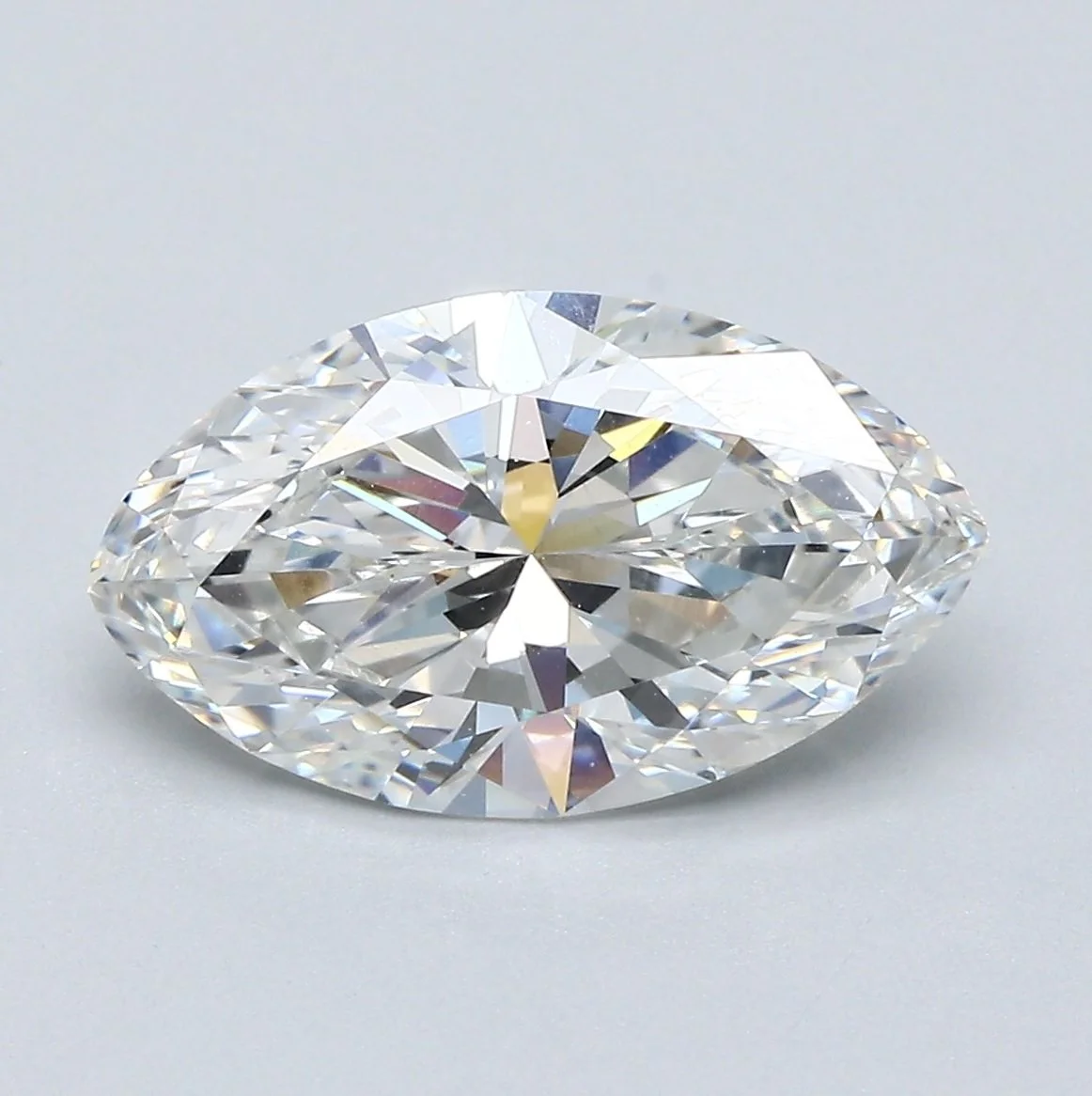
Marquise cut diamond sourced by Gerard Rene atelier
Production and Quality Control
Once the CAD is approved and stones are secured, the piece moves into fabrication. This is where the design becomes physical — and where the most legitimate reasons for a timeline to expand tend to appear. A setting that needs to be adjusted to properly secure a stone. A material behaving differently than expected. A structural detail that needs to be reinforced once it exists in metal rather than on screen. We'd rather solve these issues properly than ship a piece that won't hold up.
Before anything leaves the atelier, it goes through an internal review under magnification — checking prong thickness, band integrity, and stone security. If a piece doesn't meet that standard, it doesn't go out the door yet, regardless of what the calendar says.
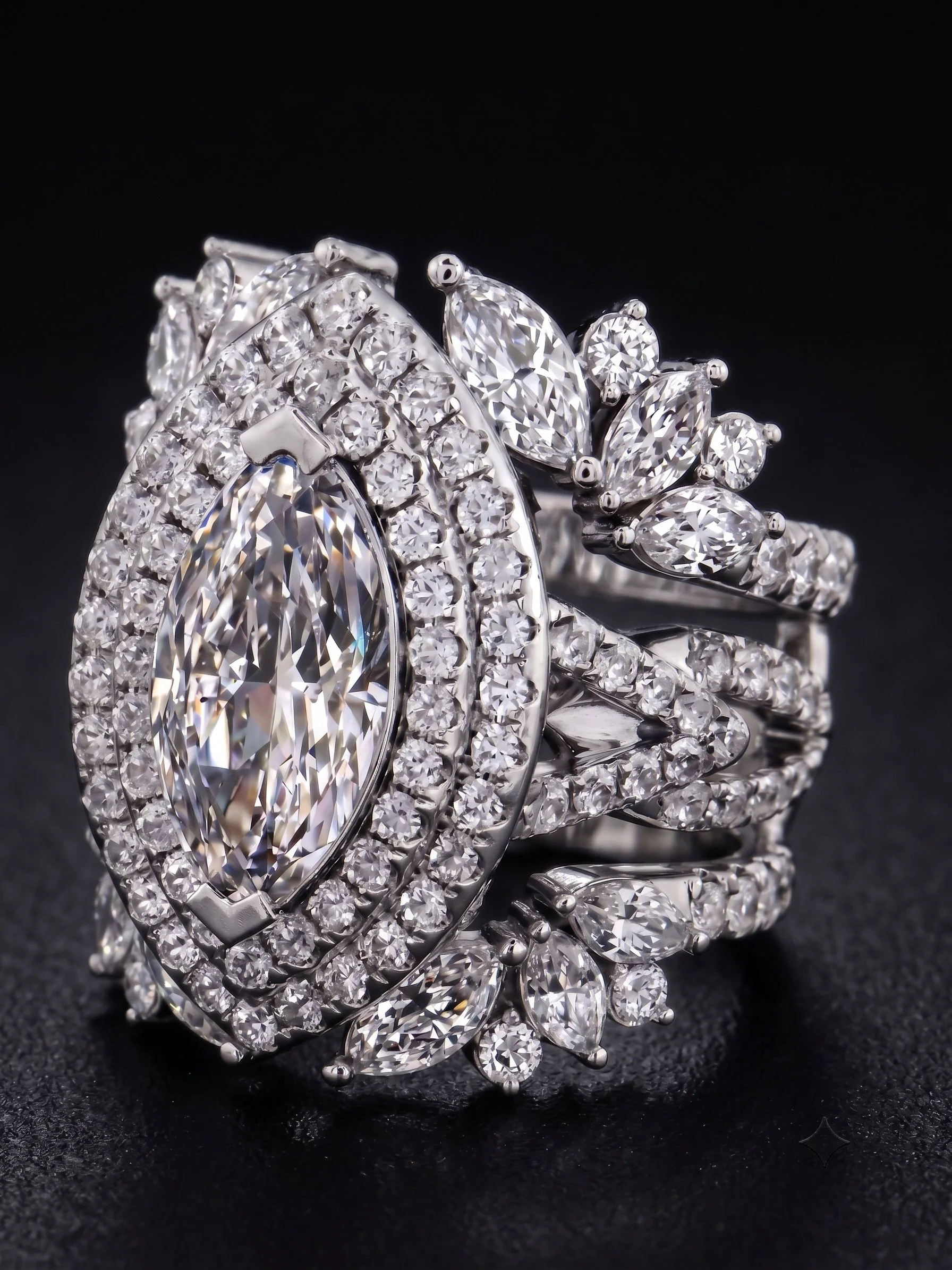
The Alumna wedding set by Gerard Rene atelier
So, Realistically — How Long?
For a design built around stones already sourced, expect the process from first consultation to finished ring to run several weeks. For a piece requiring a specific gemstone search, more elaborate hand-finishing, or a highly complex sculptural design, plan for a longer window — often a few months. The honest range depends entirely on complexity and sourcing, which is exactly why we walk every client through a realistic timeline at the start rather than a marketing number designed to sound fast.
What Actually Extends a Timeline
A design that changes direction significantly partway through
A specific, rare stone that takes time to locate and vet properly
Structural problems discovered mid-build that require re-engineering
A client who isn't yet clear on the "why" behind the piece, which tends to produce more revisions
What Doesn't Have to Slow You Down
Knowing what you want — and, just as importantly, why you want it — is the single biggest accelerant in this entire process. Clients who arrive with a clear sense of the story they want the ring to tell move through concept and CAD faster than those still discovering their own taste in real time. Either way, we meet you where you are. But it's worth knowing that clarity, more than budget or complexity, is often what determines how quickly a commission moves.
If you're planning a proposal and working backward from a date, timeline is exactly the kind of thing worth discussing before you fall in love with a design — not after. Schedule a consultation to talk through your timeline honestly, or explore the full bespoke process from start to finish.