
Luxury Has a Branding Problem: Why Significance Matters More Than Exclusivity
Luxury has become obsessed with looking expensive. A case for significance over manufactured scarcity, and what fifty years of meaning actually requires.
Luxury has become obsessed with looking expensive.
Spend enough time in the jewelry industry and you'll notice the same playbook everywhere: limited editions, waitlists, celebrity endorsements, logos, exclusivity campaigns, carefully manufactured scarcity. The assumption is simple: if fewer people can have it, people will want it more.
I understand why that works, but I don't think it's what makes something truly valuable.
The Moment My Definition of Luxury Changed
My definition of luxury didn't shift decades ago. It shifted in 2025, at The Winter Show at the Park Avenue Armory.
I went expecting to admire exceptional craftsmanship. I didn't expect to rethink my entire philosophy of value.
That year's exhibition felt different. It felt less like an antiques fair and more like walking through centuries of human imagination. An extraordinary Art Deco coffee and tea service. A Tiffany Studios Oriental Poppy table lamp whose light seemed almost alive. Furniture, paintings, sculpture, and silver carrying price tags into the hundreds of thousands of dollars.
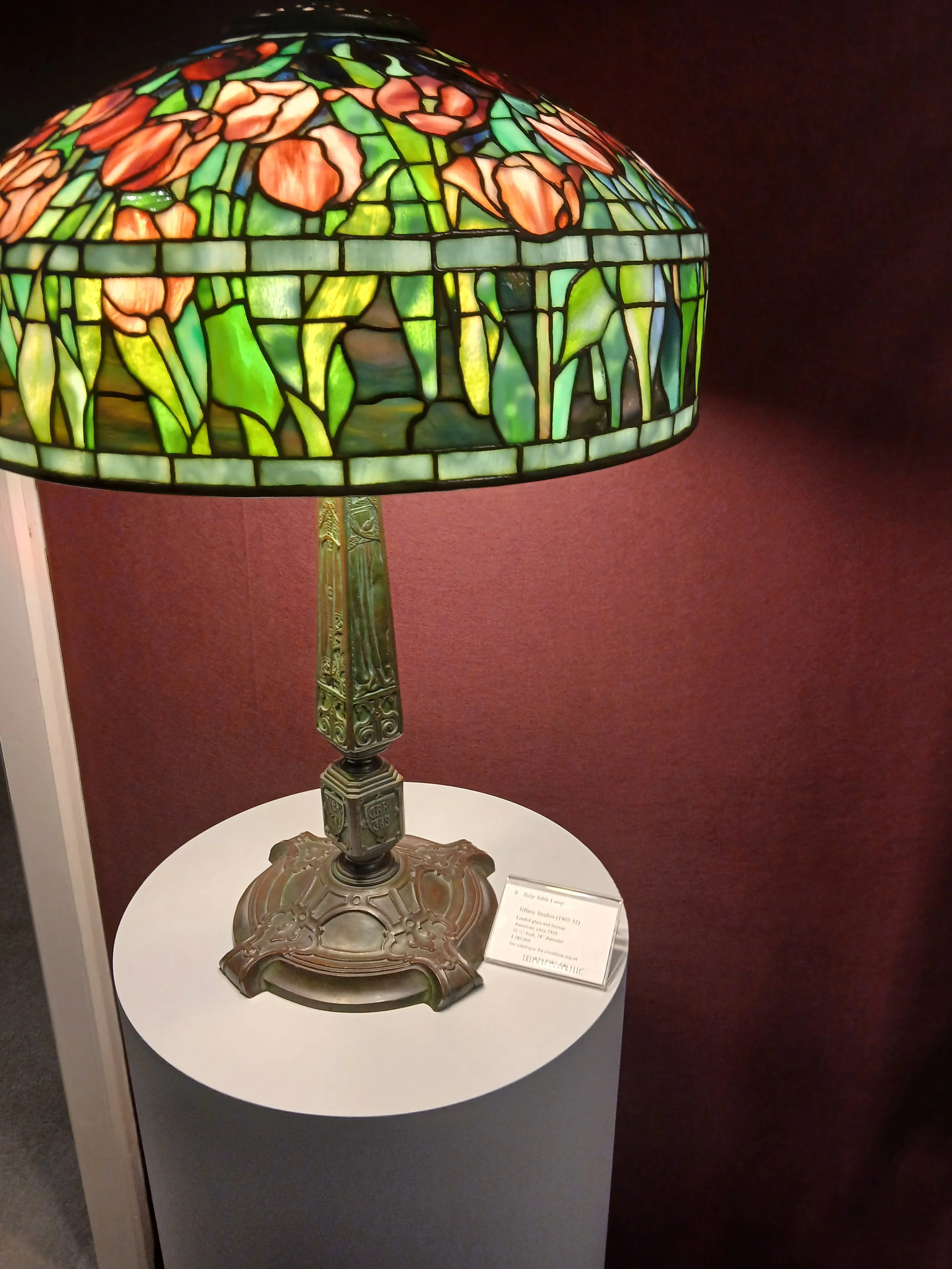
Tiffany Studios leaded glass lamp displayed at The Winter Show 2025, illustrating craftsmanship and artistic vision beyond material value.
None of it captivated me because it was expensive. It captivated me because every piece had something to say. The Tiffany lamp was remarkable because someone imagined light differently. The Art Deco silver was beautiful because an artist believed geometry could communicate elegance.
Standing there, I realized I wasn't looking at expensive objects. I was looking at conviction made physical. Every brushstroke, carving, and imperfection existed because someone believed their vision was worth preserving.
The luxury was never the price tag. It was the honesty behind the object. That realization shapes everything I believe about who Gerard Rene is as an atelier.
Jewelry Should Preserve More Than Wealth
People often ask whether jewelry is a good investment. Sometimes it is. Sometimes it isn't. I think that's the wrong place to start.
The better question: what is this piece preserving that would otherwise be forgotten? A marriage. The birth of a child. A family's homeland. A season of grief. A personal transformation. The memory of someone who changed your life.
When jewelry carries those things, it stops being decoration. It becomes history, which is where I think real luxury jewelry begins.
Scarcity Isn't the Point. Meaning Is.
Scarcity has become one of luxury's favorite marketing tools: limited releases, artificial waitlists, manufactured shortages, all implying the same thing. If fewer people can buy it, it must be more valuable.
I don't reject scarcity entirely. Some things genuinely are rare: a remarkable gemstone, master craftsmanship, time, an original idea.
Gerard Rene creates one-of-one bespoke jewelry and high jewelry pieces, but not because scarcity itself is the product. Every bespoke commission is built around one person's history, relationships, memories, beliefs, and future. Every high jewelry piece is conceived as an individual work of art rather than a design intended for replication, which is why every piece in In Your Dreams exists exactly once.
If I reproduced those pieces over and over simply because they sold well, I wouldn't just diminish their exclusivity. I would erase the very reason they were created.
Our exclusivity isn't manufactured through artificial restriction. It's the natural consequence of refusing to duplicate a story that was never meant to belong to anyone else.
Trends Have Expiration Dates. Meaning Doesn't.
The jewelry industry runs on constant reinvention: elongated diamonds one year, hidden halos the next, paper-thin bands after that. Eventually every trend disappears, replaced by the next set of rules. That business model depends on your taste expiring.
Mine doesn't. I want someone wearing a Gerard Rene piece fifty years from now to feel exactly what they felt the day they received it, not because it came back in style, but because its story never stopped mattering.
Price Should Follow Substance
I don't think luxury has a pricing problem. I think it has a justification problem.
Some objects genuinely deserve extraordinary prices: museum-quality paintings, master sculpture, historic furniture, rare gemstones. Jewelry belongs in that conversation when the work justifies it. When extraordinary pricing reflects extraordinary craftsmanship, rare materials, and real artistic vision, I have no objection to it. What I object to is luxury pricing that relies on branding alone to justify itself, with nothing underneath it.
Every person who contributes to a piece (the miner, the cutter, the polisher, the setter, the engraver) deserves to be paid fairly for it. Luxury shouldn't exist because someone further down the supply chain was underpaid. It should elevate everyone whose hands made the work possible.
How My Thinking About Lab-Grown Diamonds Changed
Early in my career, I generally supported clients choosing lab-grown diamonds over natural stones if it let them own a larger diamond within budget.
Looking back, that advice was incomplete because I was asking the wrong question. Today I start somewhere different: what are you actually trying to accomplish? Owning a beautiful ring is one conversation. Maximizing visual size for a given budget is another. Building a bespoke heirloom that carries both emotional and material significance for future generations is a different conversation entirely.
Our commission process begins in that third conversation. Before we discuss gemstones, we talk about what you're trying to preserve. Once that's clear, the material usually becomes obvious. Clients deserve honesty, not a sales pitch, and that honesty is the foundation of our process from the very first conversation.
What Gerard Rene Actually Creates
People often assume I make jewelry. I don't think that's quite right. I embed stories into metal and stone: sometimes celebrating a marriage, sometimes honoring someone who's passed, sometimes marking the birth of a child or a person's own transformation. Every consultation starts with the same question: why? Not because sentimentality sells, but because that answer shapes every decision after it: the gemstones, the engineering, the symbolism, the engraving.
Fifty Years From Now
Whether someone commissions a bespoke ring or acquires a one-of-one Gerard Rene high jewelry piece, I hope their first reaction isn't "this is expensive." I hope it's "this belongs in my story."
Then I think fifty years ahead. A granddaughter or grandson opening a jewelry box, wanting to know who wore it, why it was made, what it survived, what it meant.
At that point the jewelry has stopped being a luxury good. It's become part of a family's mythology. Not simply an object that appreciates in value, but one that appreciates in meaning.
If you're building a piece meant to outlive trends, and maybe outlive you, I'd be glad to help tell that story. Join the Collector List to stay close to the atelier, or begin a private commission conversation below.
What You Are Actually Paying For When You Commission a Custom Engagement Ring in NYC
What a custom engagement ring commission in NYC actually pays for with Gerard Rene, beyond the diamond: judgment, engineering, and a piece built to outlive the moment it was made for.
When You Commission a Ring from Gerard Rene, You're Not Buying Jewelry. You're Investing in Permanence.
A client arrives expecting to talk about diamonds. They have a Pinterest board full of inspiration photos, a rough budget in mind, and a handful of questions about carat weight or color grades. They assume we'll spend the next hour comparing gemstones.
There's a moment during almost every consultation when that expectation changes. Instead of talking stones, I ask a different question: why this ring? Not why this shape, or why this budget. Why this moment?
The answer is rarely about jewelry. It's usually about the person they're becoming.
A custom engagement ring has the potential to outlive everyone who first gave it meaning. Long after the flowers have wilted and the wedding venue has hosted a hundred other celebrations, the ring remains. Eventually, it may belong to a child or grandchild who never met the couple who first exchanged it.
That changes how I think about design. When you commission a ring from Gerard Rene, you're not simply buying a piece of jewelry. You're commissioning something that may become part of your family's visual language for generations, and that deserves more than shopping from a spreadsheet.
Beyond the Four Cs
The jewelry industry has done an exceptional job teaching consumers how to compare diamonds: cut, color, clarity, carat weight. Those characteristics matter, and they're useful for understanding a gemstone's physical qualities.
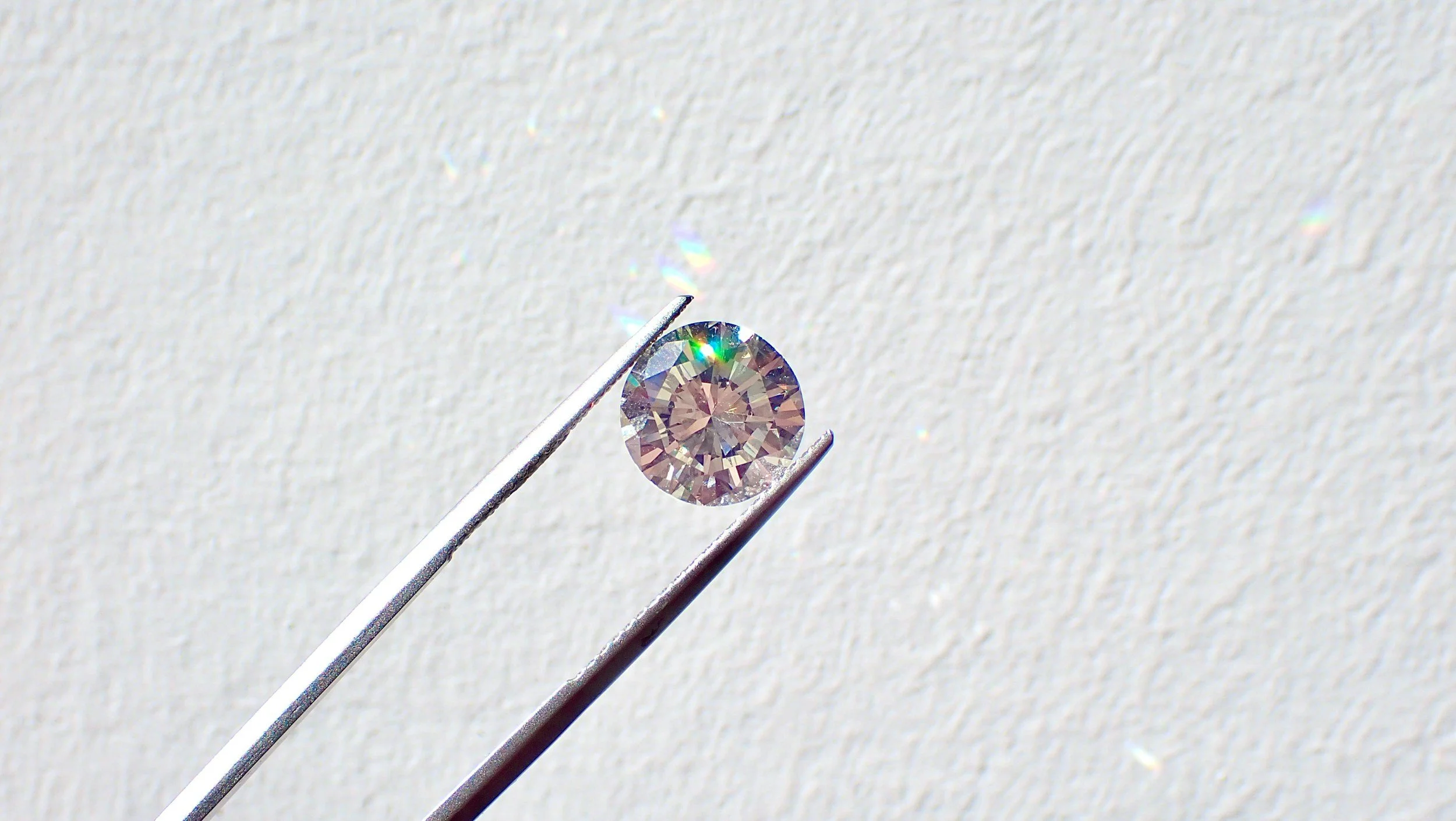
What they don't explain is why one ring stays with someone forever while another is eventually forgotten. A grading report can tell you how a diamond performs under laboratory conditions. It can't tell you whether the proportions feel harmonious on your hand, whether the design reflects your personality, or whether you'll still love looking at it thirty years from now.
Most importantly, it can't tell you whether the piece says anything meaningful about the life it represents.
Answering that question is the real starting point of custom design with Gerard Rene.
What I Actually Look At
When another jeweler shows me a finished piece, my eyes don't go straight to the center stone. I step back and look at the composition first: does the whole piece feel balanced, do the colors speak to one another, do the proportions create tension or harmony? I look at how the prongs interact with the geometry of the stone, whether they're simply holding the diamond in place or contributing to the architecture of the design.
Then I move closer. The engraving hidden inside the band. The finishing. The gallery beneath the stone. The transitions between one design element and another. Sometimes I find myself appreciating an ancient technique that's survived for centuries; other times I'm excited by a modern structural solution I haven't encountered before.
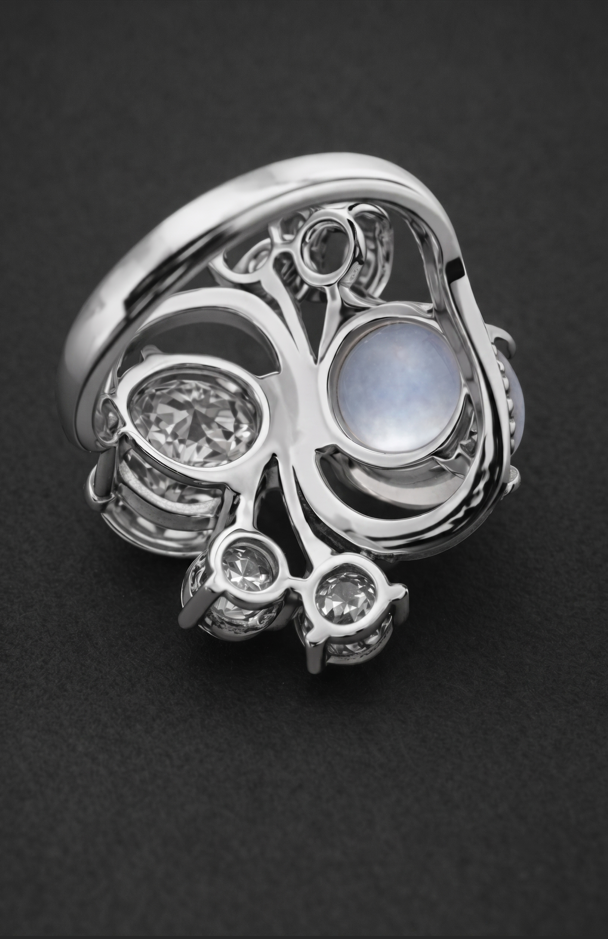
Underside detail of the Dreamwatcher one-of-one high jewelry ring, highlighting its sculptural gallery and handcrafted design.
When a gemstone is large enough, I often look for subtle inclusions, not because flaws are inherently undesirable, but because natural stones have personalities. Light moves differently through every crystal, and two diamonds with identical grading reports can feel completely different once they're in the hand. Jewelry is experienced with the eye, but it's remembered emotionally, and those two things aren't always measured the same way.
Engineering Is an Act of Love
Romance without structure doesn't last. Neither does jewelry.
Once a design moves from sketch to CAD and eventually to the workbench, my attention shifts almost entirely toward engineering: will this ring survive everyday life, will the stones stay secure, does the CAD preserve the original design intent or did something meaningful get lost in translation? Can someone wear this daily for decades without constantly worrying about repairs?
There are compromises I won't make. I don't design bands thinner than 2 millimeters. Thin bands have become fashionable because they make center stones appear larger, but they also wear down faster, bend more easily, and create structural problems over time. A ring shouldn't sacrifice longevity for a trend. Likewise, I avoid gemstones that aren't eye-clean unless that characteristic is intentionally part of the story we're telling. Every design decision should serve both beauty and permanence. If I know something is likely to fail, I won't build it just because it's popular. This same engineering discipline shapes our process from the first sketch to the final polish.
Sometimes the Best Advice Costs Me Money
People often assume custom jewelers are always trying to increase the final invoice. In reality, some of my favorite consultations end with clients spending less than they originally intended.
One gentleman came to me convinced he needed a three-carat diamond for his fiancée. Before we discussed stones, I asked about her: what was she like, how did she dress, what kind of jewelry did she already wear? He described someone petite, understated, and deeply minimalist. A three-carat round diamond would have dominated her hand; it would have reflected his expectations more than her personality.
I recommended something different instead: a one-carat oval, which naturally creates more visual coverage across the finger than a round of the same weight. She'd still have presence and elegance without sacrificing proportion. The recommendation reduced the cost significantly, and it also produced the better ring. My job isn't to sell the largest diamond available. It's to build the piece that's actually true to the person wearing it.
When Does Something Become Truly Custom?
This is probably where I disagree with much of the industry. Many people call a ring "custom" simply because it combines elements from a few inspiration photos. I'd call that customization, not custom.
A ring becomes truly custom when it answers a question only one person could ask. Maybe the center stone reminds someone of their grandmother. Maybe a flower represents where a proposal happened. Maybe an engraving quietly honors a child who changed everything, or the design carries a country, a faith, or a family history forward. Meaning is what turns decoration into authorship. Without that "why," you're just rearranging existing ideas.
A Ring That Could Only Exist for One Story
One of my favorite commissions came from a client from the Dominican Republic. He didn't ask me to build an extravagant ring. He asked me to tell a story: faith, forgiveness, healing, and his Taíno heritage, all within a single piece.
That request changed the design process from the start. I began researching Taíno history instead of browsing jewelry references, and discovered that Anacaona's name means "golden flower," which led me to the Rosa de Bayahíbe, the national flower of the Dominican Republic, found nowhere else on Earth. That flower became one side of the band. To honor the cacique Caonabo, I incorporated El Corral de los Indios on the opposite side. The central motif became an owl, an animal frequently depicted in Taíno cave art and tied to the spirit world and guardianship, with natural Larimar, the Dominican Republic's national gemstone, set as its eyes.
Every decision answered the same question: why. Nothing existed simply because it looked beautiful. Everything belonged. The finished piece became a conversation between history, identity, spirituality, and craftsmanship that no catalog could have produced. It's the kind of one-of-one, narrative-driven work you'll find throughout In Your Dreams.
What You're Really Paying For When You Commission Gerard Rene
When someone commissions a custom engagement ring from Gerard Rene, they're paying for far more than precious metal and gemstones. They're paying for judgment, for restraint, for engineering that protects future generations from preventable problems, and for someone willing to recommend the smaller diamond because it's the better choice. Mostly, they're paying for a process that begins with a person instead of a product.
People often assume I make jewelry. What I actually do is embed stories, memories, and identity into metal and stone. The jewelry is simply the medium.
I don't believe the value of a custom ring can ever be measured by its materials alone. The most enduring pieces are remembered not because they held the largest diamond, but because decades later, someone can still explain exactly why they were made.
Every Gerard Rene commission begins with one question: why. Everything else follows from there.
If you're ready to start that conversation, or simply want to understand what's possible, we'd welcome hearing your story.