
Luxury Has a Branding Problem: Why Significance Matters More Than Exclusivity
Luxury has become obsessed with looking expensive.
Spend enough time in the jewelry industry and you'll notice the same playbook everywhere: limited editions, waitlists, celebrity endorsements, logos, exclusivity campaigns, carefully manufactured scarcity. The assumption is simple: if fewer people can have it, people will want it more.
I understand why that works, but I don't think it's what makes something truly valuable.
The Moment My Definition of Luxury Changed
My definition of luxury didn't shift decades ago. It shifted in 2025, at The Winter Show at the Park Avenue Armory.
I went expecting to admire exceptional craftsmanship. I didn't expect to rethink my entire philosophy of value.
That year's exhibition felt different. It felt less like an antiques fair and more like walking through centuries of human imagination. An extraordinary Art Deco coffee and tea service. A Tiffany Studios Oriental Poppy table lamp whose light seemed almost alive. Furniture, paintings, sculpture, and silver carrying price tags into the hundreds of thousands of dollars.
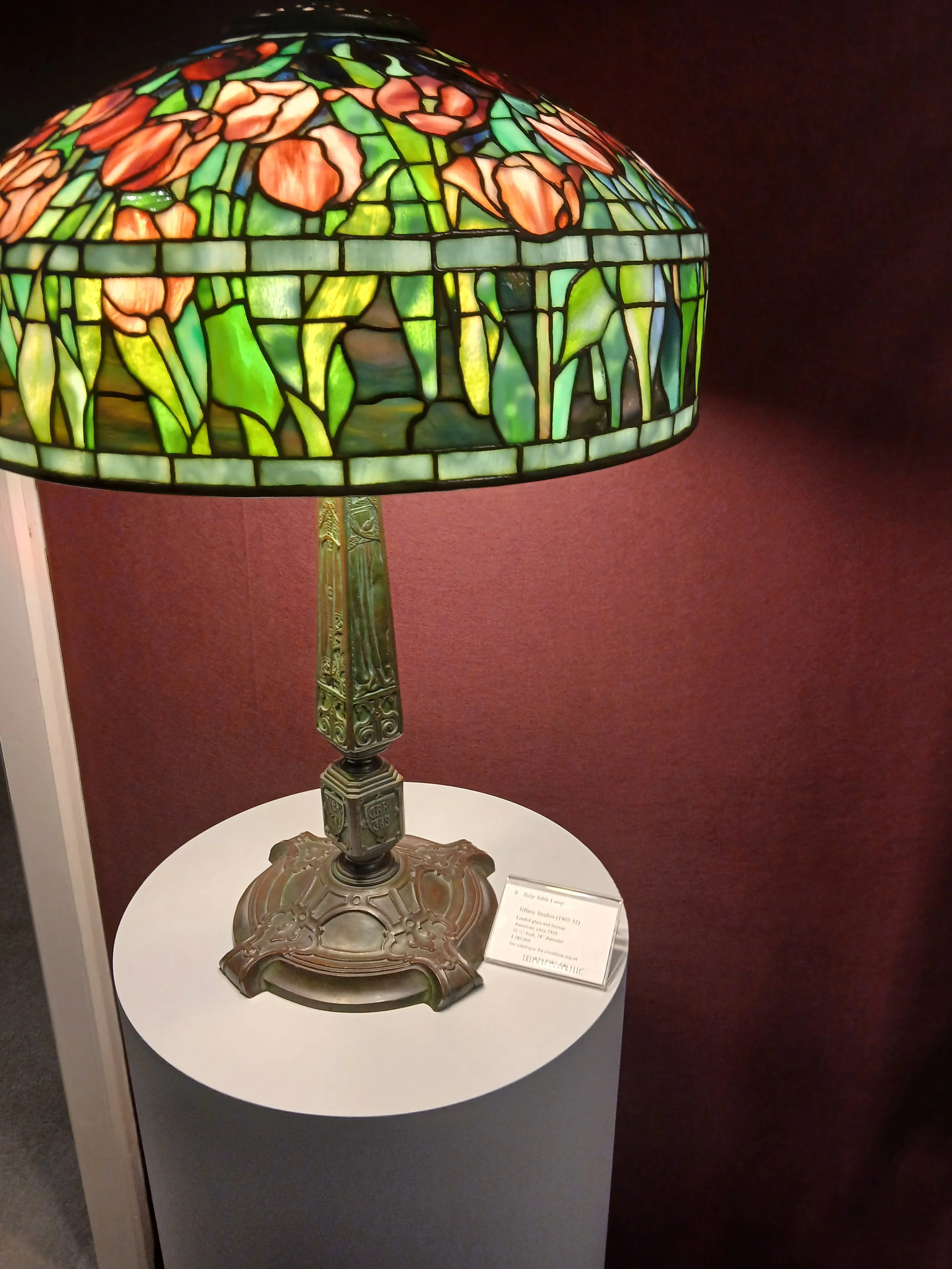
Tiffany Studios leaded glass lamp displayed at The Winter Show 2025, illustrating craftsmanship and artistic vision beyond material value.
None of it captivated me because it was expensive. It captivated me because every piece had something to say. The Tiffany lamp was remarkable because someone imagined light differently. The Art Deco silver was beautiful because an artist believed geometry could communicate elegance.
Standing there, I realized I wasn't looking at expensive objects. I was looking at conviction made physical. Every brushstroke, carving, and imperfection existed because someone believed their vision was worth preserving.
The luxury was never the price tag. It was the honesty behind the object. That realization shapes everything I believe about who Gerard Rene is as an atelier.
Jewelry Should Preserve More Than Wealth
People often ask whether jewelry is a good investment. Sometimes it is. Sometimes it isn't. I think that's the wrong place to start.
The better question: what is this piece preserving that would otherwise be forgotten? A marriage. The birth of a child. A family's homeland. A season of grief. A personal transformation. The memory of someone who changed your life.
When jewelry carries those things, it stops being decoration. It becomes history, which is where I think real luxury jewelry begins.
Scarcity Isn't the Point. Meaning Is.
Scarcity has become one of luxury's favorite marketing tools: limited releases, artificial waitlists, manufactured shortages, all implying the same thing. If fewer people can buy it, it must be more valuable.
I don't reject scarcity entirely. Some things genuinely are rare: a remarkable gemstone, master craftsmanship, time, an original idea.
Gerard Rene creates one-of-one bespoke jewelry and high jewelry pieces, but not because scarcity itself is the product. Every bespoke commission is built around one person's history, relationships, memories, beliefs, and future. Every high jewelry piece is conceived as an individual work of art rather than a design intended for replication, which is why every piece in In Your Dreams exists exactly once.
If I reproduced those pieces over and over simply because they sold well, I wouldn't just diminish their exclusivity. I would erase the very reason they were created.
Our exclusivity isn't manufactured through artificial restriction. It's the natural consequence of refusing to duplicate a story that was never meant to belong to anyone else.
Trends Have Expiration Dates. Meaning Doesn't.
The jewelry industry runs on constant reinvention: elongated diamonds one year, hidden halos the next, paper-thin bands after that. Eventually every trend disappears, replaced by the next set of rules. That business model depends on your taste expiring.
Mine doesn't. I want someone wearing a Gerard Rene piece fifty years from now to feel exactly what they felt the day they received it, not because it came back in style, but because its story never stopped mattering.
Price Should Follow Substance
I don't think luxury has a pricing problem. I think it has a justification problem.
Some objects genuinely deserve extraordinary prices: museum-quality paintings, master sculpture, historic furniture, rare gemstones. Jewelry belongs in that conversation when the work justifies it. When extraordinary pricing reflects extraordinary craftsmanship, rare materials, and real artistic vision, I have no objection to it. What I object to is luxury pricing that relies on branding alone to justify itself, with nothing underneath it.
Every person who contributes to a piece (the miner, the cutter, the polisher, the setter, the engraver) deserves to be paid fairly for it. Luxury shouldn't exist because someone further down the supply chain was underpaid. It should elevate everyone whose hands made the work possible.
How My Thinking About Lab-Grown Diamonds Changed
Early in my career, I generally supported clients choosing lab-grown diamonds over natural stones if it let them own a larger diamond within budget.
Looking back, that advice was incomplete because I was asking the wrong question. Today I start somewhere different: what are you actually trying to accomplish? Owning a beautiful ring is one conversation. Maximizing visual size for a given budget is another. Building a bespoke heirloom that carries both emotional and material significance for future generations is a different conversation entirely.
Our commission process begins in that third conversation. Before we discuss gemstones, we talk about what you're trying to preserve. Once that's clear, the material usually becomes obvious. Clients deserve honesty, not a sales pitch, and that honesty is the foundation of our process from the very first conversation.
What Gerard Rene Actually Creates
People often assume I make jewelry. I don't think that's quite right. I embed stories into metal and stone: sometimes celebrating a marriage, sometimes honoring someone who's passed, sometimes marking the birth of a child or a person's own transformation. Every consultation starts with the same question: why? Not because sentimentality sells, but because that answer shapes every decision after it: the gemstones, the engineering, the symbolism, the engraving.
Fifty Years From Now
Whether someone commissions a bespoke ring or acquires a one-of-one Gerard Rene high jewelry piece, I hope their first reaction isn't "this is expensive." I hope it's "this belongs in my story."
Then I think fifty years ahead. A granddaughter or grandson opening a jewelry box, wanting to know who wore it, why it was made, what it survived, what it meant.
At that point the jewelry has stopped being a luxury good. It's become part of a family's mythology. Not simply an object that appreciates in value, but one that appreciates in meaning.
If you're building a piece meant to outlive trends, and maybe outlive you, I'd be glad to help tell that story. Join the Collector List to stay close to the atelier, or begin a private commission conversation below.