

Diamond District Heirloom Redesign: A Private Atelier Alternative
The Diamond District is the obvious place to take an heirloom for redesign, but redesign is a different kind of conversation than a walk-in reset.
Search "heirloom redesign" alongside "New York," and the Diamond District comes up almost automatically. It's the city's historic center for jewelry — dozens of storefronts on a single block, generations of trade knowledge, and more inventory in one place than almost anywhere else in the country. If you're holding a piece with real family history and wondering where to take it, it's the obvious first instinct.

But redesigning a meaningful heirloom is a different kind of request — and the environment in which that conversation happens can matter as much as the technical work itself.
What the Diamond District Does Well
To be clear: the Diamond District exists for good reason. It's fast, competitive, and enormously efficient if what you need is a repair, a resize, a straightforward reset, or simply the best price on a stone. Decades of trade relationships and sheer density of expertise live on that block. For transactional jewelry needs, it's genuinely hard to beat.
Why Heirloom Redesign Requires a Different Process
A walk-in retail environment is designed to make a transaction possible efficiently. A bespoke redesign requires something different: time to understand what should remain, what can change, and what the client actually wants the finished piece to say. That's not a knock on any individual jeweler — it's simply a different kind of business model, built for a different kind of decision.

A heirloom redesign conversation also tends to go better away from a public storefront. Comparing quotes in real time on a busy block is an efficient way to shop for a diamond. It's a much harder environment in which to hand someone a ring that belonged to your grandmother and explain what it actually means to you.
What Happens During a Private Heirloom Redesign
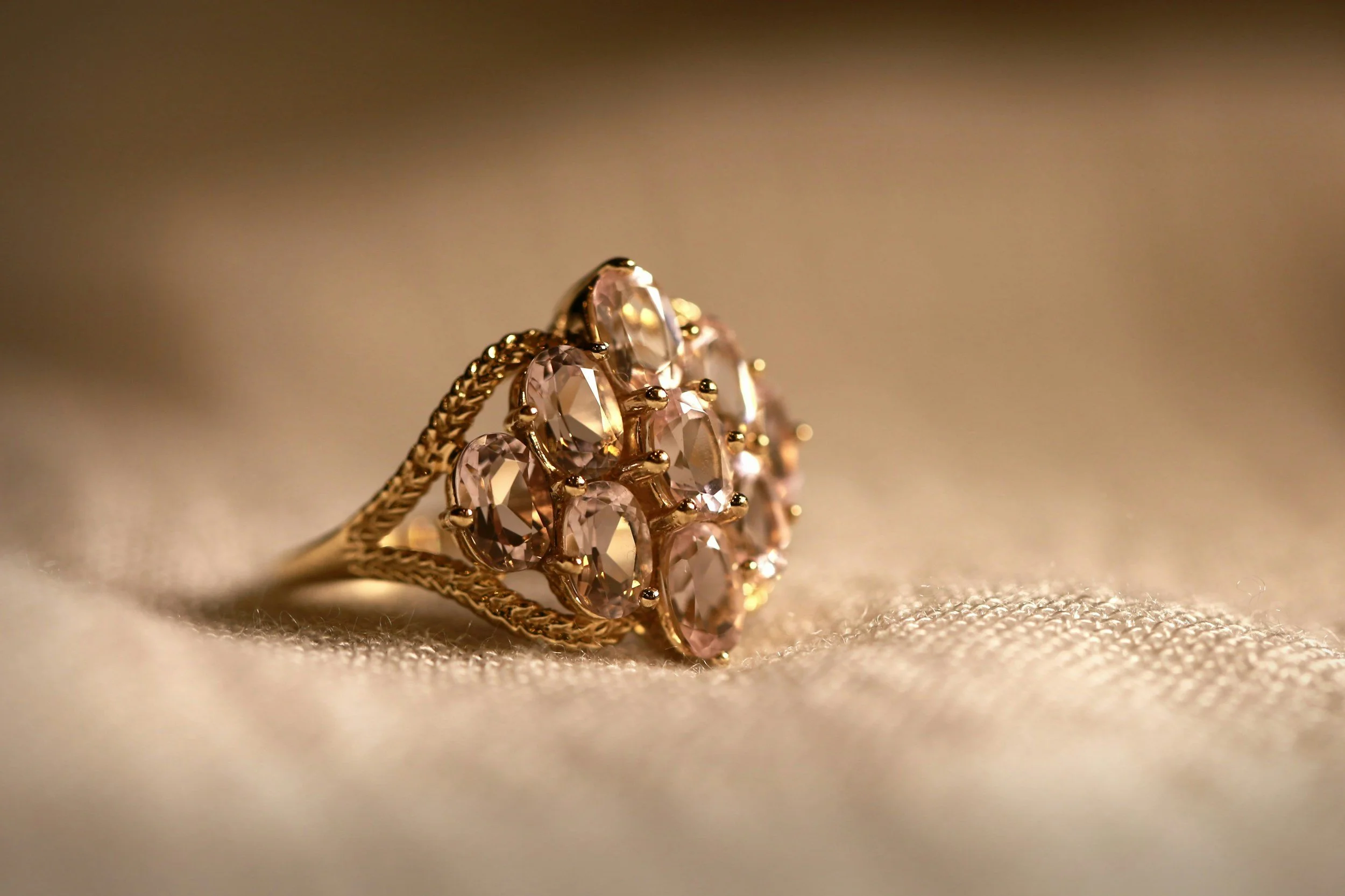
For clients who want the privacy of an independent designer without leaving New York, Gerard Rene approaches heirloom redesign through a private atelier model rather than a traditional retail storefront. In practice, that looks like a specific sequence:
We examine the existing piece. What gemstones are present, what condition the setting is in, which materials can realistically be reused, whether there are structural problems, and whether there are details worth preserving.
We separate sentimental value from physical structure. Sometimes the most meaningful part of an heirloom isn't the original setting at all — it might be the center stone, an engraving, a particular gemstone, or simply the fact that the material belonged to someone specific.
We determine what should survive. Not everything needs to be preserved for the piece's meaning to carry forward. This is usually the most important decision in the entire process, and it's made with the client, not for them.
We design around what the client wants the piece to become. This is where the actual design process begins — informed by everything above, rather than starting from an existing setting on a tray.
A Reset Isn't the Same as a Redesign
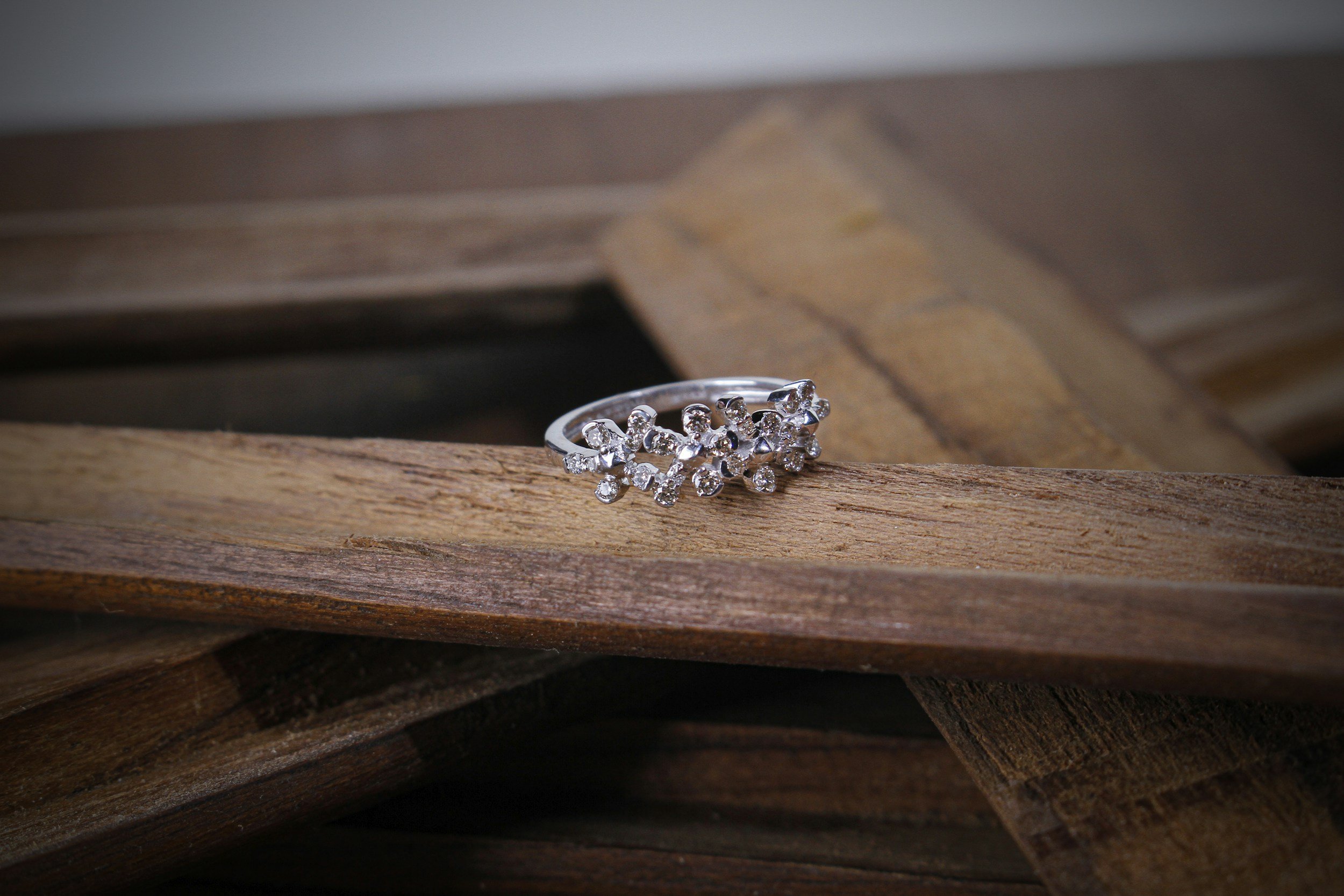
A reset means taking an existing stone and placing it into another setting. A redesign asks a bigger question: what should this piece become? That distinction matters, because the answer might be to preserve the center stone, reuse multiple stones, completely change the silhouette, change the metal, incorporate a single original detail, or build an entirely new structure around the existing materials. A reset can be part of a redesign. It's rarely the whole of one.
What Changes When the Question Becomes "What Should This Become?"
Once there's no pressure to move quickly, the questions get better. Rather than "which of these existing settings do you want your stone in," the question becomes: what part of this ring do you actually love, and why? Would you still love it if that same detail existed in a completely different format? Can this piece carry its history forward without looking exactly the way it did fifty years ago? That's the design thinking a redesign actually requires — and it's difficult to get to on a public sales floor.
Who a Private Atelier Is For
If you need a quick repair or a straightforward reset and price is the deciding factor, the Diamond District remains a perfectly reasonable place to start. But if you're holding a piece with real emotional weight — something you inherited, something tied to a person or a chapter you want to honor rather than erase — a private atelier process is built specifically for that kind of decision, without the noise of a public storefront experience around it.
Schedule a private heirloom consultation, or read more about how to redesign an inherited ring without losing its meaning.