
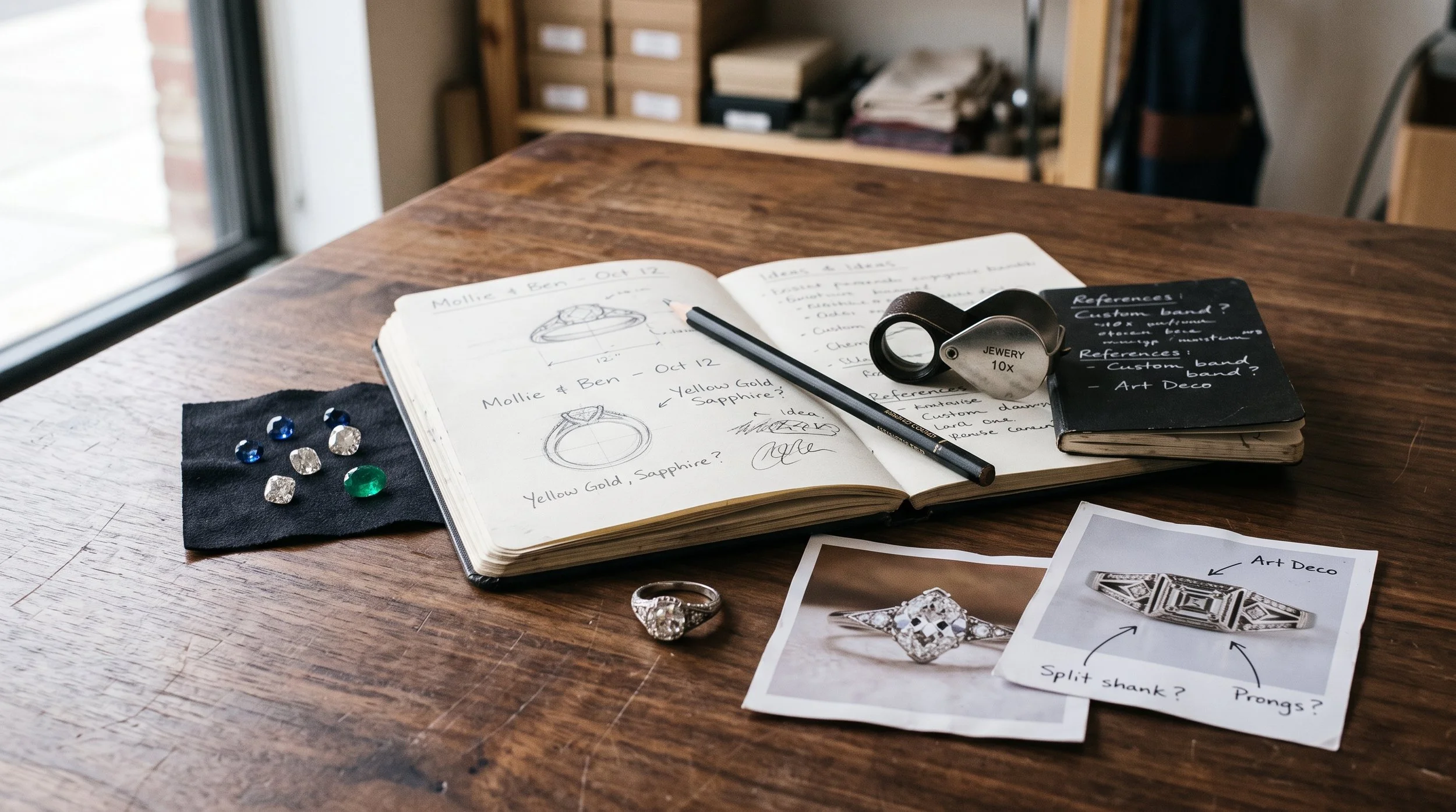
What to Bring to Your First Bespoke Jewelry Consultation
Wondering what to bring to your first bespoke jewelry consultation? Less than you think — here's what's actually useful, and what you don't need to have figured out yet.
The most common question we get before a first consultation isn't about design at all. It's some version of: "What am I actually supposed to bring?" The honest answer is that you need far less than most people assume — clarity helps, but it isn't a requirement.
What's Actually Useful
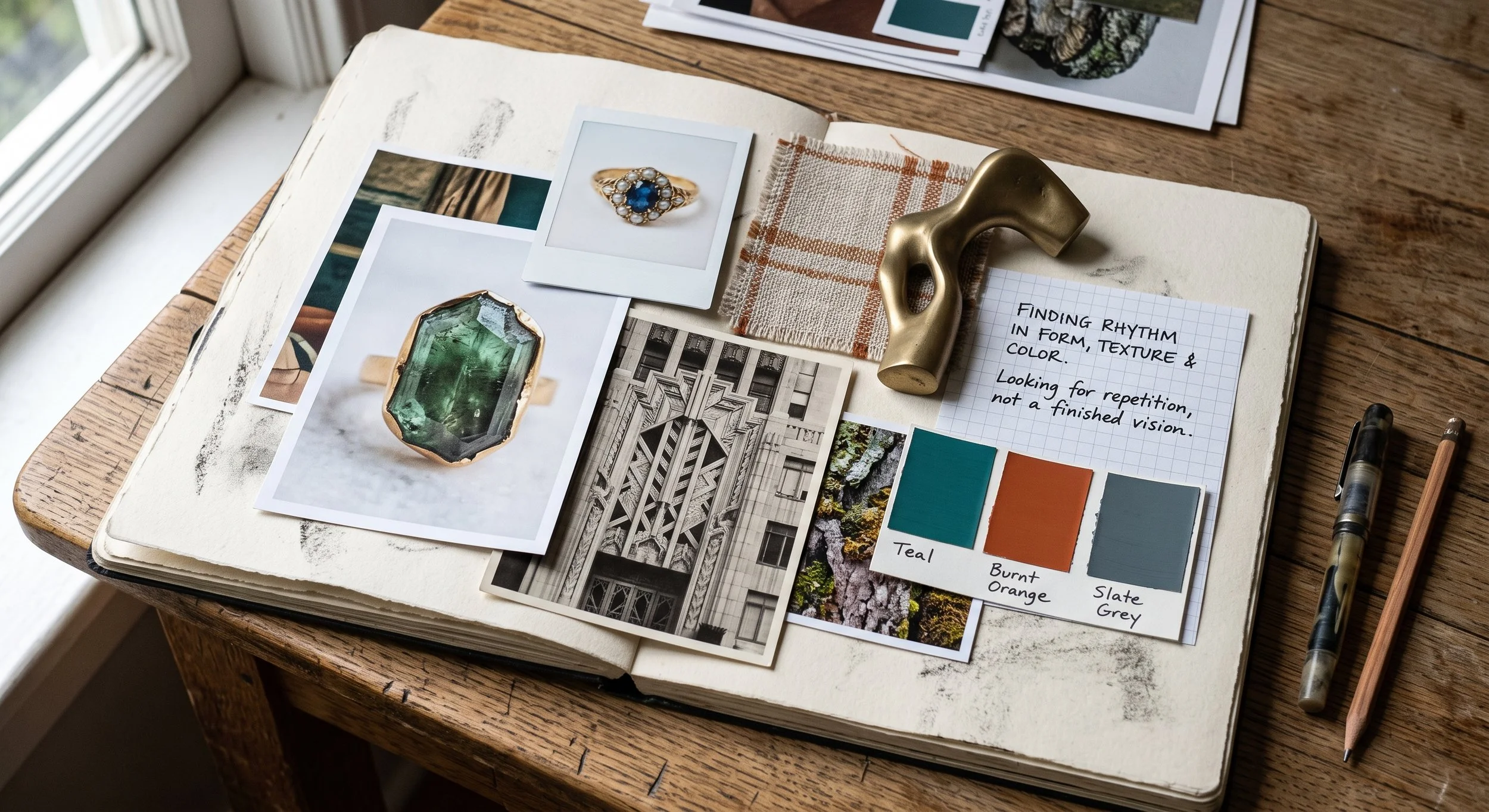
Reference images, if you have them — but not a finished vision. If you've been saving photos, bring them, even if they feel scattered or contradictory. We're not looking for a single perfect example of what you want. We're looking for what repeats: a stone shape, a proportion, a level of detail you keep gravitating toward. Even just your single favorite element from each image is enough to start building a real picture of your taste.
A general sense of your budget range. You don't need an exact number, and you're never going to be pushed toward spending more than you're comfortable with. But a rough range helps shape realistic options from the very first conversation, rather than designing something that has to be scaled back later.
Context about the relationship, if it's an engagement ring. How you met, how long you've been together, what your partner's day-to-day life actually looks like — whether they wear jewelry often or almost never, whether they're active or more likely to be behind a desk. None of this needs to be polished. The more honestly you can describe the person, the more the design can actually reflect them.
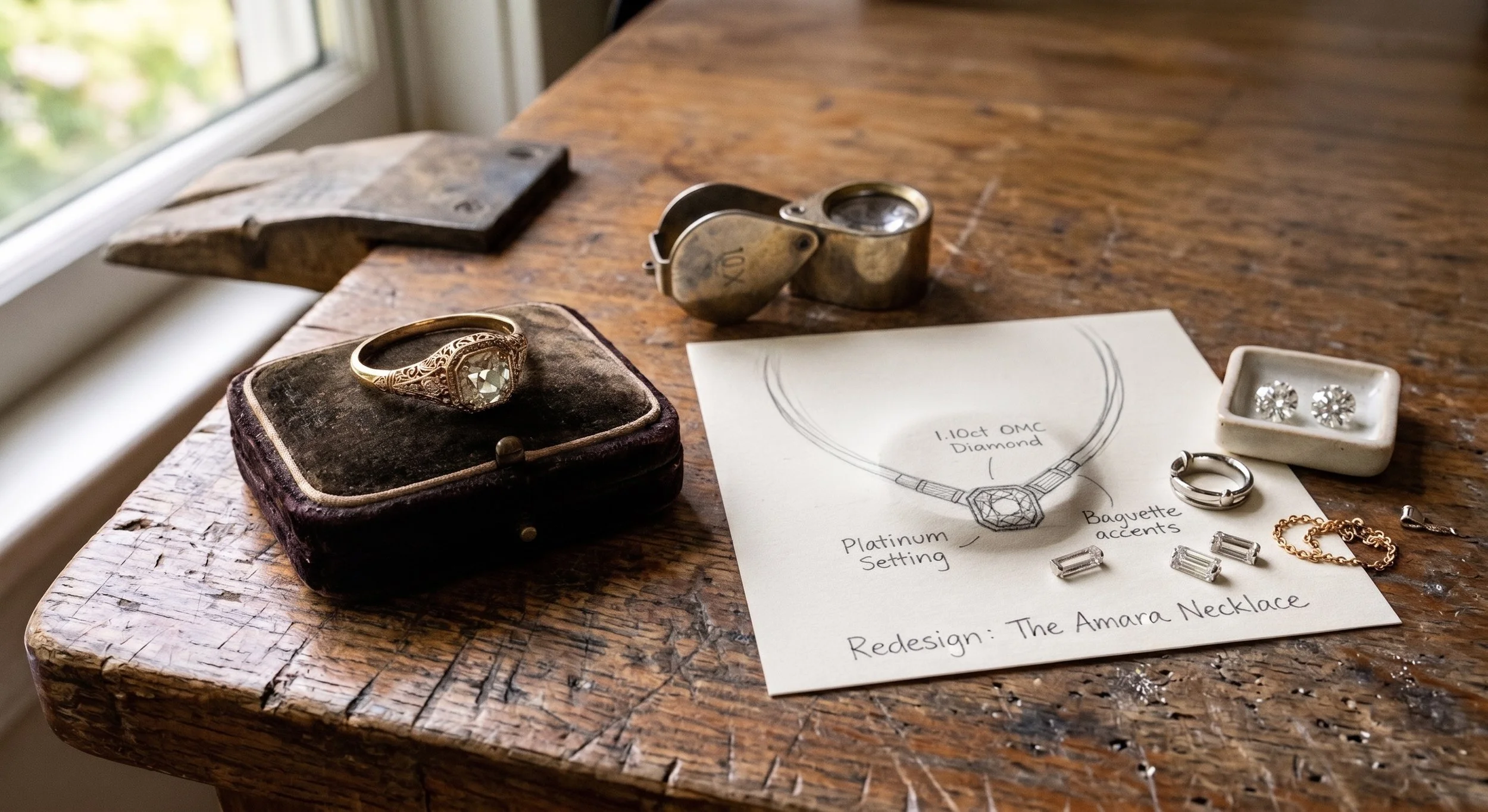
Any inherited materials you're considering incorporating. If there's a family stone, an heirloom piece, or inherited gold you might want worked into the new design, bring it — or at least mention it exists. It changes what's possible and often becomes the most meaningful part of the final piece.
Your actual questions, even the basic ones. Nobody expects you to already understand cut grades, sourcing, or engineering. Ask anything. Understanding the process is part of what a consultation is for.
What You Genuinely Don't Need
A finished design in your head. Plenty of the most successful commissions start with a client who has no clear vision at all — just a feeling, or a handful of scattered references. That's a completely normal starting point, not a disadvantage.
A ring size. Sizing happens later in the process, once a direction is set. It's not something you need before a first conversation.
Certainty about every material decision. Metal, stone type, whether it's a diamond or a colored gemstone — these get worked out together. You don't need to walk in with firm answers.
What the Consultation Itself Actually Involves
Expect a real conversation before any sketching happens — questions about your story, your taste, and what you want the piece to say, not an immediate pitch toward a specific setting or stone. If you already have strong references and a clear point of view, we'll let that lead. If you're starting from almost nothing, we'll build the picture together from what you tell us about your life.
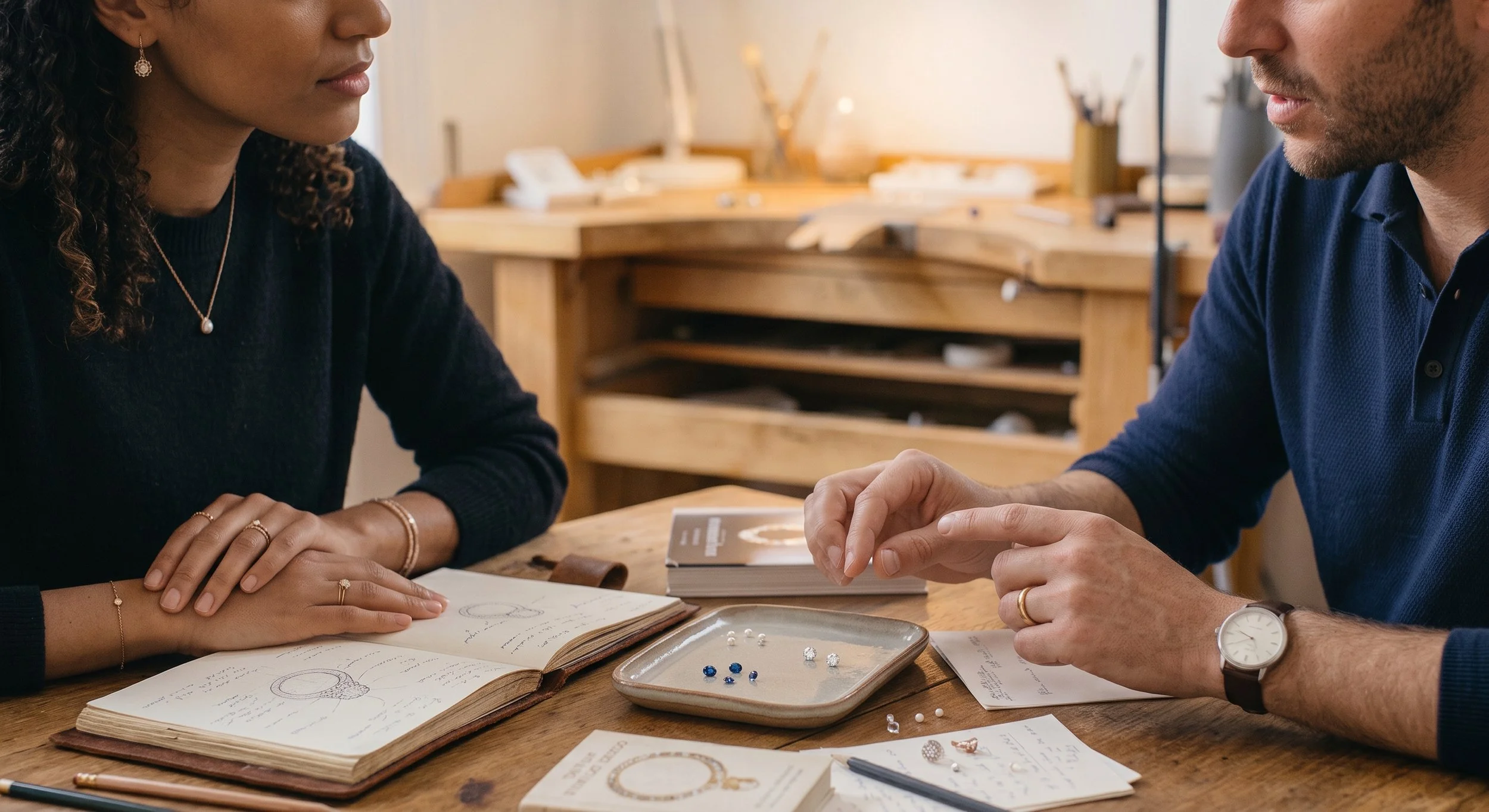
There's no wrong way to arrive at a first consultation. Some clients come in with a folder of saved images and a firm budget. Others come in with nothing but a feeling that they want something different from what they've seen everywhere else. Both are exactly the right starting point.
Schedule your private consultation, or read more about the bespoke engagement ring process, start to finish to know what happens after that first conversation.