
The Bespoke Engagement Ring Process, Start to Finish
From the first conversation to the final polish, here's exactly what happens when you commission a bespoke engagement ring — and why none of it looks like picking from a catalog.
Most explanations of the "custom ring process" are really explanations of a product configurator: pick a setting, pick a stone, pick a size, check out. That's customization. It's not what happens at Gerard Rene, and it's not what the word bespoke actually means.
This is the general process behind a Gerard Rene bespoke engagement ring commission — from the first conversation through final quality control. The sequence can vary depending on the piece, particularly when gemstone sourcing, design development, and engineering overlap, but the underlying process remains the same.
Step One: We Learn Who the Ring Is For
The first thing we want to know isn't your budget or your metal preference. It's how you two met, how long you've been together, what her day-to-day life actually looks like. Does she wear jewelry often, or almost never? Is she active, or does she work a desk job? Does she care how her ring compares to what her friends and family wear, or is that irrelevant to her? Where someone lives even factors in — a large center stone reads differently in New York than it does somewhere it would make the wearer feel conspicuous rather than confident.
If a client already has strong references — a folder of saved images, a clear point of view — we let that lead. If they arrive with nothing but a feeling, we build the design from everything they've told us about their life, their values, and what they want the ring to say. Either way, the goal of this stage is the same: understanding the person well enough that the ring could only have been made for them.

Step Two: Reading the References
When a client sends twenty saved photos, we're not just looking at what's pretty. We're looking for what repeats — stone shapes, proportions, metal tones, whether the eye is drawn to architectural lines or organic movement, negative space, symmetry, engraving, pavé. If there's no obvious throughline, we ask a simpler question: out of everything you've shown me, what's your single favorite detail from each one? That's usually enough to reverse-engineer a taste the client hasn't fully articulated yet.
Step Three: Concept Sketches
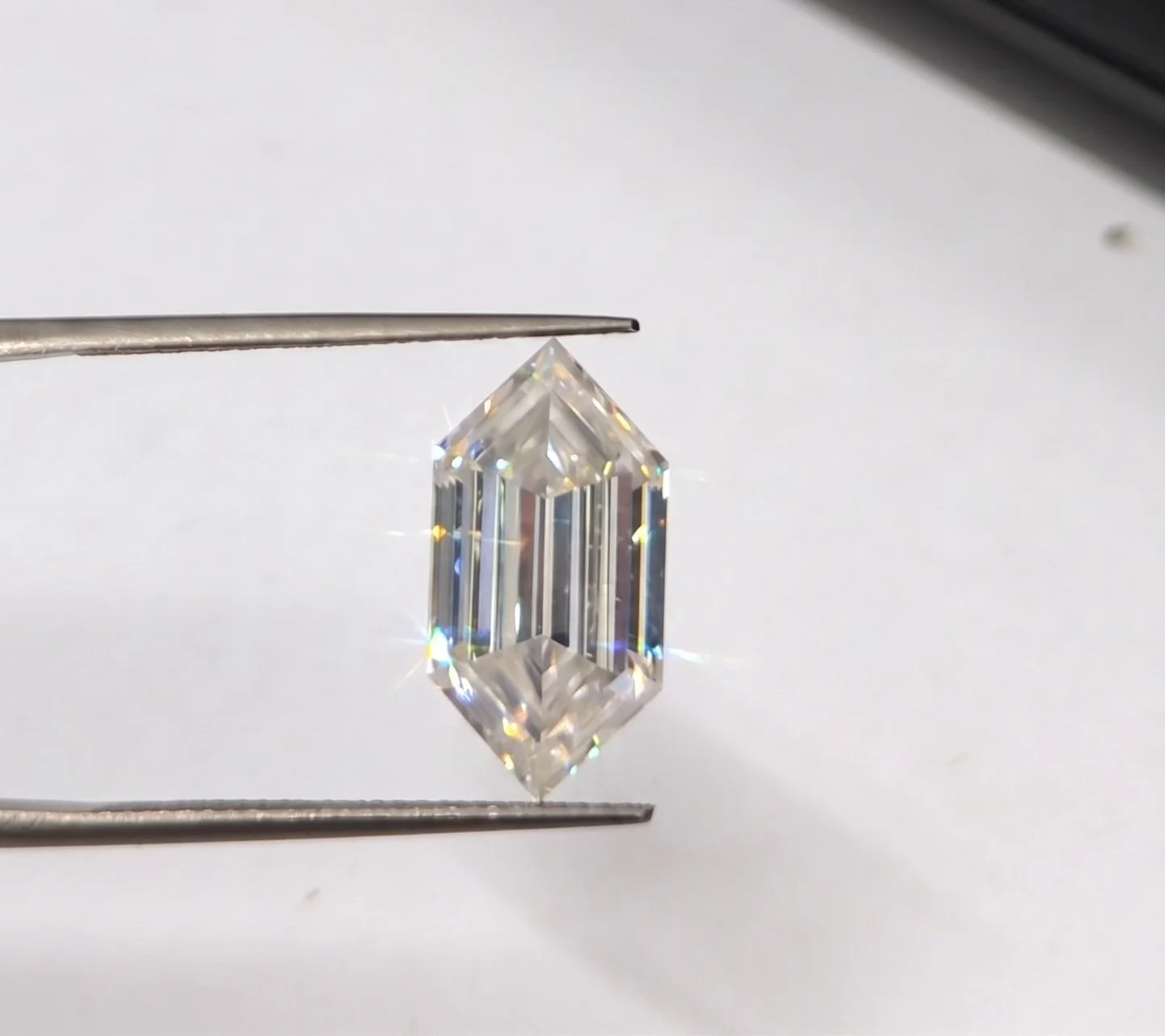
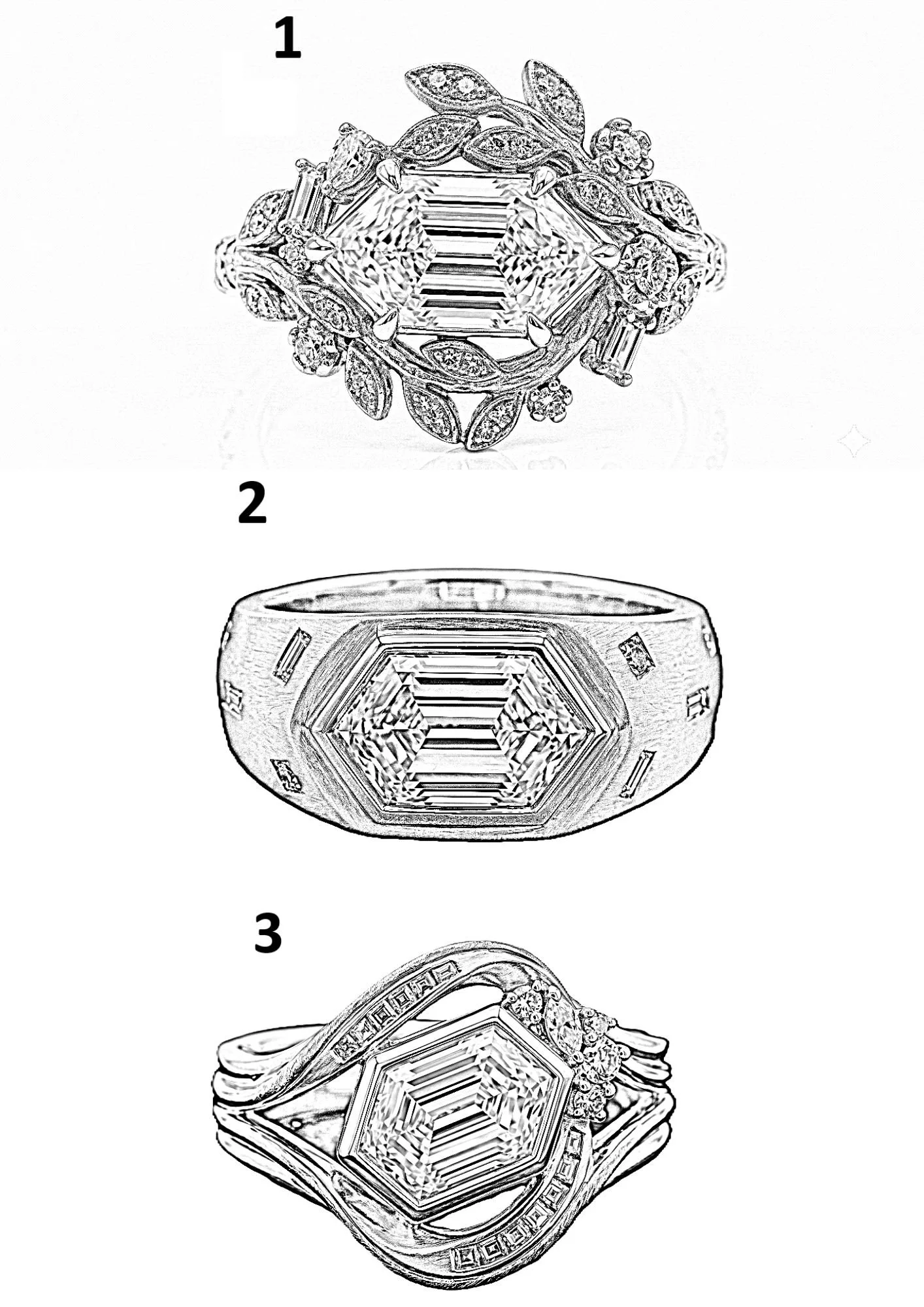
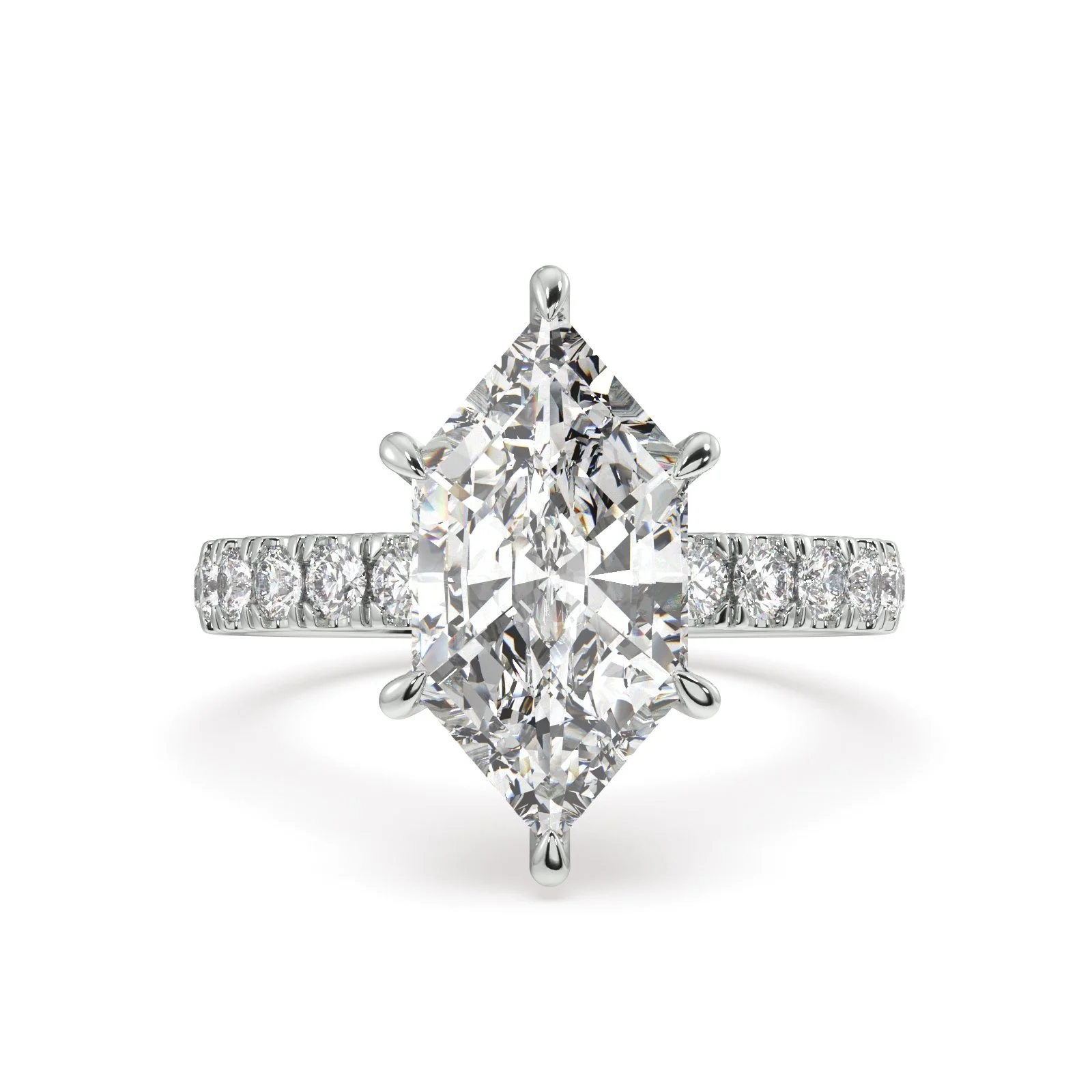
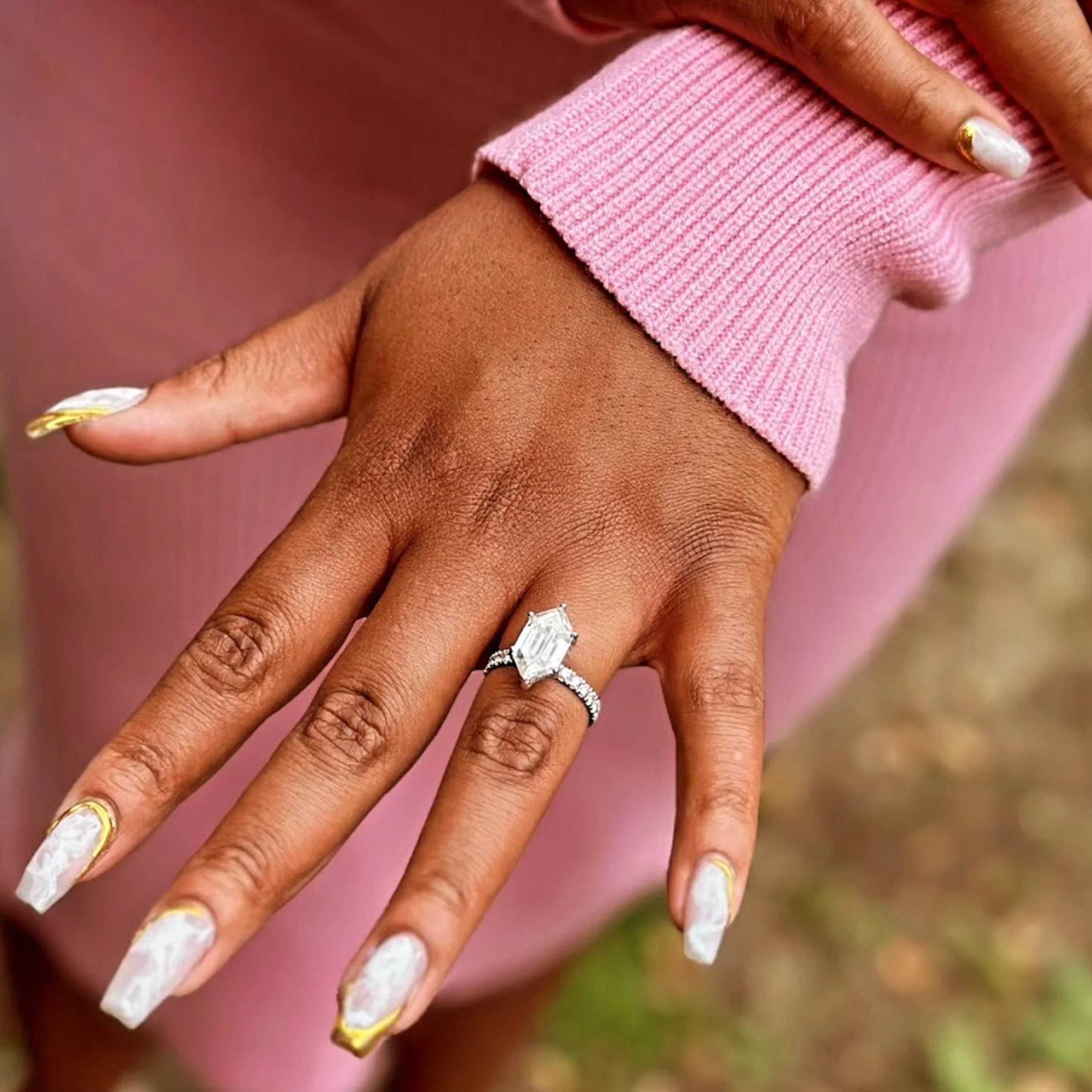
From there, we sketch — typically three or four directions, sometimes rendered in color to help a client visualize the design more concretely. This is a deliberately iterative stage. We're not trying to land on the final design in round one; we're learning, from what a client says no to, exactly what they're actually looking for. One recent client's fiancé handed us reference images of a pear-shaped diamond and said that was "exactly" what she wanted. We designed three pear options — and when we finally spoke with her directly, she was happy, but not thrilled. It took one honest conversation to learn she wanted a center stone shape almost no one else had. She ended up choosing an elongated hexagon cut that never would have surfaced from the original brief alone.
Step Four: CAD — Where the Design Becomes Real
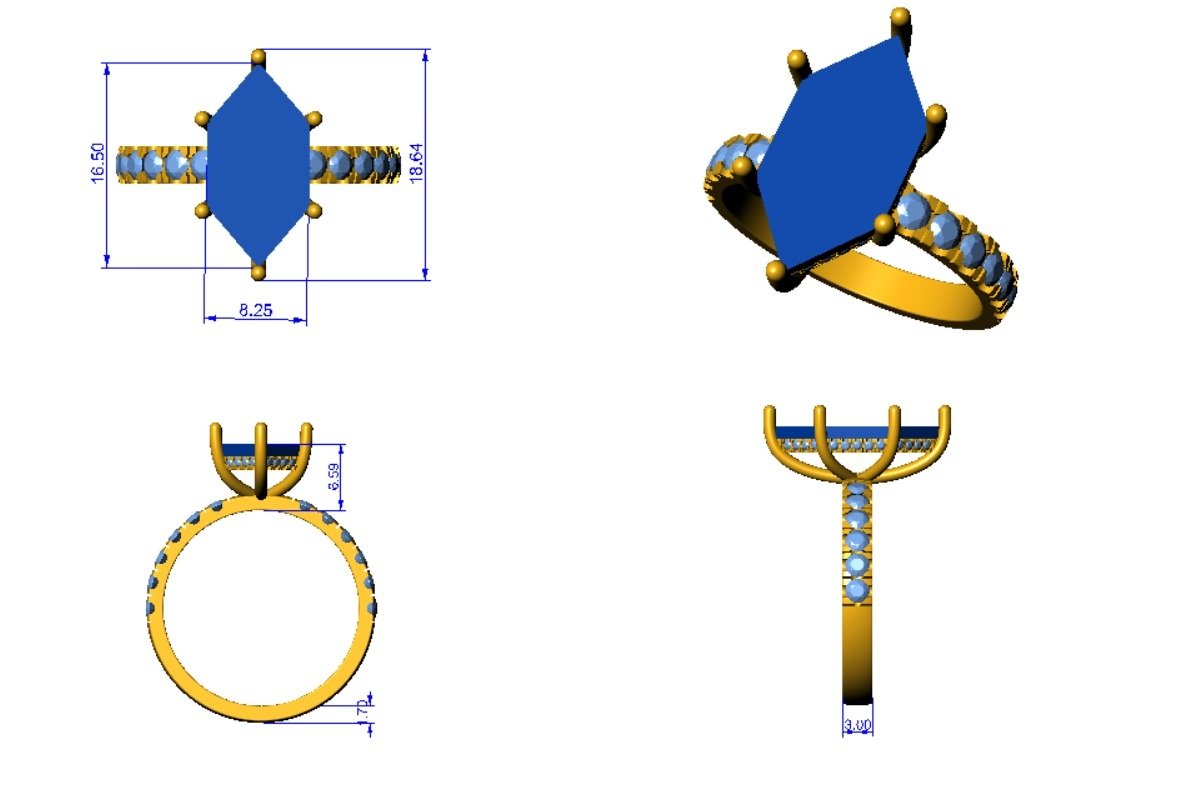
Once a direction is chosen, the piece moves into CAD. This is genuinely the moment a concept stops being an idea and starts being engineered. Sketches can be more elaborate than what's physically or structurally possible, and CAD is where that gets tested — proportions, structural integrity, manufacturability. This stage typically takes anywhere from a day to a week depending on complexity, and it's also where our design standards get applied. At Gerard Rene, for example, we generally avoid bands below 2.5mm in designs intended for everyday wear, because thinner structures can be more vulnerable to bending or deformation.
Step Five: Stone Sourcing
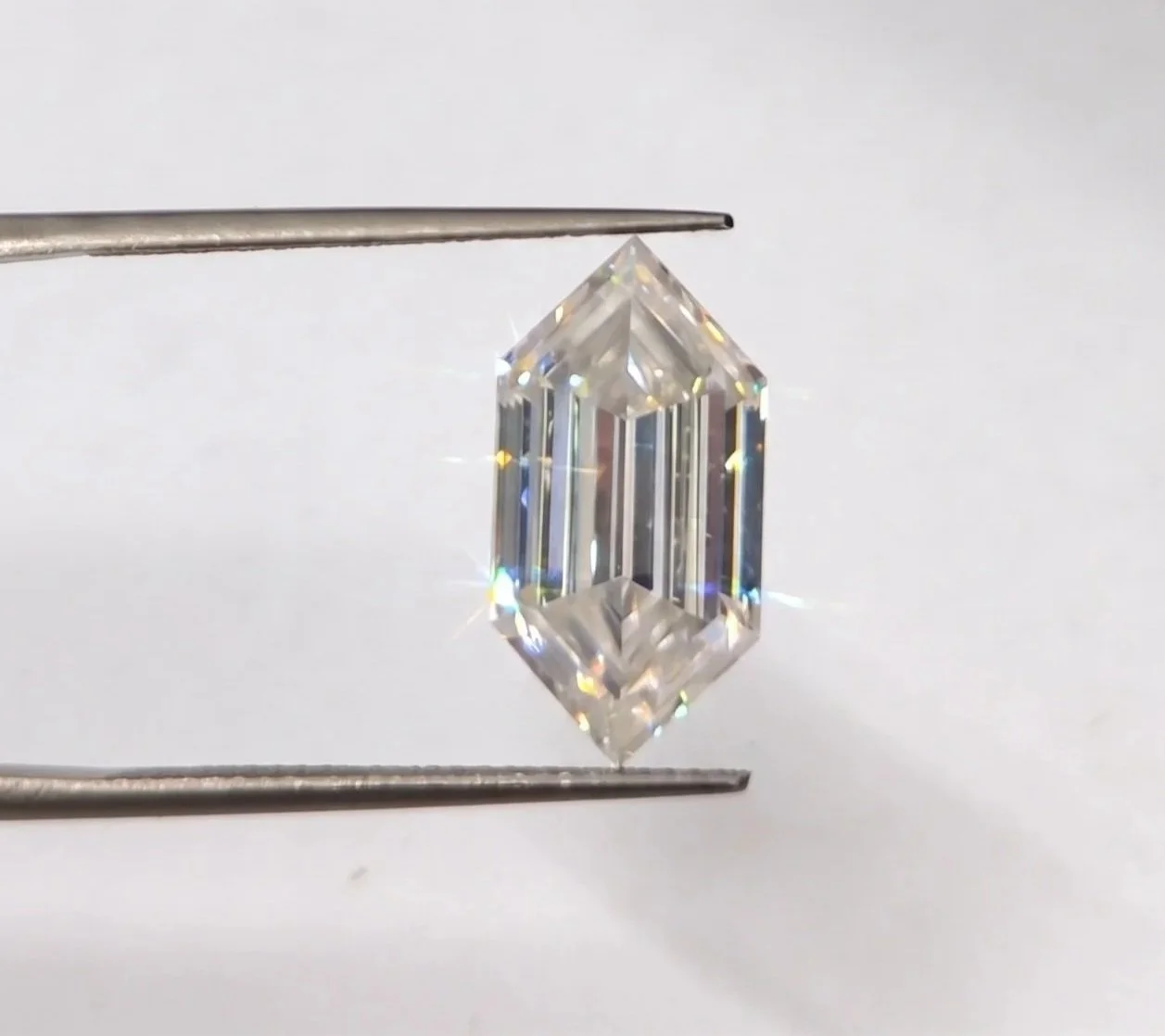
Whether the center stone is a diamond or a colored gemstone, sourcing follows the same underlying discipline, adjusted for what each material rewards. For diamonds, cut quality matters more than chasing the highest color and clarity grade — a slightly lower color can read beautifully in certain gold tones, and a stone that isn't clinically perfect often has more character. For gemstones, the same logic applies, with even more weight given to how the stone's individual personality — its inclusions, its color zoning, the way light moves through it — will read in the final piece. Every stone is vetted for its cut, its visual presence, and its documentation before it's approved for a commission. Depending on the client, this sourcing sometimes happens before design work begins, and sometimes runs alongside it.
Step Six: Renders and Refinement
Once the CAD is finalized, we provide both photo and video renders so the design can be evaluated from every angle before production begins. This is the last checkpoint before the piece becomes physical — the moment to confirm the proportions, the stone placement, and the overall composition feel right.
Step Seven: Production
From approved renders, the ring moves into fabrication. Depending on the design, this may involve hand fabrication, casting, or a combination of both — hand fabrication for crisp, dense, structurally demanding architecture, casting for sculptural or organic forms that would be nearly impossible to achieve any other way. Problems can surface here that never showed up in CAD: a setting that needs reinforcing, a stone that needs to be re-secured, a material behaving differently than expected. We solve these as they arise rather than compromising the final piece to protect a deadline.
Step Eight: Quality Control
Before any ring leaves the atelier, it's reviewed under magnification — prong thickness, prong alignment, band durability, stone security. If it doesn't meet that standard, it isn't finished yet, regardless of the calendar.
What Makes This Bespoke, Not Custom
Customization is choosing from a menu — swapping a setting, resizing a stone, picking from six hundred pre-built templates. Bespoke is different in kind, not just degree. It's design built entirely around a person's story, informed by a real conversation about who they are and why this piece matters, rather than assembled from existing options. That distinction is the entire premise of this atelier.
Ready to begin? Start your commission, browse past one-of-one pieces, or read about what determines the price of a custom engagement ring to understand where the investment actually goes.