
Heirloom Jewelry Redesign NYC: The Story Behind a Family Ring's Second Life
Some of the most valuable jewelry isn't the most expensive. It's the piece someone's been too afraid to touch for decades. The story behind one family's redesign.
Why the Most Meaningful Jewelry Was Never Meant to Stay in a Box
Some of the most valuable pieces of jewelry I have ever held weren't the most expensive. They weren't flawless. They weren't famous. Many of them weren't even being worn.
They arrived wrapped in tissue paper, tucked inside velvet boxes that hadn't been opened in years. Sometimes decades.
Almost every time, the client begins with the same sentence.
"I've been afraid to do anything with it."
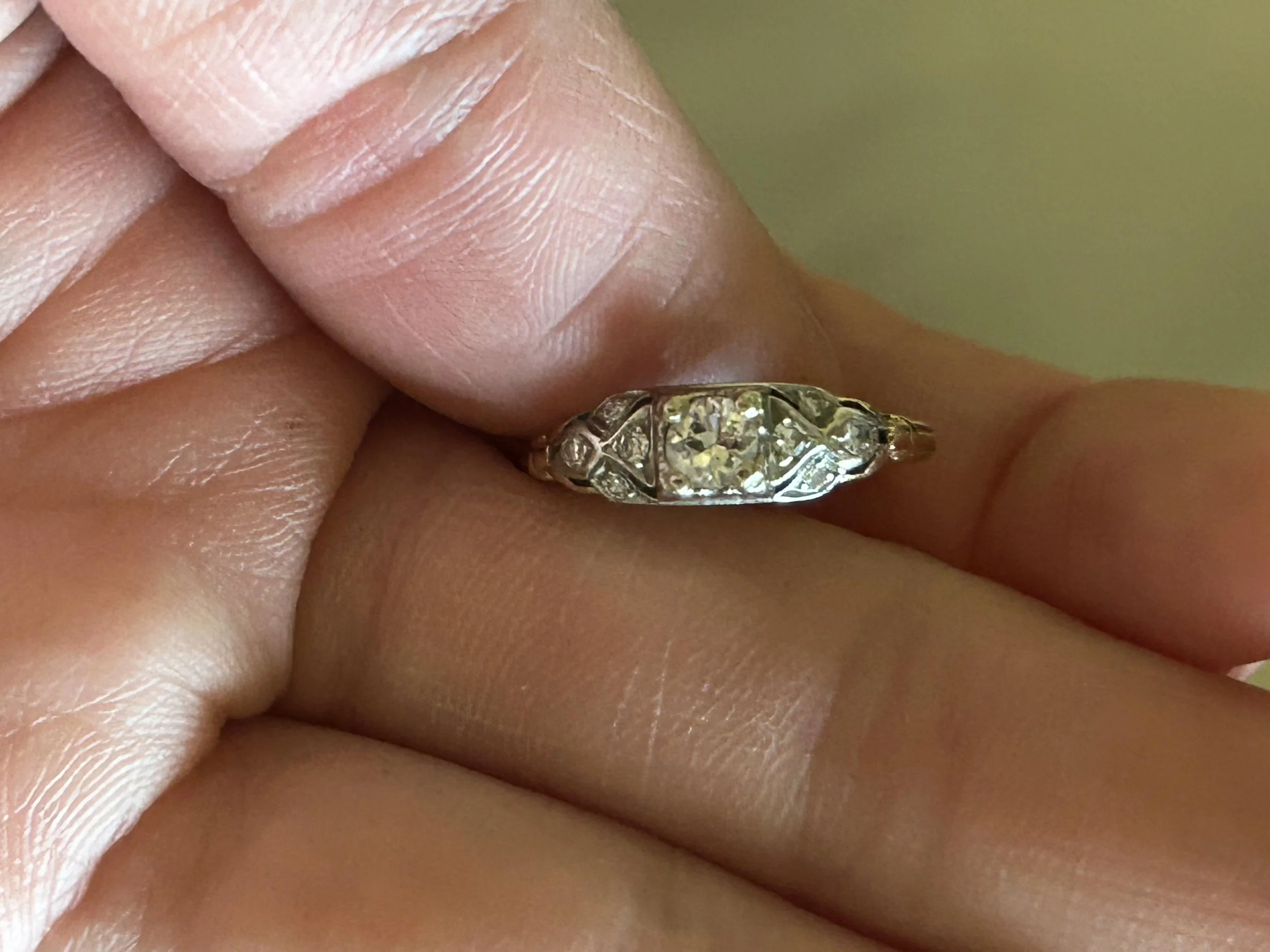
Photo of client heirloom. Every heirloom begins as more than a piece of jewelry — it carries the memories, milestones, and stories of the people who wore it.
Not because they don't love it. Because they love it so much. They're afraid that changing the ring somehow means changing the memory.
I understand that fear. But I don't believe memory lives inside a setting. I believe it lives inside the meaning we choose to carry forward.
Jewelry Was Never Meant to Be Archived
Families often treat heirlooms like museum pieces. Too precious to wear. Too sentimental to alter. Too fragile to risk. Eventually the jewelry becomes something everyone owns but no one experiences, sitting quietly in a safety deposit box while life continues without it.
I don't think that's what heirlooms were made for. A wedding ring wasn't created to become an artifact. It was created to witness a marriage. It watched hands grow older. It held babies. It survived arguments and anniversaries. It traveled. It celebrated promotions. It comforted grief. Every tiny scratch became part of its history.
Why should its story end simply because the original owner is no longer here? The greatest honor we can give an heirloom isn't preserving it perfectly. It's allowing it to keep participating in life.
Before I Design, I Listen
When someone places a heirloom in front of me, I don't immediately begin sketching. I ask what makes this piece impossible to replace. What they remember when they hold it. If we changed everything about the ring except one detail, what would that detail have to be.
Sometimes the answer surprises even the client. People often believe they're attached to the design. After a longer conversation, they realize they're attached to something quieter: the engraving inside the band, the way their grandmother always turned the ring while thinking, a tiny chip only they know exists, an emerald their grandfather spent months searching for.
Not because these details are expensive. Because they're true. This is exactly why every consultation follows our process of listening first and sketching second.
[Learn more about private jewelry consultations in NYC with Gerard Rene, where bespoke commissions, heirloom redesigns, and one-of-one creations begin with a conversation.]
History Doesn't Have to Look Historical
One of the biggest myths surrounding heirloom jewelry is that preserving history requires preserving appearance. It doesn't. History is remarkably adaptable. A Victorian engraving can live beautifully inside a contemporary ring. An Art Deco silhouette can inspire a completely modern composition. A family diamond can become part of a minimalist design without losing its lineage.
Sometimes we preserve the stone. Sometimes the metal. Sometimes a motif. Sometimes nothing physical survives except the story itself, and that can be enough. The goal was never imitation. It's continuity.
A Consultation I'll Never Forget
A client once came to me carrying her late aunt's engagement ring from the 1930s. She adored it. She also admitted something that made her feel guilty: she didn't want to wear it. Not because she didn't appreciate its beauty. Because it simply wasn't her.
Every time she opened the box, she felt torn. Leave it untouched and never enjoy it, or redesign it and risk erasing the woman who once wore it.
Instead of discussing settings, we talked about her aunt. What she admired about her. The memories that surfaced every time she saw the ring. The role that piece had played in their family's story.
Eventually, something became clear. She wasn't trying to preserve the ring. She was trying to preserve her relationship with her aunt. Those are not the same thing.
So we chose a different path. Her aunt's engagement ring remained exactly as it was. Instead of redesigning it, we created a companion ring designed to sit beneath it, borrowing subtle architectural details from the original while incorporating her partner's birthstone in a way that felt unmistakably modern. Nothing meaningful was lost. Everything meaningful was carried forward.
You can see the finished Lars ring that resulted from that conversation.
The Most Beautiful Redesigns Begin With Grief
People often imagine heirloom consultations are joyful. Many are. Many are also heartbreaking.
I've had clients tell me about parents they never had the chance to properly say goodbye to. Children they lost. Marriages that ended. Illnesses that permanently changed the way they understood time. Sometimes a redesign becomes the first tangible expression of healing. Other times it's an act of gratitude. A celebration. A quiet promise to remember.
Jewelry has an extraordinary ability to hold emotion without asking us to explain it. That's why redesign isn't merely a creative exercise. It's an emotional one. Sometimes people don't need a new ring. They need permission to carry an old story differently.
A Ring Doesn't Have to Stay a Ring
One of the most freeing realizations clients have is understanding that preserving an heirloom doesn't require preserving its original function. A ring can become a pendant worn close to the heart. A brooch can become earrings shared between siblings. Inherited gold can become wedding bands for an entirely new generation. A diamond that spent decades hidden in a drawer can become the center of a completely different story.
Transformation doesn't diminish significance. It extends it. The materials remain the same. Only the chapter changes.
Every Generation Adds Something
I sometimes think about heirlooms the way historians think about old buildings. The oldest cathedrals in Europe weren't constructed in a single decade. Generation after generation added windows, restored stonework, strengthened foundations, and repaired what time had worn away. No one would argue those buildings became less authentic because they continued evolving. Quite the opposite. Their evolution became part of their authenticity.
Family jewelry works the same way. One generation commissions the ring. Another resizes it. Another engraves initials inside the band. Another redesigns it to reflect a changing life. Another eventually passes it forward. None of those decisions erase history. They become history.
Jewelry Should Continue Living
One day, someone you will never meet may inherit the jewelry you wear today. They may know your name. They may only know fragments of your story. Either way, they'll hold something your hands once held.
That thought changes the way I approach every heirloom redesign. I'm not trying to freeze a moment in time. I'm trying to create continuity. The best heirlooms aren't the ones that remain untouched. They're the ones that remain loved.
The question is never "how do we protect this object." The better question is "how do we make sure this story keeps being lived." Because jewelry was never meant to spend generations hidden inside a velvet box. It was meant to gather scratches. To witness milestones. To absorb laughter. To survive loss. To be worn. To be remembered. And eventually, to be entrusted to someone new.
That, to me, is what makes an heirloom priceless.
If you're holding a piece with a story like this, waiting for its next chapter, I'd be honored to help write it.